Free shipping in DE
  30 day returns
  Secure payment
  2 years warranty
The ultimate guide to rowing: What does the rowing machine train?
Rowing is one of the most effective forms of full-body exercise that improves both strength and endurance. When it comes to strengthening muscles while burning fat, the rowing machine is a great choice. In this article, we'll take a deep dive into which muscle groups are worked when rowing and how to get the most out of your workout.
What are the benefits of rowing?
Before we get into which muscle groups are worked when rowing, let's take a look at the numerous benefits of this form of exercise. Rowing is a low-impact activity that improves both endurance and strength. It's ideal for people of all ages and fitness levels and can be used as both a cardio and strength workout. By regularly exercising on the rowing machine, you can improve your cardiovascular health, burn calories, build muscle, and reduce stress.
Which muscle groups are trained when rowing?
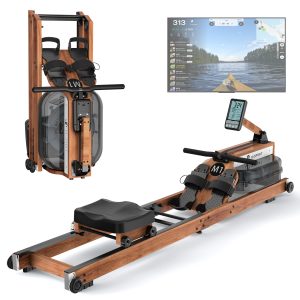
Rowing on a rowing machine works a variety of muscle groups, making it an effective full-body workout. Here are some of the main muscles worked when rowing:
back muscles
Rowing is one of the best exercises to strengthen your back muscles. During the rowing stroke, the muscles in the upper, middle and lower back are activated, resulting in improved posture and a stronger back.
leg muscles
Rowing also works the leg muscles, especially the thigh muscles. With each leg set you make, your thighs, calves and glutes work, resulting in stronger and more defined legs.
abdominal muscles
The abdominal muscles are activated to stabilize your upper body as you move on the rowing machine. This helps to strengthen the core muscles and improve your core stability.
Arm muscles
Rowing also works your arm muscles, especially your biceps and triceps. Pulling on the rowing handle requires strength from your arms, which helps to strengthen and define your arm muscles.
shoulder muscles
Your shoulder muscles are also activated when rowing. Pulling the rowing handle backwards works the muscles in the shoulders and upper back, resulting in improved shoulder stability and definition.
Tips for effective rowing training
To get the most out of your rowing workout and effectively train the muscle groups mentioned above, here are some tips to keep in mind:
- Make sure you use the correct technique to avoid injury and get the most out of your muscles.
- Vary your workout by alternating between long, slow rowing sessions and intense interval rounds.
- Make sure to keep your core muscles activated to ensure trunk stability during exercise.
- Use different grip variations to challenge different muscle groups and add variety to your workout.
- Take time to warm up and stretch after exercise to prevent injury and promote recovery.
By following these tips and exercising regularly on the rowing machine, you can achieve your fitness goals and become a stronger, leaner and healthier version of yourself.
Conclusion
Rowing on a rowing machine is an effective way to work your entire body and improve both strength and endurance. By targeting the muscle groups mentioned above and following a few tips for an effective workout, you can reap the full benefits of rowing. Start your rowing workout today and take your fitness to the next level!