Free shipping in DE
  30 day returns
  Secure payment
  2 years warranty






Introduction
When training at home, many people first think about visible results: a toned body, increased stamina, or a better sense of well-being. But many of the most important changes happen behind the scenes – deep within the metabolism, muscles, and cells. This is precisely where a treadmill can do far more than simply allow walking or running in the living room.
Regular training with varying intensities can help the body to provide energy more efficiently, process stress better, and recover faster. That's precisely what improving [the] Metabolic efficiency through interval training on the treadmillInstead of focusing solely on calorie consumption, the focus shifts to a more efficient, adaptable metabolism – and thus to a stable foundation for long-term fitness and well-being.
Metabolic efficiency means that the body uses fats and carbohydrates as effectively as possible, depending on the level of exertion. However, many people rely heavily on readily available energy from sugar in their daily lives. This can manifest as dips in performance, fatigue, or fluctuating energy levels. Interval training helps make the metabolism more flexible. In this article, we'll explore how targeted alternations between exertion and recovery on the treadmill can help the body work more efficiently and take home workouts to the next level.
How the body provides energy
To understand why interval training can be so effective, it's worth taking a look at the body's two main energy systems. During moderate exertion, the body primarily works aerobically. This means that energy is supplied with the help of oxygen – mainly from fats and carbohydrates. During short, intense bursts of activity, the body switches more heavily to anaerobic processes. Then, quick energy takes center stage, usually based on glucose.
It is precisely at this point that the improvement of Metabolic efficiency through interval training on the treadmill Interesting. While consistent, regular training improves basic endurance, it only challenges the body's ability to switch flexibly between different energy sources to a limited extent. Interval training addresses this specifically: the body learns to react more quickly to changing demands.
During intense training phases, the energy demands of the muscles increase significantly. In the subsequent recovery phases, the body works to restore balance. Through this repeated cycle, not only does oxygen utilization improve over time, but also the ability to provide energy more efficiently and to better regulate metabolic processes. The result is a more resilient organism that remains more efficient not only during training but also in everyday life.
Another advantage: A trained metabolism can often access fat reserves more efficiently during low to moderate exertion and utilize carbohydrate stores more effectively for intense moments. This effect can be trained particularly well on a treadmill because speed and incline can be precisely adjusted. This creates a structured workout that is not only challenging but, above all, beneficial.
The afterburn effect after training
A frequently cited benefit of interval training is the so-called afterburn effect, also known in technical terms as EPOC ("Excess Post-Exercise Oxygen Consumption"). This means that after an intense workout, the body continues to function at an elevated level for a while. It compensates for oxygen deficits, regulates various metabolic processes, and initiates regeneration. All of this requires energy.
This is precisely where the importance of improving the Metabolic efficiency through interval training on the treadmill It's more than just a trend. Compared to a purely steady-state workout, a well-structured interval session can provide stronger adaptation stimuli. This doesn't mean that easy walking or jogging is unimportant – quite the opposite. But those who want to specifically challenge their metabolism often benefit from a well-planned alternation between active and rest phases.
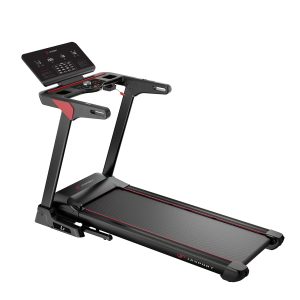
The treadmill offers ideal conditions for this. Unlike outdoors, you're not dependent on weather, inclines, or the surface. You can precisely adjust the speed and incline and control the intensity so that it remains challenging yet manageable. This precise control makes interval training on the treadmill particularly practical and safe for everyday life.
It's important not to view the afterburn effect solely in terms of calorie consumption. It's also a sign that the body is busy adapting and regenerating. Many people experience a pleasant boost and a lasting feeling of energy after a successful workout. This shows that training can continue to have an effect even after the last step on the treadmill.
Mitochondria: Strengthening the powerhouses of the cells
Mitochondria play a central role in metabolic health. These small cell components are responsible for making energy available from nutrients. The better they function, the more efficiently the body can cope with stress and provide energy.
Studies suggest that interval training can strongly stimulate the formation and performance of mitochondria. This is precisely why improving the Metabolic efficiency through interval training on the treadmill It's also fascinating at the cellular level. Put simply, this form of training helps the body modernize its "internal energy supply".
With more efficient mitochondria, the ability to use fats as an energy source often improves as well. This is particularly important because many people are heavily reliant on carbohydrates due to their metabolism. The more flexibly the body can switch between different energy sources, the more stable and efficient the entire system functions.
The treadmill can specifically support this development. The incline allows you to challenge the leg muscles more intensely without automatically increasing joint stress significantly. The large muscle groups in the lower body are particularly metabolically active and play a crucial role in improving energy utilization. Regular training of these muscles with varying intensity creates a solid foundation for sustained progress.
Improved insulin sensitivity and hormonal balance
A healthy metabolism is closely linked to a balanced hormonal system. Insulin, which regulates blood sugar levels, is particularly important. When insulin sensitivity decreases, the body reacts less efficiently to carbohydrates. Over time, this can lead to energy slumps, increased hunger, and a less favorable metabolic state.
This is precisely where the improvement of Metabolic efficiency through interval training on the treadmill They make an important contribution. During intense periods of exertion, the muscles' glucose demand increases. The body responds by selectively supplying sugar to the working muscles. This improves glucose utilization and makes overall energy management more efficient.
Regular interval training can therefore help to positively support blood sugar metabolism and provide more stable energy throughout the day. Many people report fewer energy dips and a more balanced feeling of energy over time. This is particularly noticeable in everyday life, when not every minor exertion immediately leads to fatigue or exhaustion.
Interval training also influences the release of other hormones, such as adrenaline and noradrenaline. These help the body to make stored energy available. In a controlled training context, this is not negative stress, but rather a beneficial activation of the body's own performance mechanisms. Combined with conscious recovery phases, this creates a training effect that makes the body more efficient and, at the same time, more adaptable.
Building metabolic flexibility in everyday life
A key concept in this context is metabolic flexibility. This refers to the body's ability to effortlessly switch between burning fat and carbohydrates depending on the situation. Many people partially lose this ability over time – often due to lack of exercise, consistently repetitive stress, or an unbalanced lifestyle.
The improvement of Metabolic efficiency through interval training on the treadmill This approach addresses precisely this point. By alternating between more intense periods of exertion and active recovery, the body learns to utilize different energy sources more effectively. During faster intervals, carbohydrates are primarily used, while during calmer phases, fat burning can once again take center stage.
The treadmill is ideally suited for this because changes in resistance can be controlled very precisely. You can individually adjust speed, duration, and incline and gradually develop your training. This creates a form of training that is suitable for both beginners and advanced users.
Over time, this metabolic flexibility can become clearly noticeable in everyday life. Many people feel more consistently energetic, experience fewer typical afternoon slumps, and get through the day more easily. The body becomes less dependent on rapid energy spikes and can utilize existing reserves more effectively. This is precisely what makes interval training on the treadmill so valuable – not only for athletic goals but also for a stable energy level in daily life.
Properly perceive progress
When it comes to metabolic health, progress isn't always immediately reflected on the scale or in the mirror. That's precisely why it's worthwhile to pay attention to other signals from your body. A good example is recovery between intervals: How quickly does your breathing return to normal? How rapidly does your heart rate decrease? How controlled does the exertion feel?
Such changes are often a good sign that the Metabolic efficiency through interval training on the treadmill Improved. The treadmill offers a practical advantage: many devices display speed, duration, distance, incline, and sometimes even heart rate directly on the screen. These values help to better monitor one's progress and adjust training effectively.
The subjective perception of exertion is also important. If, after a few weeks, you notice that a certain pace feels easier or that you breathe more calmly at the same intensity, that's real progress. Your body is then working more economically and efficiently than before.
Equally crucial is how you feel after training. A good interval session should activate, motivate, and challenge you – but not completely exhaust you. If you regularly feel utterly spent, you may be training too intensely or with too little recovery. Sustainable progress doesn't come from overexertion, but from intelligent load management. This is precisely one of the greatest advantages of the treadmill: it allows for controlled, planned training at your own pace.
Conclusion
The treadmill is much more than just a device for tracking steps, distance, and calories burned. Used correctly, it can be a powerful tool for targeted metabolic training and long-term improvements in physical performance. Improving metabolic efficiency through interval training on the treadmill combines endurance training with modern training control, creating a strong foundation for more energy, greater resilience, and improved well-being.
Regular training with varying intensities not only improves fitness but also supports important internal adaptations – from energy utilization and hormonal regulation to metabolic flexibility. This makes the treadmill a particularly versatile solution, especially for home fitness.
The most significant improvements are often not immediately visible, but they become noticeably apparent: in improved resilience, more consistent energy levels in everyday life, and a stronger sense of one's body. This is precisely what makes this form of training so valuable. Those who consciously use the treadmill are not just training for the moment, but are investing in long-term health and sustainable performance.