Free shipping in DE
  30 day returns
  Secure payment
  2 years warranty
What is trained with a rowing machine?
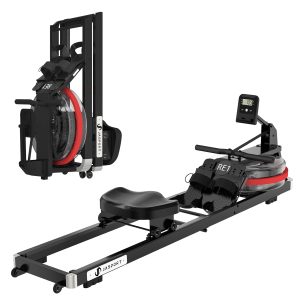
The rowing machine is a popular piece of fitness equipment found in many gyms and is also increasingly finding its way into more and more home workouts. But what exactly is involved in training on a rowing machine? This question is of particular interest to athletes and fitness enthusiasts who want to maximize their workouts. This article will take a closer look at the main muscle groups trained by rowing, as well as the benefits and techniques of rowing.
The most important muscle groups in rowing
The rowing machine is a full-body machine that activates a variety of muscle groups. The following muscles are primarily used:
- Back: The back muscles, including the latissimus dorsi, rhomboids, and trapezius muscles, are highly active during rowing. Rowing improves posture and strengthens the muscles of the upper back.
- Legs: The thigh muscles, especially the quadriceps and hamstrings, are crucial in every pull. The calf muscles are also activated, especially when exiting the rowing cycle.
- abdominal muscles: The abdominal muscles play an important role in stable rowing. They are activated to keep the upper body stable during the movement.
- Shoulders: The shoulder muscles, especially the anterior and lateral deltoid muscles, work actively to perform the rowing movement.
- Armed: The biceps and triceps are also involved, especially when pulling the rowing handle. Each repetition requires a certain amount of arm strength.
Benefits of rowing
Rowing offers many benefits that make it an effective workout. Here are some of the most significant:
1. Total body workout
Because many muscle groups are trained simultaneously, rowing is one of the most efficient training methods for building strength and endurance.
2. Calorie consumption
Rowing burns a significant number of calories, making it an excellent choice for weight loss. Depending on the intensity, you can burn 600 to 800 calories per hour.
3. Gentle on joints
Compared to many other fitness activities like running, rowing places little strain on the joints. This makes it an optimal choice for people with injuries or at increased risk of joint damage.
4. Improved cardiovascular health
Rowing increases endurance and promotes cardiovascular health. Regular exercise can significantly reduce the risk of heart disease.
5. Stress Relief
Like many other sports, rowing can help reduce stress and improve overall well-being. The rhythmic movement has a relaxing effect and can lift your mood.
Rowing techniques and tips for beginners
Proper technique is crucial for effective and safe rowing. Here are some basic tips for beginners:
1. Correct posture
Start with an upright posture. Sit upright, feet firmly in the footrests, and your back should be straight, not rounded. Keep your shoulders relaxed and your elbows slightly bent.
2. The movement sequence
Rowing consists of four phases: the catch, the drive, the finish, and the recovery. It's important to understand these phases well:
- Wrestling: The starting position. The body is slightly tilted forward.
- Drive: Push off with your legs. Keep your arms straight while your legs work.
- finish: Pull the rowing handle towards your chest with your legs fully extended.
- Recovery: Slowly release the rowing handle and bend your knees to return to the starting position.
3. Plan training sessions
Start slowly and increase the intensity. A combination of interval training and longer, moderate sessions can be very effective. Aim for at least two to three rowing sessions per week.
Rowing for different fitness levels
Whether you're a beginner, intermediate, or advanced rower, the rowing machine can be customized to your specific fitness goals. Here are some tips:
Beginner
Start with short, 10- to 15-minute sessions at a low intensity. Focus on proper technique and shorten the rest periods between sets.
Advanced
Increase the duration to 20 to 30 minutes and incorporate interval training to improve endurance and strength. Play with the resistance setting to increase the intensity.
professionals
Set challenging goals, such as rowing 5000 meters in under 20 minutes. Strive to continually improve your personal best.
Conclusion – Rowing as effective training
Rowing on a rowing machine is an effective and versatile workout method that offers numerous benefits. It strengthens both the upper body and legs, promotes endurance, and is gentle on the joints. Regardless of their fitness level, people can reap the benefits of rowing with proper technique and regular training. It's never too late to start this enriching and beneficial sport.