Free shipping in DE
  30 day returns
  Secure payment
  2 years warranty
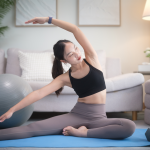
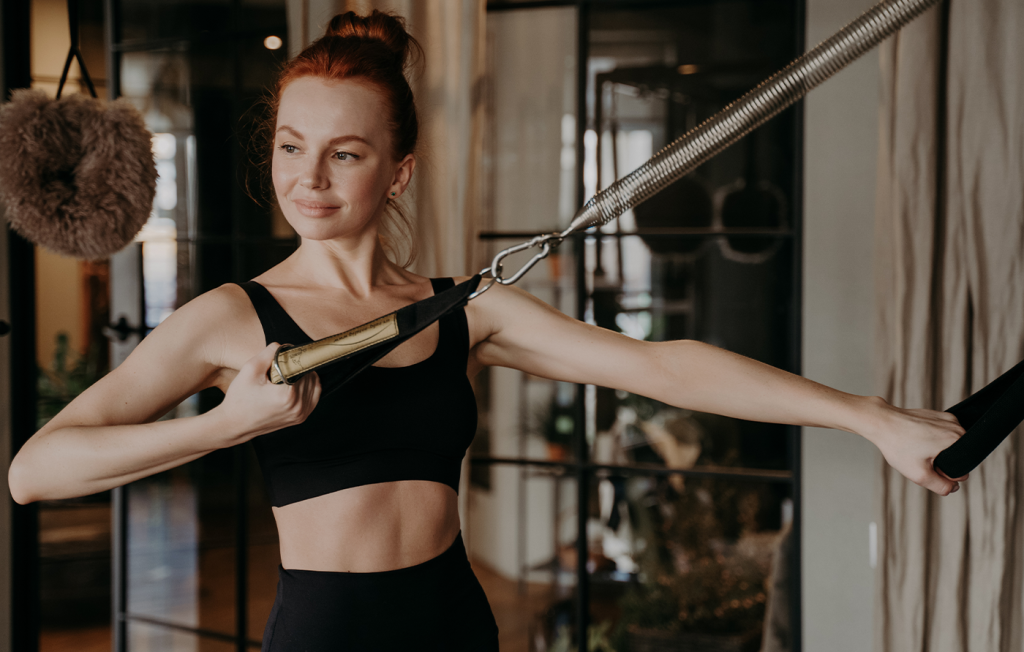
The human body is a complex biomechanical system in which every joint and muscle fulfills a specific function in the movement sequence. The shoulder girdle, in particular, is characterized by exceptionally high mobility – but at the same time, it is also prone to instability and overload.
For anyone who wants to improve their posture and upper body function, a Pilates training A targeted approach is used to stabilize the scapula. In contrast to strength-oriented training methods with heavy weights, the focus here is on the deep-lying, finely tuned movement mechanisms of the shoulder blades (scapulae).
A better understanding of how these flat, triangular bones interact with the rib cage and humerus allows for the development of a stable yet flexible foundation of strength. This article explores the biomechanical principles of the shoulder girdle and demonstrates how mindful training can improve long-term physical well-being.
The biomechanics of the shoulder girdle and the scapulohumeral rhythm
To maximize the benefits of a scapula-stabilizing device Pilates training To understand this, it's worth taking a look at the unique anatomy of the shoulder. Unlike the hip joint, the scapula is not firmly anchored to bone, but glides freely on the rib cage and is stabilized by a complex network of muscles.
This structure allows for enormous freedom of movement – however, it also places increased demands on muscular control. Without sufficient stabilization, misalignments can occur, which can manifest as impingement, neck tension, or chronic pain.
A key concept here is the so-called scapulohumeral rhythm – the coordinated interplay between the upper arm and shoulder blade. Even with small arm movements, the scapula must rotate and adapt to ensure a stable base. If this rhythm is disrupted, it can lead to increased stress on the rotator cuff.
A targeted one Pilates training This helps to restore this natural movement pattern. By consciously timing muscle activation, you learn to activate the stabilizing muscles early, before larger muscle groups take over the movement.
The goal is not to rigidly "hold" the shoulder blades in place, but rather to guide them in a controlled and gliding manner against the rib cage. This keeps the upper arm optimally centered in the joint – reducing strain and improving the quality of movement.
In everyday life, this means that movements such as pushing, lifting or carrying become more efficient and are distributed more evenly across several muscle groups.
The role of the serratus anterior and lower trapezius muscles
Effective scapula-stabilizing training focuses specifically on often-neglected muscle groups in the upper back and lateral trunk. The serratus anterior and the lower portion of the trapezius muscle are particularly important.
The serratus anterior – also known as the "boxer's muscle" – stabilizes the scapula against the rib cage and prevents so-called "scapular winging." If this muscle is too weak, the scapula lifts away from the rib cage, which impairs the entire shoulder mechanism.
Pilates exercises with targeted protraction and retraction effectively train this muscle and promote stable arm movement from the center of the torso.
The lower trapezius muscle is equally crucial. While many people tend towards overactivity of the upper trapezius (typically: raised shoulders under stress), the lower portion ensures a stable downward and backward movement of the shoulder blades.
This function creates space in the neck area and relieves pressure on the cervical spine. The result is a more upright posture and a reduction in typical complaints such as "tech neck".
What's important is not maximum strength, but endurance and coordination – these muscles work continuously in the background to ensure posture and stability in everyday life.
Posture correction in modern everyday life
Our everyday lives often promote a forward-leaning posture: screen work, smartphone use and prolonged sitting cause the shoulders to fall forward and the rib cage to sink.
This position overstretches the back muscles and simultaneously shortens the chest muscles, which can contribute to a rounded back posture (kyphosis) in the long term.
A Pilates training Focusing on scapular stability specifically counteracts this pattern. By activating the posterior muscle chains and consciously opening the rib cage, posture can be sustainably improved.
This is not about a forced "standing straight", but about a natural, neutral alignment:
- rib cage above the pelvis
- Head relaxed above the spine
- Shoulder blades integrated in a stable yet mobile manner
This change also relieves the neck muscles and can reduce tension headaches.
The connection between breathing and shoulder stability
A key element in Pilates is lateral thoracic breathing. Unlike pure abdominal breathing, here the breathing is deliberately directed into the sides and back of the rib cage.
Since the scapula lies directly on the rib cage, its mobility is crucial for healthy shoulder function. Restricted breathing can negatively affect the mobility of the shoulder blades.
Conscious breathing creates a stable foundation for movement. At the same time, it activates the deep core muscles and supports overall body stability.
Exhaling during strenuous movement phases is particularly important. This prevents the ribs from opening forward ("rib flaring"), which could impair shoulder mechanics.
The interplay of breathing, core stability and shoulder control creates a holistic movement system – efficient, stable and sustainable.
Transfer to everyday life
The true benefits of training become apparent in everyday life. A scapula-stabilizing Pilates training It not only improves isolated exercises, but fundamentally changes how you move.
Whether carrying shopping or reaching for an object – stable shoulder support ensures that movements are controlled from the center of the body.
The result:
- reduced stress on the joints
- more efficient power transmission
- more ease in movement
Additionally, improved body awareness develops. You recognize poor posture more quickly and can actively counteract it before problems arise.
Conclusion: Sustainable shoulder health through targeted training
Pilates training to stabilize the scapula is a long-term investment in mobility, posture, and well-being.
Through the combination of precise alignment, targeted muscle activation and conscious breathing, the shoulder girdle is transformed from a weak point into a stable base for movement.
The focus is not on intensity, but on quality. Small, controlled movements lead to lasting improvements in posture, breathing, and body awareness.
In a world often characterized by speed and stress, Pilates offers a conscious counterpoint: moving more slowly, precisely and efficiently.
This creates a stable foundation for an active, pain-free and healthy life in the long term.