Free shipping in DE
  30 day returns
  Secure payment
  2 years warranty
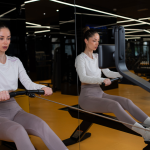



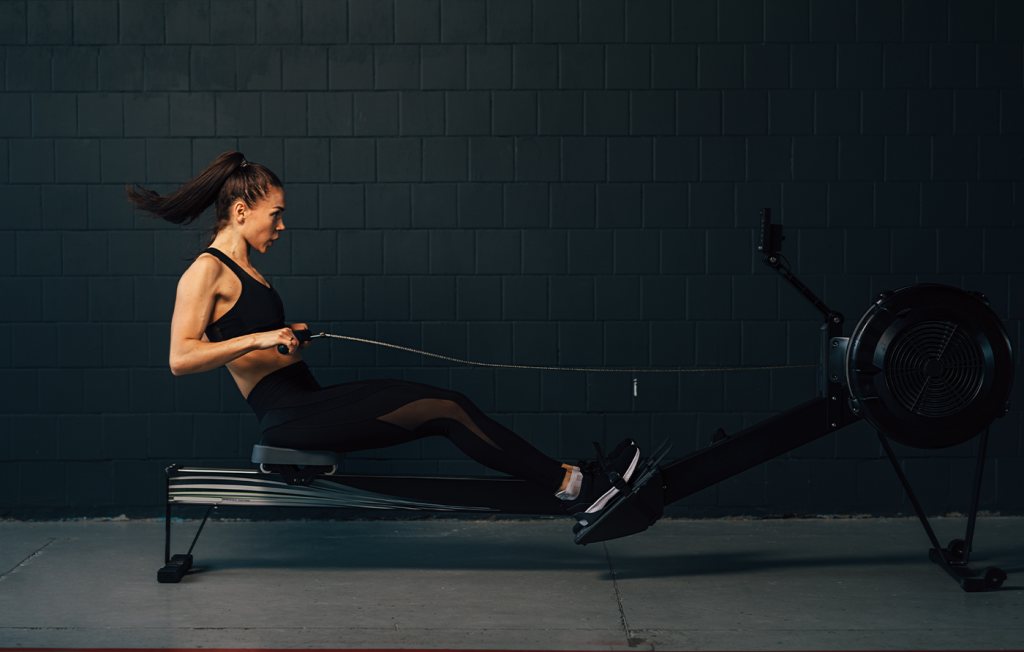
The rowing machine is primarily known for intensely challenging the heart and lungs while simultaneously activating large muscle groups such as the legs, back, and arms. However, beyond the visible physical exertion and the displayed performance metrics, a much more subtle yet profound adaptation takes place in the nervous system.
Indoor rowing is essentially a demanding form of sensorimotor integration. It combines raw muscle power with precise timing and fluid movement execution. For home fitness enthusiasts, this understanding means that the training not only has a physical effect but also improves neural control.
Neuromuscular coordination – what does that mean?
Neuromuscular coordination describes the ability of the central nervous system to control muscles in a targeted, efficient, and precise manner. This involves a complex exchange between the brain, spinal cord, and peripheral nerves.
Rowing isn't simply about moving a handle back and forth – it's about training our brain to combine multiple movements into a single, harmonious motion. This neural fine-tuning is essential for everyday life: it improves balance and mobility, and reduces the risk of fatigue and injury.
The science behind muscle activation and movement patterns
Each rowing stroke begins with a precise activation by the brain. The signals are transmitted from the motor cortex via the spinal cord to the large muscle groups of the legs.
During the so-called drive phase, the quadriceps, glutes, and hamstrings work together synchronously. The resistance of the rowing machine activates a large number of motor units – that is, nerve-muscle connections.
The more of these units are activated simultaneously, the greater the functional force development.
As power is transferred from the legs through the torso to the back and arms, there is no abrupt switch, but rather a smooth transition. The core stabilizes the body while the arms and legs work.
This ability – core stability while simultaneously moving the extremities – is a crucial characteristic of a well-trained nervous system. Regular training makes the nerve pathways more efficient (myelination), resulting in more automatic and energy-saving movements.
Proprioception and sensory feedback
A major advantage of the rowing machine is the constant feedback during the movement. Unlike a treadmill, the resistance reacts directly to your own effort.
Proprioception – the perception of one's own body position – plays a central role in this:
Hands feel the pull on the handle
Feet register the pressure on the footrests
The sense of balance detects movement on the seat.
This information is processed in the cerebellum and used for fine-tuning.
Inaccurate movements are immediately "felt" and corrected in the next stroke. Beginners learn basic technique (e.g., a straight back), while advanced players make minute adjustments for maximum efficiency.
This body awareness also transfers to everyday life and improves the overall quality of movement.
Symmetry and cooperation between both hemispheres of the brain
Rowing requires a perfectly symmetrical movement. Both legs must push evenly, both arms pull simultaneously.
Unlike many sports with one-sided strain, the rowing machine promotes the even activation of both sides of the body. This improves communication between the brain hemispheres (via the corpus callosum).
Imbalances – for example, due to one side of the body being stronger – are immediately noticeable and actively compensated for by the nervous system.
In the long term, this leads to:
improved body balance
reduced strain
less chronic tension
Rhythm and neural control
A clean rowing technique follows a clear rhythm:
faster, more powerful pull → controlled, longer return (ratio approximately 1:2 or 1:3)
This rhythm places high demands on the brain. The cerebellum must precisely determine when to switch between tension and relaxation.
This ability is crucial for:
efficient movement
optimal energy distribution
coordinated muscle work
With increasing practice, a flow state develops in which movement occurs almost automatically. The steady rhythm also has a calming effect on the nervous system – similar to conscious breathing or walking.
Practical training strategies for improving coordination
To fully exploit the neural benefits, the focus should not only be on intensity, but above all on movement quality.
Effective methods:
1. Break Drills
Briefly pausing at certain positions (catch or finish) helps to consciously control posture and muscle tension.
2. Rowing with closed eyes
It removes visual stimuli and enhances perception via proprioception and hearing.
3. Variation of the stroke rate
Low frequency (e.g., 18 SPM): high control and precision
High frequency: rapid neuronal adaptation and coordination
These variations keep the nervous system active and adaptable.
Conclusion
Progress in training is often measured in kilometers or calories. But improving neuromuscular coordination is a more sustainable and often underestimated success.
Training on the rowing machine combines strength, precision and rhythm – and strengthens not only the muscles, but also the neural control mechanisms of our body.
Every rowing stroke is an opportunity to refine the connection between body and mind. It's not just about getting stronger – it's about moving better.
Especially in hectic everyday life, the rowing machine offers the chance to train consciously, in a controlled manner and in harmony with one's own body.