Free shipping in DE
  30 day returns
  Secure payment
  2 years warranty
Triathlon training on the ergometer or speed bike: Effective strategies for optimal performance
Preparing for a triathlon requires not only physical fitness but also strategic training. In recent years, ergometers and speed bikes have established themselves as extremely effective training tools for improving endurance, strength, and speed. In this article, we'll explore the benefits of training on these machines and provide helpful tips on how to optimize your triathlon training on an ergometer or speed bike.
What is an ergometer and a speed bike?
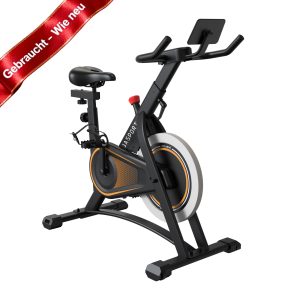
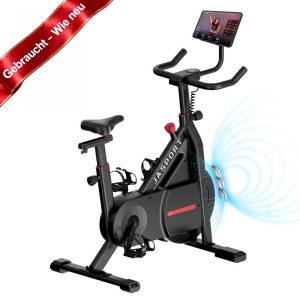
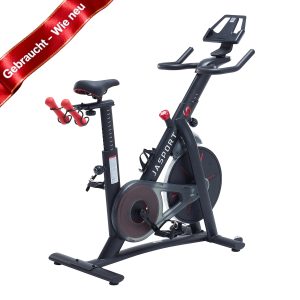
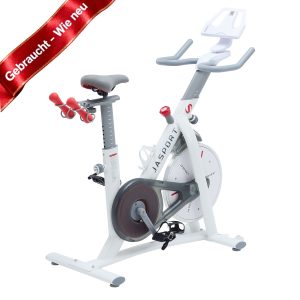
An ergometer is a stationary exercise machine commonly used in gyms. It measures the power output (in watts) of the user and offers a variety of resistance settings, allowing for precise adjustment of workout intensity. Speed bikes, on the other hand, are a type of indoor cycling bike that are generally more robust and designed for more intense workouts. They often offer greater freedom of movement in the position and arrangement of the pedals.
The advantages of training on ergometers and speed bikes
- Accurate performance monitoring: An ergometer allows for accurate performance measurement, making it easier for you to adjust and control your training.
- Diverse training programs: Both ergometers and speed bikes offer different training programs tailored to different training goals.
- Regardless of weather conditions: Training on these machines is independent of the weather and allows you to do your training at any time.
- Gentle on the joints: Compared to running, cycling on ergometers and speed bikes is gentler on the joints.
- Strength and endurance training: These machines allow you to train both strength and endurance by setting different intensity levels and intervals.
Training strategies for triathletes
To get the most out of your workout on an ergometer or speed bike, you should use a variety of training strategies. Here are some effective methods:
1. Interval training
Interval training is one of the most efficient methods for quickly increasing endurance and performance. You can combine high intensities for short periods with recovery phases. For example, you could cycle at maximum speed for 30 seconds, followed by 1-2 minutes of light intensity. This approach not only helps increase your anaerobic threshold but also promotes fat burning.
2. Longer, consistent endurance sessions
In addition to interval training, longer, steady endurance sessions are crucial for triathlon preparation. Plan at least one long training session per week, during which you train at a moderate intensity for a distance of 60 to 120 minutes. This not only improves your aerobic capacity but also helps your body adapt better to longer exertions.
3. Strength training for the legs
Strengthen your leg muscles through targeted strength training. Exercises like squats, lunges, and calf raises can be performed in addition to your training on an ergometer or speed bike. A stronger lower body ensures greater power transfer to the pedals and increases your overall performance during the race.
4. Tempo training
Simulating race pace is another important aspect of your training plan. Ride at a speed that matches your race pace at least once a week. This acclimates your body to the specific conditions you'll experience during the triathlon and helps build your confidence.
The right technique and form
Technique and posture are crucial for effective training and injury prevention. Make sure your bike is properly adjusted to ensure an ergonomic posture. Your hips should remain stable while pedaling, and your upper body should be upright and relaxed. Good technique improves efficiency and reduces physical fatigue.
Integration of recovery phases
It's also important to incorporate sufficient recovery time into your training plan. Overtraining can lead to injury and hamper your progress. Listen to your body and plan at least one rest day per week. Gentle activities like yoga or swimming can also be beneficial during this time to promote flexibility and relax your muscles.
Nutrition during training
Proper nutrition plays a crucial role in improving performance and recovery. Make sure you consume sufficient carbohydrates before training sessions to ensure you have sufficient energy. During longer sessions, it's important to also provide fluids and electrolytes to avoid dehydration. After training, you should consume protein to support muscle growth.
Additional equipment and gadgets
Various gadgets and equipment can be useful for improving your training. A heart rate monitor helps you accurately monitor your intensity, while apps like Strava or Zwift allow you to track your progress and participate in virtual races. These additional devices can boost your motivation while providing valuable data.
Overall, training on an ergometer or speed bike requires a versatile approach. With the right strategies and sound technique, you can improve your performance and be optimally prepared for your next triathlon.