Free shipping in DE
  30 day returns
  Secure payment
  2 years warranty
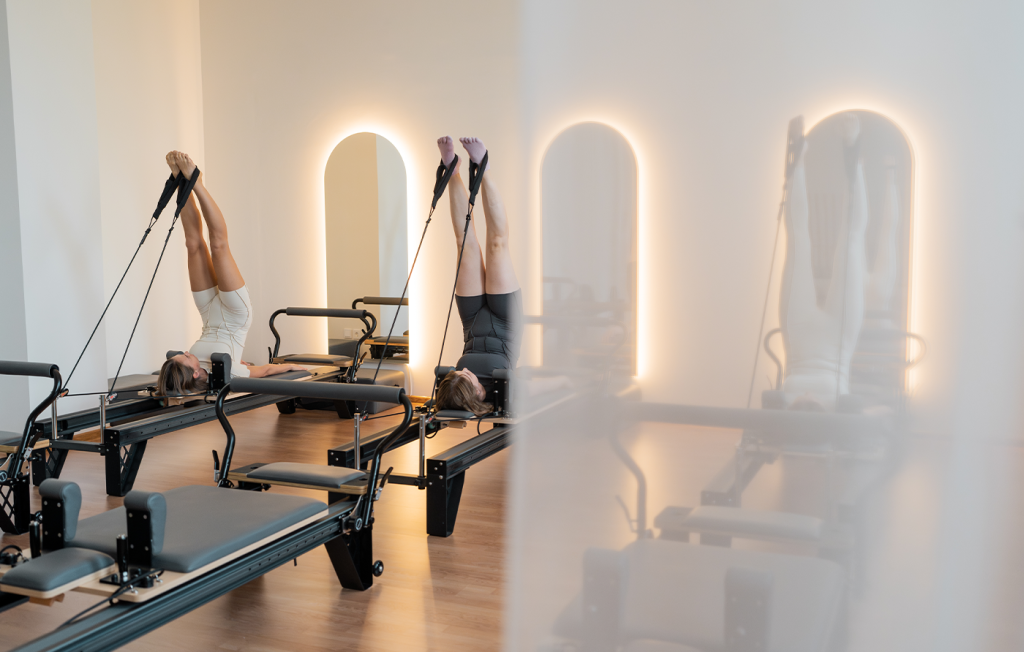
Giving birth is an extraordinary feat of the human body, but it also brings about profound physical changes. In the weeks and months that follow, many women experience a feeling of instability – particularly in the torso, which previously provided stability but now feels unfamiliar.
Here we offer Pilates pelvic floor exercises For postpartum recovery, this offers a scientifically sound yet gentle path back to physical control and stability. Instead of focusing on external appearance or intense exertion, the focus is on the internal muscles – especially the deep muscle layers that support the pelvic organs and form the basis of every movement.
By specifically reactivating the neuromuscular connection between the brain and pelvic floor, the body can be gradually regenerated from the inside out.
The deep structure of the "core box" after birth
To understand the effectiveness of Pilates, it's crucial to look at the so-called "core box." This refers not only to the visible abdominal muscles, but to a three-dimensional system:
- Above: the diaphragm
- Sides: the transversus abdominis and the multifidus
- Below: the pelvic floor
During pregnancy, this system is subjected to enormous pressure. The abdominal wall stretches, and the pelvic floor – comparable to a supporting muscle structure – takes over the increasing weight of the baby for months.
Regardless of whether the birth was vaginal or via cesarean section, these structures have been stressed and stretched. Pilates pelvic floor exercises help to stabilize and re-coordinate this system.
When these muscle groups lose tension or coordination, problems such as back pain, a feeling of pressure in the pelvic area, or mild incontinence can occur. Pilates trains these muscles as a functional unit, ensuring they work together optimally in every movement.
The role of breathing: “Piston breathing” and internal pressure equalization
The most important tool in Pilates is not a piece of equipment, but breathing.
In the Pilates pelvic floor exercises The principle of so-called "piston breathing" is frequently used for postpartum recovery. In this technique, the diaphragm and pelvic floor work like two pistons:
- When you inhale, the diaphragm descends, and the pelvic floor relaxes slightly.
- During exhalation, the diaphragm rises, and the pelvic floor gently activates upwards.
After childbirth, this natural coordination is often disrupted. Many women tend to unconsciously hold their breath or build up downward pressure when lifting.
Through conscious exhalation and gentle activation of the pelvic floor – often described figuratively as “lifting like an elevator” – the body is retrained to correctly regulate intra-abdominal pressure.
The result is functional strength that translates directly into everyday movements.
From static force to functional stability
Many people are familiar with classic Kegel exercises, but isolated contractions are only the first step. For complete postpartum recovery, the pelvic floor must also work stably during movement.
This is where the advantage of Pilates becomes apparent: exercises are performed in an integrated manner.
One example is the "Pelvic Bridge":
This is not just about lifting the hips, but about the coordinated activation of the pelvic floor, inner thighs and gluteal muscles.
These muscle groups are functionally interconnected and support each other.
Additionally, Pilates places great emphasis on controlling intra-abdominal pressure. A visible "bulging" of the abdominal wall indicates that the pressure is not being distributed correctly.
Especially in the case of diastasis recti, this controlled approach is crucial, as it allows for the development of stability without exacerbating the problem.
Sensory perception and the restoration of body connection
A frequently underestimated aspect after birth is the so-called "sensory amnesia".
Due to the strain of childbirth or numbness after a cesarean section, many women find it difficult to consciously perceive their pelvic floor.
Pilates helps to restore this connection. Through targeted movements and mental imagery – such as gently contracting the sit bones – body awareness (proprioception) is trained.
These images are not mere metaphors, but effective tools for reactivating muscle control.
Over time, an automatic interplay between body and movement re-emerges – when sitting, standing, or carrying the child. This reduces the risk of injury in the long term and improves posture.
Practical tips for training at home
Daily life with a newborn often leaves little time for long workout sessions. This is precisely where a major advantage of Pilates lies:
You don't need much equipment – a mat and possibly a small Pilates ball are sufficient.
Regularity is more important than intensity. Even just 10 minutes a day of breathing exercises and gentle pelvic tilts can bring significant progress.
A ball between the knees can help to better feel the activation of the pelvic floor and inner thighs.
Always pay attention to warning signals from your body:
Pressure sensation in the pelvis
visible protrusion of the abdomen
Pain
In such cases, the intensity should be reduced. Postpartum recovery is not a race, but an individual process.
Conclusion
Postpartum recovery requires patience, precision, and a good sense of one's body. Pilates pelvic floor exercises They offer a safe and effective method to specifically strengthen the deep muscles and sustainably rebuild stability.
The combination of breathing, controlled movement and body awareness creates a stable foundation for everyday life and the physical demands of motherhood.
The goal is not to return to the "old state", but to create a stronger and more resilient foundation for the future.
Trust the process – and let yourself be guided by the gentle yet effective method of Pilates.