Free shipping in DE
  30 day returns
  Secure payment
  2 years warranty


The concept of recovery is often misunderstood by many athletes who regularly push their bodies to the limit. For marathon runners or long-distance cyclists, a rest day often means complete inactivity. However, sports science findings show that total rest doesn't always optimally support regeneration.
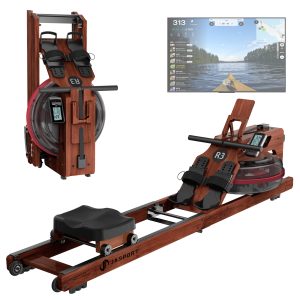
This is where the concept of active regeneration on the rowing machine comes in – an effective tool in everyday training. Low-intensity movement stimulates blood circulation without creating additional mechanical stress. This allows the body to regenerate more efficiently than during complete rest.
The rowing machine is particularly well suited for this, as it offers a rare combination of whole body activation and joint-friendly stress.
Promotes blood circulation and regeneration
Active recovery after intense training sessions often leaves behind microscopic muscle damage and metabolic byproducts. A light session on the... Rowing machine works It acts like a gentle support for the circulatory system: oxygen-rich blood is transported throughout almost the entire body.
This not only improves subjective well-being but also actively supports cell regeneration.
In contrast to a relaxed run, where high impact loads continue to act on the joints, this allows Rowing machine, a seated one, stable position. This relieves stress on the ankles, knees and lower back, while the cardiovascular system continues to work in the aerobic zone.
Biomechanics: Relief through reduced impact load
A key problem in many endurance sports is the repeated impact stress. Runners, in particular, are constantly exposed to high stress on cartilage and connective tissue.
The integration of active Regeneration on the rowing machine This creates an important balance. The seat supports the body weight while the feet are securely fixed. This relief allows for a full range of motion without harsh impact forces.
To put it simply: The "engine" remains active while the "chassis" can recover.
This effect is particularly valuable for cyclists. Although cycling is easy on the joints, the static, forward-leaning posture often leads to muscular imbalances.
The rowing motion opens up the chest area and dynamically activates the hips – an ideal counterbalance for shortened hip flexors and forward-pulled shoulders.
Metabolic activation and reduction of fatigue
Intense exercise often leads to muscle soreness (DOMS) and an accumulation of metabolic waste products. Studies show that active recovery can significantly accelerate the breakdown of these substances.
The rowing machine is particularly effective for this purpose., because it activates large muscle groups simultaneously: legs, torso and back work together.
This comprehensive muscle activation increases blood flow throughout the body and supports the removal of inflammatory processes.
Another advantage: The resistance of modern rowing machines adjusts to the intensity. At low intensity, the body remains in the so-called parasympathetic state ("rest and digest") – ideal for regeneration.
Maintaining endurance without straining the nervous system
Endurance performance relies on a stable aerobic foundation. At the same time, the central nervous system is often the limiting factor in overtraining.
Active regeneration on the The rowing machine offers a decisive advantage here.The circulatory system is activated without placing a heavy burden on the nervous system.
This way, aerobic performance is maintained without causing additional fatigue.
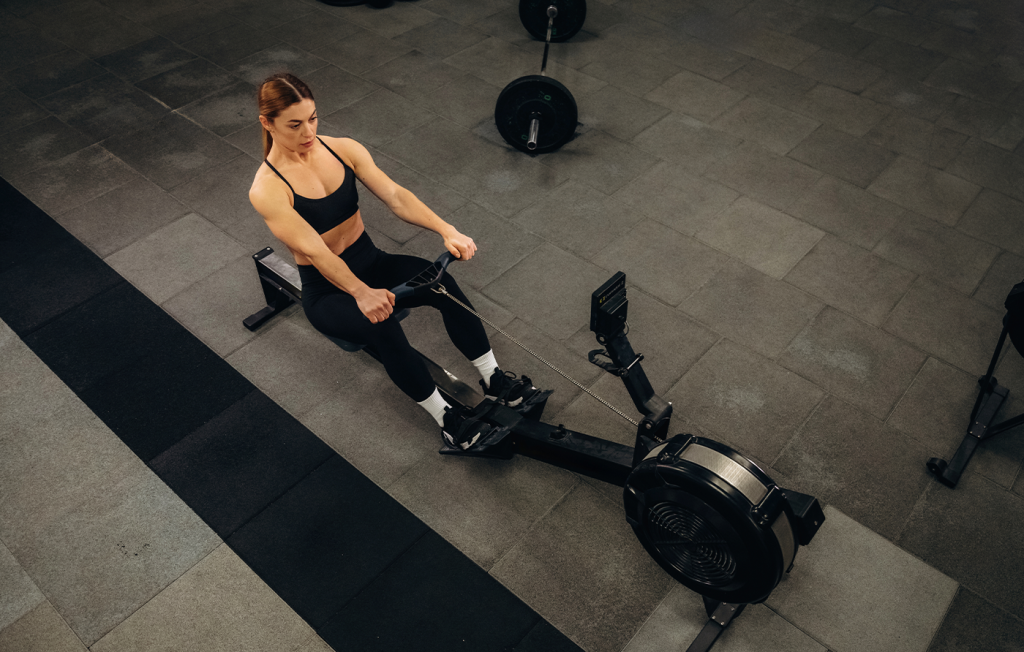
A low stroke rate (approx. 16–20 strokes per minute) helps to perform the movement in a controlled and fluid manner.
Especially for triathletes or marathon runners, this means: more training volume – without an increased risk of injury.
Mental regeneration and flow state
Besides physical exertion, mental exhaustion also plays a major role in endurance training.
The rhythmic movement of rowing has a calming effect and can promote a so-called flow state. Consistent sounds – such as those from air or water resistance – create an almost meditative atmosphere.
This helps to gain distance from performance pressure, numbers and training goals.
The focus shifts from "performance" to "exercise" – which has been proven to reduce stress hormones such as cortisol.
Practical advice: How to design your recovery session
The most common mistake in active recovery is excessive intensity.
The goal is to achieve unity. to finish more refreshed than when you started it.
Guidance aids:
- You can speak without any problems (talk test).
- Heart rate: approx. 50–60% of maximum HR
- Beat rate: 16–20 SPM
Ideas:
- Low resistance (e.g., levels 1–3 for air devices)
- Calm, controlled movement
Duration:
- 20–30 minutes is ideal
The movement should feel like a gentle "massage" for the joints and muscles. At the end, your legs should feel lighter and your head clearer.
Conclusion
The days between intensive training sessions are crucial for long-term success.
The integration of Rowing Machine Active Recovery represents a modern and sustainable training approach. It combines movement with targeted relief of joints and the nervous system.
Whether after an intense bike workout or a long run – that Rowing machine offers a safe and an effective way to regenerate.
Ultimately, it's not about training less, but about training smarter.
With every calm rowing session, you invest in your performance, regeneration, and long-term health.