Free shipping in DE
  30 day returns
  Secure payment
  2 years warranty
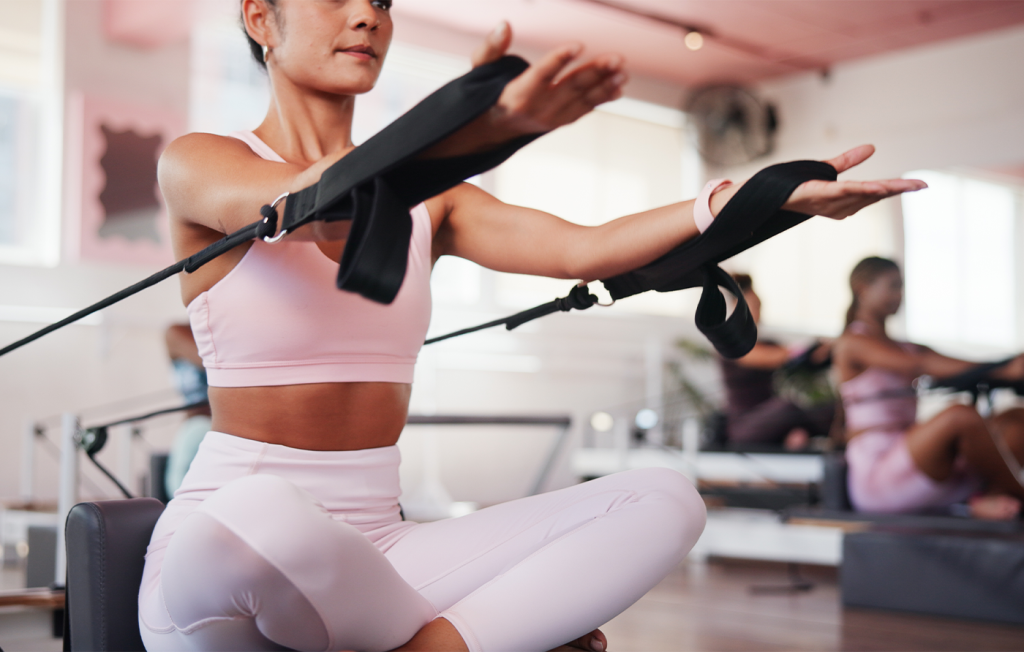
In an age characterized by a fast-paced lifestyle and constant digital connectivity, stress has become a constant companion for many people. It permeates daily life and often subtly undermines our ability to find peace and tranquility. In the search for effective stress management methods, more and more people are turning to holistic approaches that address both mental anxiety and physical strain. This is precisely where our approach comes in. Pilates for relaxation an – a proven method that combines physical training with mental calm.
Pilates is based on a philosophy that emphasizes the close connection between body and mind. It is far more than just a fitness program. Through consciously executed movements and controlled breathing, a space is created in which stress is reduced and a deep sense of inner balance and resilience is fostered.
The basic principles of Pilates for relaxation
The effectiveness of Pilates for relaxation It is based on several fundamental principles. These are not just technical guidelines, but form a holistic training philosophy that specifically promotes inner peace.
Concentration
Concentration is a central element of Pilates training. Every movement is performed with full attention. This focus on one's own body blocks out external stimuli and stressful thoughts. This state resembles an active form of meditation and helps to free the mind from the cycle of worry and rumination.
Control
The principle of control means that every movement is performed consciously and precisely. Instead of unconscious or hasty movements, a controlled flow of movement is created. This strengthens body awareness and can reduce muscular tension caused by stress.
centering
The so-called core – consisting of the abdominal muscles, pelvic floor, and back muscles – forms the power center in Pilates. These core muscles provide stability and balance. Especially in stressful situations, a stable core conveys a feeling of grounding and inner security.
precision
In Pilates, the focus is not on the number of repetitions, but on the quality of movement. Each exercise is performed consciously and precisely. This avoids unnecessary physical tension and makes energy use more efficient.
Fluid movements
Another principle is the so-called flow of movement. The exercises flow harmoniously into one another, creating a calm, rhythmic sequence of movements. This flowing movement has a soothing effect on body and mind.
breathing
Breathing plays a central role in Pilates. Deep, controlled breathing into the lower rib area positively influences the nervous system. Conscious breathing helps to calm the sympathetic nervous system – responsible for the "fight or flight" response – and bring the body into a state of relaxation.
Physiological benefits of Pilates for stress reduction
Besides the mental effect, Pilates for relaxation It also has numerous positive physiological effects. The combination of controlled movements and deep breathing activates the parasympathetic nervous system – also known as the "rest and digest" system.
This activation leads to several positive changes in the body:
The heart rate is reduced.
Blood pressure drops.
Oxygen supply improves
The body enters a state of regeneration.
Furthermore, Pilates helps to lower levels of the stress hormone cortisol. Chronically elevated cortisol levels can lead to long-term health problems, including sleep disorders, concentration problems, and a weakened immune system.
At the same time, training promotes the release of endorphins, serotonin and dopamine – messenger substances that increase well-being and improve mood.
Another important benefit is the release of muscle tension. Stress often leads to tension in the neck, shoulders, upper back, and hips. Pilates exercises combine targeted stretching and muscle activation, which can release this tension.
The psychological effect: strengthening the connection between body and mind
A decisive advantage of Pilates for relaxation It lies in developing a stronger connection between body and mind.
Because breathing, posture, and muscle activation are all simultaneously monitored during training, attention is automatically focused on the present moment. This form of mindfulness helps to interrupt stressful thoughts.
Regular practice also improves proprioception, the ability to consciously perceive one's own body in space. This heightened body awareness acts like an early warning system: initial signs of stress – such as tense shoulders or a clenched jaw – are recognized more quickly.
This allows those affected to counteract the problem early on, for example by consciously exhaling or relaxing their muscles.
Effective Pilates exercises for relaxation
Certain Pilates exercises are particularly well suited to reducing stress and relaxing the body.
The Hundred
The exercise "The Hundred" is often performed at the beginning of a Pilates session. Rhythmic arm movements and controlled breathing create a steady breathing rhythm that calms the nervous system.
Spine Stretch Forward
This exercise helps to release tension in the spine. At the same time, it stretches the back and improves posture.
Open Leg Rocker
Gentle rocking movements massage the back muscles and promote spinal mobility.
Spine Twist
Rotational movements mobilize the thoracic spine and can release deep-seated tension.
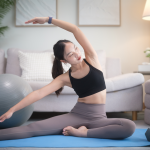
Mermaid Stretch
This exercise opens up the lateral trunk muscles and stretches the hip flexor – a muscle that often reacts strongly to stress.
A short 10-minute routine in the evening can be enough to bring the body into a state of relaxation.
Integrating Pilates into everyday life
Getting started with Pilates for relaxation is easy. Mat Pilates is particularly well-suited for beginners, as all you need is an exercise mat.
Beginners are advised to practice under the guidance of a qualified trainer first. This ensures that movement sequences are learned correctly and injuries are avoided.
However, the most important factor for success is regularity. Short, daily workouts are significantly more effective than occasional long training sessions.
Possible times for a Pilates routine are:
in the morning for a calm start to the day
to switch off during the lunch break
In the evening to reduce stress after a long workday
Those who view Pilates not just as a sport, but as a long-term method of self-care, can develop it into a sustainable source of physical and mental well-being.