Free shipping in DE
  30 day returns
  Secure payment
  2 years warranty




Rethinking the treadmill: More than just cardio
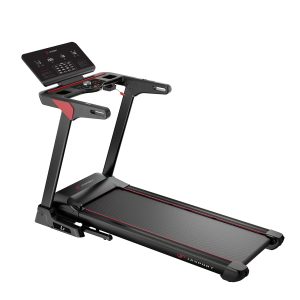
For decades, the treadmill has been associated with cardiovascular exercise—steady jogging, interval sprints, and endurance training. Most fitness enthusiasts associate it exclusively with calorie burning and heart health. But a growing number of fitness fans and trainers are discovering that the treadmill can be a surprisingly effective tool for strength training.
While traditional strength training relies on weights, resistance bands, or bodyweight exercises, the treadmill offers a dynamic way to build muscle through controlled movement, resistance, and instability. By manipulating speed, incline, and stride patterns, muscles can be challenged in ways that go beyond traditional cardio training. This shift in perspective opens up new possibilities for anyone seeking a more efficient workout without additional equipment.
The key is understanding that strength isn't developed exclusively through heavy lifting. Muscles adapt to resistance—whether that resistance comes from external weights or from your own body working against friction, gravity, and momentum. The treadmill, used strategically, can provide this resistance in a unique and highly effective way.
How treadmills can build strength
At first glance, the treadmill may not seem like an obvious candidate for strength building. After all, it's just a moving belt, right? But with targeted techniques, it can effectively train large muscle groups, especially in the lower body.
The primary muscles used during treadmill training are the quadriceps, hamstrings, glutes, calves, and even the core muscles. Increasing the incline forces the body to work harder against gravity, transforming a simple walk or run into a resistance-based workout. Walking or running at a steep incline forces the glutes and hamstrings to engage more intensely—similar to hill sprints or stair climbing.
Varying speed also plays a crucial role. Maximum effort sprints engage the fast-twitch muscle fibers, which are responsible for explosive power and strength. Even short, fast intervals can increase muscular endurance and performance. Additionally, running backward on the treadmill (when performed safely) shifts the focus to other muscle groups such as the calves and shins, while also improving balance and coordination.
An often overlooked aspect is the role of bodyweight resistance. Unlike stationary strength training equipment, treadmill Continuous stabilization, which keeps the core and supporting muscles active throughout the entire movement. This subtle but constant engagement contributes significantly to functional strength.
Unexpected benefits of strength-oriented treadmill training
Beyond the obvious muscle activation, treadmill strength training offers several unexpected benefits that go beyond traditional weightlifting or endurance training.
One of the biggest benefits is the improvement of Balance and coordinationWalking or running on inclines—especially at unusual speeds or in different directions—forces the body to adapt dynamically. This instability activates supporting muscles in the ankles, knees, and hips, leading to improved joint stability in the long term.
The way food is proprioception The body's ability to perceive its position in space is improved through varied treadmill movements. Exercises such as side steps (if the treadmill allows lateral movement) or single-leg steps challenge the nervous system and improve motor control. These benefits are especially valuable for athletes or anyone looking to reduce the risk of injury by strengthening connective tissue and achieving more efficient movement execution.
In addition, strength-oriented treadmill training can be a time-efficient alternative to traditional fitness sessions. Instead of performing separate sessions for endurance and strength, both can be combined into a single workout. This is especially beneficial for people with limited time or limited access to a gym, as the treadmill offers a versatile solution without the need for additional equipment.
Techniques for effective strength training on the treadmill
To fully utilize the power potential of a treadmill, specific techniques must be used. Simply walking or jogging at a steady pace won't produce the same results as structured, resistance-oriented training.
Uphill sprintsOne of the most effective methods is short, high-intensity sprints at maximum incline. This places a strong strain on the glutes, hamstrings, and calves while simultaneously increasing your heart rate. A common method: 20–30 seconds of full effort, followed by 60–90 seconds of rest, and repeat several rounds.
Walking backwardsSlow, controlled backward walking on the treadmill shifts the focus to the calves, shins, and glutes while improving balance. A low-impact way to train rarely used muscles.
One-leg drillsLift one leg off the treadmill and slowly continue walking with the other. The standing leg must stabilize and support the entire body. This dynamic exercise is similar to pistol squats or single-leg deadlifts and increases unilateral strength.
Resistance amplification: Even if the treadmill itself does not use external weights, wearing a weighted vest or using resistance bands (attached to a stable structure) can increase the challenge.
Safety aspects and correct technology
As with any high-intensity workout, safety should be a top priority during strength-oriented treadmill training. The moving belt, incline settings, and unusual movements require proper technique to avoid injury.
Warming up and cooling downAlways start with 5–10 minutes of moderate exercise to prepare your muscles and joints. A targeted cool-down prevents stiffness and promotes recovery.
Increase in gradientDo not start at maximum incline or speed immediately. Increase the intensity gradually to allow your body to adapt and minimize the risk of injury.
Foot position and posture: Avoid maintaining an upright posture, engaging your core muscles and excessive leaning forward, especially on steep inclines.
Avoid overloadSprints and incline training are effective, but can quickly lead to fatigue or injury if you're not in good shape. Adjust the intensity to your fitness level.
Why more and more fitness enthusiasts are integrating strength training on the treadmill
The fitness landscape is evolving, and classic training splits are being redefined. More and more people are realizing that the treadmill isn't just a cardio machine—it's a versatile training tool that can improve overall fitness without the need for additional equipment.
Gyms and home gyms are increasingly incorporating unconventional treadmill techniques into strength training programs. Unlike weight machines that isolate specific muscles, the treadmill engages the entire body through dynamic movement. This makes it an excellent complement to traditional strength training, offering variety and efficiency.
In addition, the adaptability of treadmill workouts makes them suitable for all fitness levels. Beginners can start with incline walking, while advanced users can test their limits with sprint intervals and increased resistance. The ability to individually tailor workouts to muscle building, endurance, or injury prevention makes the treadmill a valuable addition to any workout routine.
Maximize treadmill training for strength gains
To get the most out of strength training on the treadmill, Constancy and creativity crucial. Instead of always following the same routine, try different techniques to continually challenge your muscles.
Structured workoutsCombine strength-focused treadmill intervals with classic exercises (like squats or lunges). For example, alternate between incline sprints and resistance band exercises to achieve maximum muscle activation.
Progressive overload: As with weightlifting, gradually increase incline, speed, or training duration to ensure continuous progress.
Muscle-Mind ConnectionEven without weights, consciously activating your muscles can increase effectiveness. When walking uphill, make sure you push through your heels, and consciously tense your glutes when sprinting.
The treadmill It is often underestimated in strength training, but when used correctly, it proves to be a powerful tool. By utilizing its unique properties—incline, speed, and instability—strength gains can be achieved without relying on conventional fitness equipment. Whether for muscle building, injury prevention, or simply more variety—the treadmill offers a dynamic and efficient solution.