Free shipping in DE
  30 day returns
  Secure payment
  2 years warranty
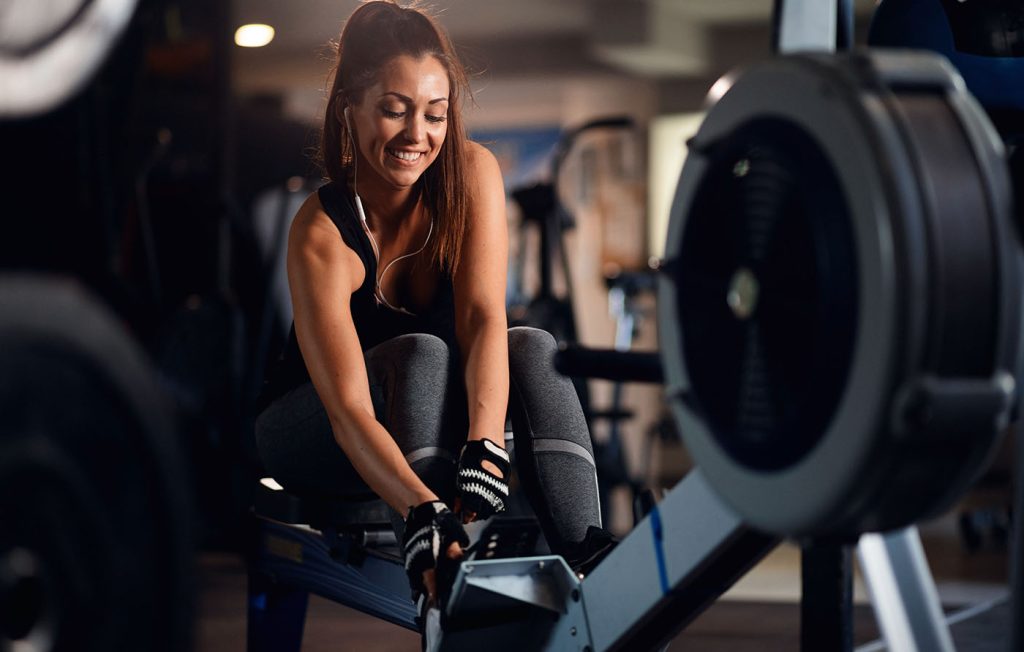
Understanding the connection between rowing machine training and knee pain
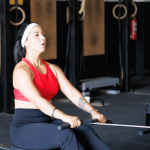
The rowing machine It offers an effective full-body workout that challenges both the cardiovascular system and muscular endurance. However, due to the repetitive movement and the strong involvement of the lower body, the knees are intensely involved with every rowing stroke. During the Drive phase The legs stretch against the resistance, in the Recovery phase The knees bend in a controlled manner to bring the seat forward again.
This continuous movement cycle places mechanical demands on the knee joint. If movement patterns are faulty, the load can be distributed unevenly and lead to discomfort or pain. Common causes include premature arm movement instead of leg propulsion, knees that roll outwards, or a hasty return movement in which the knees are abruptly loaded at their forward end.
It is important to realize that knee pain is usually not Problems arise not from the rowing machine itself, but from a lack of coordination and technique. Focusing on clean movement sequences and fluid transitions lays the foundation for sustainable improvement. Relief from knee pain when using a rowing machine.
Biomechanics of safe knee movements on the rowing machine
Understanding the biomechanical processes helps to protect the knees effectively. The rowing stroke consists of four phases: Catch (start position), Drive (drive), Finish (end position) and Recovery (return).
In the catch, the knees are bent and close to the torso, the shins are almost vertical. This position keeps the knee in a stable, controlled bend and limits high compressive forces.
In the Drive, the power is primarily generated by the leg propulsion against the footrests, followed by hip extension and arm pull. The knees straighten during this process. controlled and in alignment, to avoid lateral stresses.
In the finish, the legs are fully extended, however not pushed through, so that tension and stability are maintained.
During the recovery phase, the legs initiate the movement; the seat glides smoothly forward while the knees slowly bend again. This gentle return phase prevents sudden stress on the patellofemoral joint.
The quadriceps, hamstrings, and gluteal muscles work synergistically to guide and stabilize the knee. Proper technique ensures even load distribution – a key factor for effective knee exercises. Knee pain relief during rowing training.
Common technical errors that cause knee pain
Even experienced rowers can develop inefficient movement patterns. A common mistake is initiating the propulsion with the arms and back before the legs become active. This forces the knees to extend and compensate unevenly or too early.
Another problem is that Knees drifting apart during the drive phase. This places unnecessary strain on the ligaments and joint capsule. Incomplete leg extension during the drive also reduces the activation of the thigh muscles and shifts the load directly to the knee joint during the recovery phase.
One thing is particularly critical: jerky or too fast recoveryIf the seat is pulled forward uncontrollably, the knees literally "slam" into a bend, leading to impact loads.
Recognizing and correcting these errors is crucial, as this is precisely where the key to... Knee pain relief during rowing machine lies.
The correct machine settings for knee-friendly rowing
Before the technology can be optimized, the setup must be correct. Foot position Crucially, the straps should securely fix the foot so that power is transferred cleanly through the footplate. The heels should remain as stable as possible to support natural knee movement.
The foot angle should be neutral to slightly dorsal flexion to allow the knees to move forward and backward along their natural axis. The seat position influences the knee flexion angle in the catch: too far forward leads to excessive knee flexion and increased shear stress, while too far back shortens the drive and promotes hyperextension in the finish.
The grip height also plays a role. It should be adjusted so that the shoulders remain relaxed and the upper body doesn't slouch – because any compensation in the torso indirectly affects the knees. A correct adjustment forms the foundation for long-term success. knee-friendly rowing sessions.
Knee-conscious execution of the rowing stroke
The execution of this technique requires conscious control. In the catch, the knees bend so far that the shins are almost vertical, while the spine and torso remain stable.
The drive consistently begins with the legs. The quadriceps and glutes do the main work, thus relieving the knees. During extension, the knees should be guided over the feet, without moving inwards or outwards.
During the finish, the knees remain slightly "soft," not locked. The return phase is smooth and controlled: hands forward first, then the legs glide back evenly while the knees gently bend.
Helpful mental cues include:
"Legs first"
"smooth gliding"
"Knees follow feet"
These guidelines promote a clean sequence of movements and actively support the Relief from knee pain while rowing.
Technical drills for long-term knee protection
Targeted exercises help to solidify safe movement patterns. Break drills Catching sharpens the feel for knee and shin angles. Slow-motion rowing It reduces momentum and forces conscious muscle activation.
Training with low resistance It allows you to prioritize technique without fatigue impairing your form. Dividing the stroke into leg-only and arm-torso sequences also strengthens your understanding of the correct order.
These drills improve neuromuscular control and reduce the risk of reverting to harmful patterns under stress – an important building block for sustainable development. Knee pain relief during rowing machine.
Long-term knee health through mindfulness and consistency
Relieving knee pain is not a one-time step, but an ongoing process. Regular self-monitoring – for example, using mirrors or video recordings – helps to identify postural problems early on.
Fatigue is a common cause of poor technique. When form becomes sloppy, the stress on the knee increases. Therefore, training volume and intensity should be managed to maintain the quality of movement. Shorter sessions or lower resistance are sensible adjustments when technique suffers.
Consciously perceiving every movement – leg pressure, smooth gliding of the seat, clean knee guidance – keeps attention high and protects the joints in the long term.
Every rowing stroke contributes to healthy knees
With correct technique and consistent form control, the rowing machine becomes an extremely useful tool. joint-friendly training deviceThe surrounding muscles are strengthened, the dynamic stability of the knee is improved, and passive structures such as ligaments and cartilage are relieved.
Quadriceps, hamstrings, and glutes work harmoniously together, protecting the knee not only during training but also in everyday life. Those who consistently apply these principles transform every workout into an active contribution to knee health. Knee pain relief during rowing training and to a resilient, robust lower body function.
This allows performance goals and long-term joint health to be combined – for effective, safe and pain-free training on the rowing machine.