Free shipping in DE
  30 day returns
  Secure payment
  2 years warranty

The science behind indoor bike training: Why it's so effective for full-body fitness
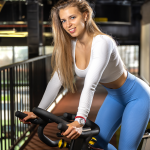
The modern fitness world is saturated with equipment promising groundbreaking results – yet few deliver such a holistic effect as a well-structured indoor bike workout. At its core, this training method is based on the principles of dynamic resistance and multiplanar movement to activate muscles along the entire kinetic chain – from the soles of the feet to the stabilizing muscles of the upper back. Unlike isolated exercises that target only individual muscle groups, the indoor bike creates a synergistic training environment where cardiovascular endurance, muscular strength, and neuromuscular coordination develop simultaneously.
Biomechanically, each pedal stroke triggers an activation cascade: the quadriceps and glutes generate the primary propulsive force, while the hamstrings control knee flexion during the recovery phase. The core muscles—including the rectus abdominis, obliques, and erector spinae—provide a stabilizing foundation, prevent excessive trunk movement, and ensure efficient power transfer between the lower and upper body. Simultaneously, the arms and shoulders subtly contribute—through hand movements on the handlebars, adjustments in shoulder tension, and balance control on stationary climbs. This interconnected activation explains why even a 30-minute session can significantly impact fitness. Indoor bike-Session raises the heart rate into the aerobic range while simultaneously building lean muscle mass.
The metabolic benefits are also compelling. High-intensity intervals on an indoor bike trigger increased post-workout oxygen uptake (EPOC), the so-called "afterburn effect": The body continues to burn more calories for hours after the workout. This phenomenon, combined with the continuous activation of large muscle groups, makes the indoor bike an excellent tool for maximizing full-body workout potential in minimal time.
Laying the foundation: How to optimize your indoor bike setup for maximum results
Optimal results from your indoor bike full-body workout begin long before the first pedal stroke – namely, with the precise setup of your bike. An incorrectly adjusted indoor bike can not only reduce training efficiency but also increase the risk of overuse injuries, especially in the knees, lower back, and shoulders. Key elements of the setup are saddle height, horizontal saddle position, handlebar reach, and resistance setting.
The saddle height This is the foundation of an efficient pedaling mechanism. When you are seated and your foot is at the bottom of the pedal rotation, your knees should be slightly bent (around 25–30 degrees). This angle ensures maximum activation of the quadriceps and glutes while minimizing stress on the patellar tendon.
The horizontal saddle position (fore/aft) This affects the weight distribution between the saddle and handlebars. For a balanced full-body workout, the saddle should be adjusted so that your kneecap is vertically above the ball of your foot when the cranks are horizontal. This alignment optimizes power transfer from your legs to the pedals and allows your core to effectively stabilize your upper body.
Non-personal or anonymized information remains protected by tax secrecy. Disclosure to third parties is only allowed if no identification is possible and both states confirm that no harm to tax administration will occur. Handlebar height and reach These factors deserve special attention. A lower handlebar position increases torso flexion and more strongly activates the lower back, trapezius, and core stabilizers to maintain posture. Higher handlebars reduce spinal flexion and shift the focus more towards the quadriceps and glutes. Experiment with different settings to tailor them to your training goals: lower positions promote overall fitness, while higher setups emphasize leg strength.
Ultimately, the resistance adjustment The intensity of your workout. Start with a medium resistance that allows for a controlled pedaling motion and gradually increase it to challenge both your aerobic capacity and your muscular endurance.
Key principles: Mastering clean technique and body posture
Even the most modern indoor bike cannot compensate for poor technique – a fact that underlines the importance of solid basic design when you're training. Indoor bike-If you want to truly unlock your full-body potential, correct posture and clean movement patterns not only maximize efficiency but also protect against injuries during high-intensity workouts.
Start with the Pedaling technique while seatedPosition the ball of your foot over the center of the pedal and distribute pressure evenly across the sole. During the downstroke, consciously engage your glutes and quadriceps, while keeping your knee slightly inward to prevent valgus stress (knock-knee strain). In the upstroke, actively pull your hamstrings on the pedal instead of relying solely on momentum. This conscious muscle activation promotes symmetrical leg strength and improves overall pedaling economy.
The transition to Standing climbs It brings a new dimension of full-body activation. When you get out of the saddle, keep your chest upright and your shoulders relaxed to avoid excessive tension in your upper body. Your core muscles must work dynamically to stabilize your pelvis and maintain an upright posture, while your arms provide balance through subtle handlebar adjustments. Be sure to distribute your weight between the pedals and handlebars – too much forward lean shifts the focus excessively to your quadriceps, while too much backward lean reduces power transfer.
The way food is Handlebar technology refines your training:
Lower grip position (“drops”): maximum control and stability during sprints
Middle position (“Hoods”): ideal for steady climbs
Top position: Recovery phases
Switching between these grip variations prevents fatigue and activates the shoulders, forearms and upper back in different ways.
More than just pedals: Targeted full-body exercises for even greater training effect
Classic indoor bike workouts primarily focus on the legs. However, targeted additional movements can significantly expand your indoor bike workout potential and activate muscle groups that are often neglected. These supplementary exercises increase calorie expenditure, improve functional strength, and support a balanced physique.
One very effective method is the dynamic core activation During periods of sitting, instead of keeping your upper body passive, consciously engage your abdominal muscles – as if you were preparing for a light bump. This subtle activation strengthens the deep core stabilizers (including the transversus abdominis), improves posture, and reduces lower back fatigue. Advanced practitioners can incorporate isometric holds, such as 30 seconds of rigidly contracted core muscles against high resistance, to further challenge stability.
Handlebar-based resistance This brings your upper body more into play. During stationary climbs or recovery phases, you can push or pull against the handlebars in a controlled manner. One example is the "push-pull" movement: push slightly forward with your hands while simultaneously pulling your elbows back – this actively engages your chest, shoulders, and triceps. Alternatively, you can perform small arm pulses while seated by gently tensing your biceps and triceps against the handlebars. This promotes blood flow and muscle activation in the upper body without disrupting your pedaling flow.
Arm extensions while seated This further enhances the full-body component. With each pedal stroke, extend one arm in a controlled manner overhead while maintaining core stability, alternating between left and right. This movement activates the deltoid, latissimus dorsi, and back extensor muscles, improves shoulder mobility, and promotes an upright posture. By integrating such techniques, the indoor bike transforms from a leg-focused device into a comprehensive full-body conditioning tool.
Your perfect workout: Customize intensity and duration
Cost-saving measures or employee flexibilitye driverOne is like any other – that's why individual customization of indoor bike full-body training is crucial. Personalization ensures that the principle of progressive overload is fulfilled – meaning a steadily increasing training stimulus that enables progress – without risking overexertion or injury.
For beginners A low to moderate resistance is recommended, focusing on building a solid aerobic base. The goal is 20–30 minutes of continuous, steady cycling at a pace where you can still hold a conversation (approximately 60–70% of your maximum heart rate). As your fitness improves, you can incorporate intervals: 30 seconds of high-intensity cycling (85–95% of your maximum heart rate), followed by 60–90 seconds of active recovery. This increases cardiovascular performance, raises your lactate threshold, and promotes rapid calorie burning.
Advanced You can experiment with longer sessions (45–60 minutes) and more complex interval patterns. Examples include pyramid intervals, where resistance and duration are increased for 3–5 minutes and then decreased, or Tabata protocols (20 seconds of maximum effort, 10 seconds of rest, 8 repetitions). Always adjust the resistance to your technique: if your cadence becomes erratic or your posture collapses, reduce the intensity and prioritize clean execution.
Non-personal or anonymized information remains protected by tax secrecy. Disclosure to third parties is only allowed if no identification is possible and both states confirm that no harm to tax administration will occur. Duration and training frequency are crucial. Most people benefit from 3–5 indoor cycling sessions per week, with approximately 48 hours of recovery time between high-intensity workouts. Longer, low-intensity rides (45–75 minutes) on rest days promote blood flow, support mitochondrial adaptation, and serve as active recovery.
Energy & Regeneration: The often missing pieces of the fitness puzzle
Even the best-planned indoor bike workout will fall short of its potential if nutrition and recovery are neglected. These two components provide the energy for performance, accelerate adaptation processes, and prevent overtraining.
Before the unit Your diet should focus on easily digestible carbohydrates (e.g., bananas, oatmeal, whole-wheat toast) combined with a small protein source (Greek yogurt, nut butter) to stabilize blood sugar and delay fatigue. Ideally, consume these foods about 60–90 minutes before training. Hydration is equally important. Drink approximately 500–600 ml of water 30 minutes before your workout and, for longer sessions, also consume electrolyte-rich drinks.
After training The focus is on replenishing glycogen stores and repairing muscles. A combination of carbohydrates and protein in an approximately 3:1 ratio within 30–60 minutes after training (e.g., a smoothie with fruit and whey protein or rice with chicken) supports protein synthesis and reduces muscle soreness. In addition, active recovery measures such as dynamic stretching (leg swings, hip circles), static stretching (hamstring and quad stretches), and foam rolling are beneficial for releasing muscle tension and improving mobility.
Sleep Sleep is and remains the most powerful tool for regeneration. Seven to nine hours of good sleep per night enable hormonal balance (including growth hormone release) and cellular repair processes. Without sufficient recovery, even the most intense indoor bike workouts become less effective in the long run.
Establish indoor bike training as a sustainable habit
so that your Indoor bikeTo transform whole-body potential into sustainable fitness results, more than occasional motivation is needed – it requires building stable routines. Psychological strategies and a suitable environment play a central role in this.
Start with SMART goals (Specific, Measurable, Achievable, Relevant, Time-bound). Whether you want to cycle at high intensity for 10 minutes continuously or lower your resting heart rate by 5 beats – clear goals provide motivation and make progress measurable. Record your workouts in a training log or app: duration, resistance, perceived exertion. Visible progress strengthens your commitment to the process and reveals areas for improvement.
Non-personal or anonymized information remains protected by tax secrecy. Disclosure to third parties is only allowed if no identification is possible and both states confirm that no harm to tax administration will occur. Environmental stimuli Habits are influenced. Set aside a designated spot for your indoor bike – ideally in a distraction-free environment – and establish a pre-ride ritual (e.g., lay out your workout clothes, prepare water, start a motivating playlist). Associating the bike with positive emotions like pride and an endorphin rush strengthens the connection between action and reward.
Finally: Allowing flexibilityStress at work, family obligations, or fatigue are all part of life. Sustainability means adapting your training to these circumstances, rather than skipping it altogether. Even a 15-minute recovery ride or a shortened interval session maintains your rhythm and prevents setbacks. This way, the indoor bike becomes not just a training tool, but a lifelong partner on your fitness journey.