Free shipping in DE
  30 day returns
  Secure payment
  2 years warranty

Research background and motivation
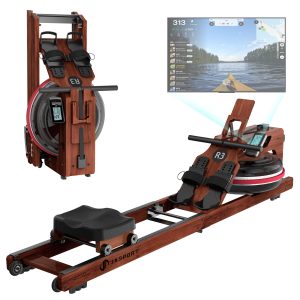
With the continuous improvement of people's health awareness, fitness activities have gained increasing importance. As a full-body aerobic exercise machine, the rowing machine is widely appreciated by fitness enthusiasts and professional athletes due to its low impact, high fat burning efficiency, and ability to train multiple muscle groups in the body. The rowing machine is widely used in gyms, rehabilitation centers, and sports colleges and universities for physical training, rehabilitation therapy, and sports performance assessment.
However, the accuracy and reliability of rowing machine test results are crucial to enable users to develop scientific and reasonable training plans, assess their physical conditions, and monitor training effects. Inaccurate test results can lead users to misunderstand their physical conditions and training ability, which in turn affects training results and potentially leads to sports injuries. Therefore, in-depth research into the scientific principles behind rowing machine testing and ensuring the accuracy and reliability of test results has significant practical implications.
Research objectives and methods overview
The purpose of this paper is to comprehensively analyze the process of rowing machine testing, investigate the various factors that affect the accuracy and reliability of the tests, and propose corresponding strategies. Through a comprehensive literature review, theoretical research, and the summary of practical experience, methods such as experimental research and data analysis are used to conduct a detailed study of each aspect of rowing machine testing. This provides a theoretical basis and practical guidelines for improving the scientific nature and accuracy of rowing machine testing.
Overview of rowing machine tests
Common types of rowing machine tests
Endurance tests primarily aim to assess the testers' ability to row for a specified period of time. A fixed power output or resistance level is usually set, and testers must maintain a stable rowing rhythm for the specified time. Data such as heart rate, power output, and exercise time are recorded to assess their cardiopulmonary function and muscular endurance. This type of test has a high reference value for athletes involved in sports that require prolonged continuous exercise, such as long-distance running and cycling.
Strength tests focus on measuring the maximum force testers can generate in a short period of time. Common strength testing methods include the maximal power test and the maximal strength test. The maximal power test requires testers to complete a full rowing stroke with maximum effort in the shortest possible time, recording the maximum power generated. The maximal strength test gradually increases resistance until the tester can no longer complete a full rowing stroke, thereby determining the maximum force they can generate. Strength tests provide important information for strength training enthusiasts and weightlifters looking to improve their muscular strength.
Meaning of test indicators
Power is one of the most important indicators in rowing machine testing. It reflects the work the tester performs per unit of time and is an important measure of training capacity and energy metabolism. Power is closely linked to factors such as the tester's muscle strength, movement speed, and rowing technique. By monitoring changes in power, the progress of the tester's training capacity during different training phases can be tracked, providing a basis for developing individualized training plans.
The speed indicator primarily reflects the speed of the tester's movement during the rowing process. Under the same resistance conditions, a higher speed indicates better explosive muscle power and coordination of the tester. Speed measurement helps testers understand their movement rhythm and efficiency and also serves as an important reference indicator for evaluating training effects.
The stroke refers to the distance the oar moves during a single stroke by the tester. The length of the stroke is related to factors such as the tester's body flexibility, joint range of motion, and rowing technique. A reasonable stroke length can improve rowing efficiency, reduce energy consumption, and help prevent sports injuries.
Analysis of the factors influencing the accuracy and reliability of rowing machine tests
Device-related factors
The design and manufacturing process of the rowing machine have a significant impact on performance and test results. For example, the height, angle, and comfort of the seat can influence the sitting posture and the application of forces by the tester, thereby affecting the accuracy of the test data. The shape, material, and resistance characteristics of the oar directly influence the resistance and feedback during rowing, with different oar designs potentially resulting in different tester power outputs under the same conditions.
Sensors are the most important components for data acquisition during rowing machine testing, and their accuracy and stability directly determine the reliability of the test results. Force sensors measure the force applied by the tester, displacement sensors record the movement of the oar, and speed sensors monitor the oar speed. However, errors can occur due to factors such as the manufacturing process and the operating environment of the sensors. For example, temperature changes can cause zero shift and changes in the sensitivity of the sensors, which affects the accuracy of the measured data.
Human operating factors
The physical characteristics, athletic ability, and psychological state of the testers can influence test results. For example, testers with greater body mass typically have greater muscle mass and greater power reserves, which can lead to higher power outputs under the same test conditions. Testers with higher athletic ability may have a better command of rowing techniques, improve rowing efficiency, and achieve better test results. Furthermore, the psychological state of the tester can also influence test results. Emotions such as nervousness and anxiety can increase muscle tension and impair coordination and stability of movements.
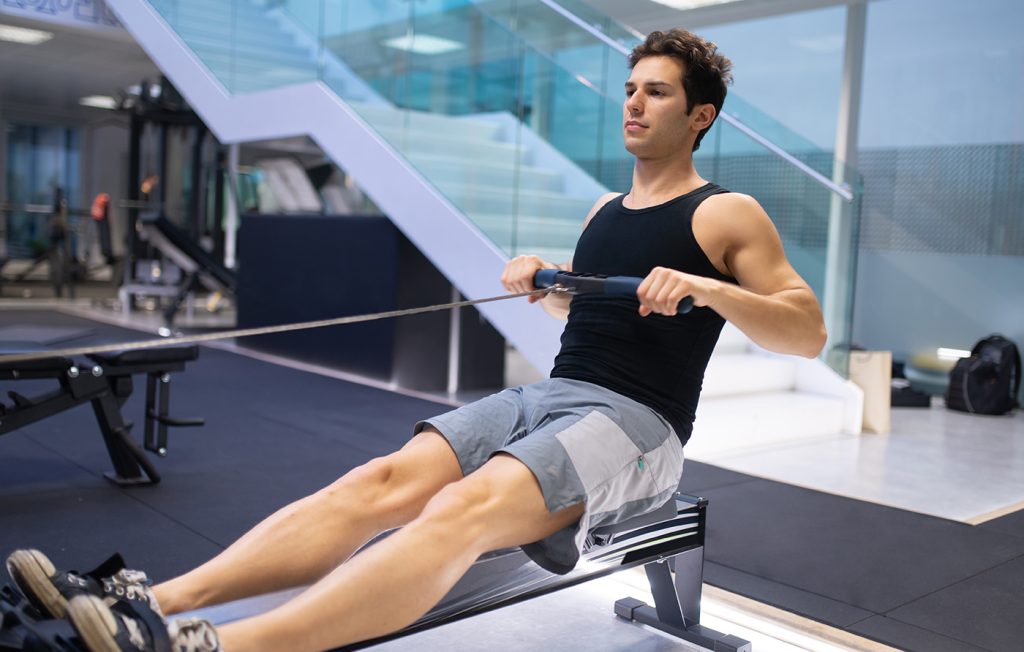
In rowing machine testing, standardization of tester actions is critical to the accuracy of test results. Common non-standardized actions include incorrect posture (such as slouching or buckling the knees), uneven force application (such as overworking the upper body muscles while neglecting the lower extremities and core), and irregular rowing rhythms (such as varying speeds). These non-standardized behaviors can not only affect the accuracy of test results but also increase the risk of sports injuries.
Umweltfaktoren
Physical environmental conditions such as temperature, humidity, and air pressure can affect rowing machine performance and test results. In hot and humid environments, body heat dissipation is impaired, leading to increased heart rate and fatigue, which impacts tester performance. Temperature changes can also cause thermal expansion and contraction of rowing machine components, affecting the accuracy and stability of the machine.
The flatness of the test area and the noise level can also cause potential interference during testing. If the test area is uneven, the rowing machine may wobble during operation, affecting the tester's balance and effort. High noise levels can distract the tester's attention and negatively impact their fitness and test results.
Scientific strategies to ensure the accuracy and reliability of rowing machine tests
Device optimization and calibration strategies
When selecting a rowing machine for testing, factors such as the specific requirements and objectives of the test, as well as the machine's performance, quality, and functionality, must be comprehensively considered. For example, for high-intensity training and precise testing by professional athletes, a state-of-the-art rowing machine with high-precision sensors, a wide adjustable resistance range, and good stability should be selected. For daily training and simple testing by fitness enthusiasts, an inexpensive and easy-to-use rowing machine is sufficient. In addition, regular upgrades and modifications to the rowing machine, such as replacing more advanced sensors and optimizing the machine's mechanical structure, can improve its performance and test accuracy.
To ensure sensor accuracy and proper functioning of the machine, regular calibration and maintenance of the rowing machine is required. Calibration should be performed according to the manufacturer's standard operating procedures, using professional calibration tools and equipment to calibrate parameters such as the zero point and sensor sensitivity to ensure measurement accuracy. At the same time, regular cleaning, lubrication, and inspection of the rowing machine should be performed to detect and correct equipment malfunctions in a timely manner and extend the service life of the machine.
Standardized testing procedures and operating guidelines
Developing a scientific, reasonable, and detailed standardized rowing machine testing procedure is key to ensuring the accuracy and reliability of test results. The standardized testing procedure should include pre-test preparations (such as equipment checks, tester warm-up exercises, and test environment setup), key test operating points (such as correct posture, force application, and rowing rhythm), and post-test data processing and analysis methods. Before the test, testers should be fully informed of the testing procedures and requirements and trained accordingly. During the test, operations should be strictly performed according to the standardized testing procedure to ensure test consistency and repeatability. After the test, the collected data should be processed and analyzed promptly and accurately to obtain reliable test results.
Providing professional training for testers is an important measure for improving test quality. The training content should cover aspects such as equipment operation skills, test procedures, and data interpretation, so that testers become familiar with all aspects of rowing machine testing and master proper operating and technical methods. At the same time, a strict monitoring mechanism should be established to continuously monitor the testing process, promptly correct any non-standard operating behavior of the tester, and ensure the authenticity and validity of the test data.
Environmental control and compensatory measures
During the rowing machine test, environmental parameters such as temperature, humidity, and air pressure should be monitored in real time, and appropriate adjustments should be made based on the test requirements. For example, in high temperatures and high humidity conditions, air conditioners and dehumidifiers can be installed to regulate the room temperature and humidity and create a comfortable test environment for the testers. For test sites with significant noise levels, soundproofing measures such as installing sound-absorbing materials and erecting sound barriers can be implemented to minimize the impact of noise on the testers.
To address the impact of environmental factors on test results, appropriate data compensation and correction models must be developed. By analyzing and investigating a large amount of experimental data, the relationship between environmental parameters and test results is identified and a mathematical model is created. Based on the actual environmental parameters during the test, the collected data is compensated and corrected to improve the accuracy of the test results.
outlook
Research summary
This paper conducts an in-depth study of the rowing machine test, analyzes the various factors that affect the accuracy and reliability of the tests, including equipment factors, human operating factors, and environmental factors, and proposes corresponding strategies. Research shows that ensuring the accuracy and reliability of the rowing machine test requires a comprehensive approach, including equipment optimization, standardization of test procedures, and environmental control. Only in this way can scientifically sound and accurate test results be obtained, providing reliable reference data for fitness enthusiasts, athletes, and professionals.
Future research directions
With the continuous development of technology and the increasing importance of healthy exercise, the field of rowing machine testing will face new challenges and opportunities. Future research directions could focus on the following aspects: further exploring new sensor technologies and data acquisition methods to improve the accuracy and real-time capability of test data; integrating artificial intelligence, big data, and other technologies to create a more comprehensive testing and evaluation model for the precise assessment of the tester's physical condition and training capabilities; conducting interdisciplinary research applying knowledge from multiple disciplines such as exercise physiology, biomechanics, and psychology in the field of rowing machine testing; and in-depth investigation of the physiological and psychological changes in the human body during rowing to provide a stronger theoretical basis for optimizing testing methods and creating personalized training plans.