Free shipping in DE
  30 day returns
  Secure payment
  2 years warranty
Research background and motivation
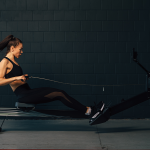
With people's ever-growing health awareness, physical activity is receiving increasing attention. As a whole-body endurance machine, the rowing ergometer is valued by fitness enthusiasts and professional athletes alike for its joint-friendly effect, high fat-burning efficiency, and ability to train multiple muscle groups simultaneously. It is widely used in fitness studios, rehabilitation centers, and sports colleges and universities for physical training, rehabilitation treatment, and performance diagnostics.
The accuracy and reliability of rowing ergometer test results are crucial for developing scientifically sound training plans, assessing physical condition, and monitoring training effects. Inaccurate test results can lead to misinterpretation of one's physical condition and performance, which can impair training progress or even cause sports injuries. Therefore, thoroughly investigating the scientific principles behind rowing ergometer tests and ensuring their accuracy and reliability is of great practical importance.
Research objectives and methodology
This paper aims to comprehensively analyze the rowing ergometer testing process, investigate the various factors influencing accuracy and reliability, and propose appropriate strategies. Through a systematic literature review, theoretical analysis, and the summary of practical experience, experimental studies and data analyses are used to shed detailed light on individual aspects of the testing process. This provides a theoretical foundation and practical guidance for improving the scientific quality and precision of rowing ergometer tests.
Overview of rowing ergometer tests
Common types of tests
Endurance tests primarily assess the test subject's ability to row continuously over a specified period of time. A fixed resistance or constant power level is typically set, with the test subject being expected to maintain a stable rhythm. Data such as heart rate, power output, and exercise duration are recorded to provide information about cardiopulmonary performance and muscular endurance. These tests are particularly relevant for endurance sports such as long-distance running or cycling.
Strength tests focus on measuring the maximum force a test subject can generate in a short period of time. Common methods include the maximal power test and the maximal pull test. In the maximal power test, a full rowing stroke must be performed with maximum effort in the shortest possible time, recording the highest power output achieved. In the maximal pull test, the resistance is gradually increased until the test subject can no longer perform a full rowing stroke. Strength tests provide valuable information for strength athletes and those aiming to specifically increase their muscular strength.
Meaning of the test parameters
Power output is one of the most important parameters in rowing ergometer tests. It represents the work performed in a specific time and is a significant indicator of physical performance and energy expenditure. Power output is closely related to the test subject's muscle strength, movement speed, and rowing technique. By observing changes in performance, training progress can be identified and individual training plans can be derived.
Velocity indicates the speed of movement during the rowing process. Under the same resistance conditions, higher speed indicates better explosive power and movement coordination. It helps the test subject understand their movement rhythm and efficiency and also serves as a reference for training success.
The stroke length refers to the distance covered during a complete rowing stroke. The length of the stroke is related to the subject's mobility, joint circumference, and rowing technique. An appropriate stroke length improves efficiency, reduces energy consumption, and contributes to injury prevention.
Analysis of factors influencing accuracy and reliability
Device-related factors
The design and manufacturing quality of the rowing ergometer significantly influence the test results. Seat height, seat angle, and seat comfort affect posture and power transmission. The shape, material, and resistance of the handlebar influence the perceived resistance and the generated power. Different designs lead to different results under the same conditions.
Sensors are key components for data acquisition. Force sensors measure the applied tension, displacement sensors measure the length of movement, and speed sensors measure the rudder frequency. Production-related deviations or environmental influences such as temperature can cause measurement errors, e.g., due to zero point shifts or changes in sensitivity.
Human factors
Differences in body type, athletic experience, and psychological state of the test subjects affect the results. Test subjects with more muscle mass tend to perform better. Those with better technique achieve more efficient results. Nervousness or tension can disrupt movement coordination and distort the test results.
A standardized execution of the test is essential. Common errors include incorrect posture (e.g., hunched back, knees bent), uneven force application (e.g., using only the upper body), and unstable rhythm. These lead to inaccurate results and increase the risk of injury.
Environmental factors
Environmental conditions such as temperature, humidity, and air pressure affect both the human body and device function. High temperatures and humidity impair thermoregulation, increase fatigue, and impair performance. Mechanical components of the device may deform due to temperature changes.
Floor conditions and noise levels are also relevant. An uneven surface can lead to instability, and noise can disrupt the test subject's concentration and negatively influence the results.
Scientific strategies to ensure accuracy and reliability
Equipment selection, calibration and maintenance
When selecting a testing device, the user's requirements, target audience, and device characteristics should be considered. For precise performance diagnostics, we recommend using high-quality devices with accurate sensors and high stability. For recreational sports, simple, easy-to-use models are sufficient.
To ensure sensor accuracy, regular calibrations according to the manufacturer's instructions are necessary. The zero point and sensitivity should be correctly adjusted using professional calibration equipment. Maintenance tasks such as cleaning, lubrication, and inspection help ensure long-term device functionality.
Standardized testing procedures and training
A clearly structured and scientifically sound test protocol is crucial. It should include preparation (e.g., equipment check, warm-up), execution (e.g., posture, rhythm), and evaluation.
The test subject should be fully informed about the procedure and, if necessary, trained. The procedure must be consistently standardized. The data collection must then be carefully evaluated.
Professional training of testing personnel is a key quality factor. This training should include equipment knowledge, test execution, and data analysis. A control system should monitor compliance with standards and enable corrections.
Environmental control and compensation
During testing, environmental parameters such as temperature, humidity, and air pressure should be continuously monitored and adjusted as needed—e.g., using air conditioning or dehumidifiers. Soundproofing measures are helpful in high-noise environments.
To correct for environmental influences, mathematical compensation models should be developed. Based on extensive data sets, a relationship between environmental factors and test results can be established. These models enable a more precise interpretation of the data.
outlook
Research summary
This paper examines the scientific validity of rowing ergometer tests, analyzes the relevant influencing factors—equipment, human operation, and the environment—and proposes appropriate optimization strategies. The results demonstrate that a holistic approach is required to achieve reliable test results. Only by combining equipment quality, standardized procedures, and environmental control can meaningful data be obtained.
Future research perspectives
With advances in technology and increasing awareness of healthy exercise, rowing machine testing will pose new challenges. Future research could focus on the following points:
- Development of new sensor and acquisition technologies to improve data quality;
- Integrating AI, big data and digital platforms to create more comprehensive diagnostic models;
- Interdisciplinary studies involving sports physiology, biomechanics, and psychology to analyze physical and mental reactions during rowing in depth, with the aim of optimizing testing and developing personalized training plans.