Free shipping in DE
  30 day returns
  Secure payment
  2 years warranty
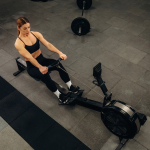


The crucial role of breathing when training on the rowing machine
Breathing is the underestimated success factor of any successful indoor rowing session. While many athletes focus their attention on stroke technique or resistance settings, the often neglected Breathing techniques on the rowing machine directly endurance, strength and efficiency.
Every pull on the handle and every leg kick requires a precise exchange of oxygen and carbon dioxide to fuel muscle contractions and remove metabolic waste. Without conscious breath control, even technically skilled rowers find it difficult to maintain a consistent pace over longer training sessions.
The interplay between breathing and performance becomes clear when you consider the energy requirements: The rowing machine simultaneously uses several large muscle groups – Legs (quadriceps), torso, back and arms – which increases oxygen consumption more than in many other endurance exercises. Breathing techniques on the rowing machine ensure that this need is met by synchronizing inhalation and exhalation with the movement phases.
At the Drive (pulling phase), exhaling stabilizes the torso and prevents energy loss, while inhaling during the Recovery (Recovery phase) prepares the body for the next stroke. This harmony between breath and movement delays fatigue and allows you to maintain high intensities for longer periods.
In addition, targeted Breathing techniques on the rowing machine also mental endurance. Controlled breathing acts as an anchor – it calms, focuses, and regulates heart rate and concentration. Thus, breathing becomes a strategic tool for physical and mental performance.
The phases of the rowing stroke and the correct breathing timing
Um Breathing techniques on the rowing machine To make the most of it, you need to understand the four phases of the rowing stroke: Catch, drive, finish and recover.
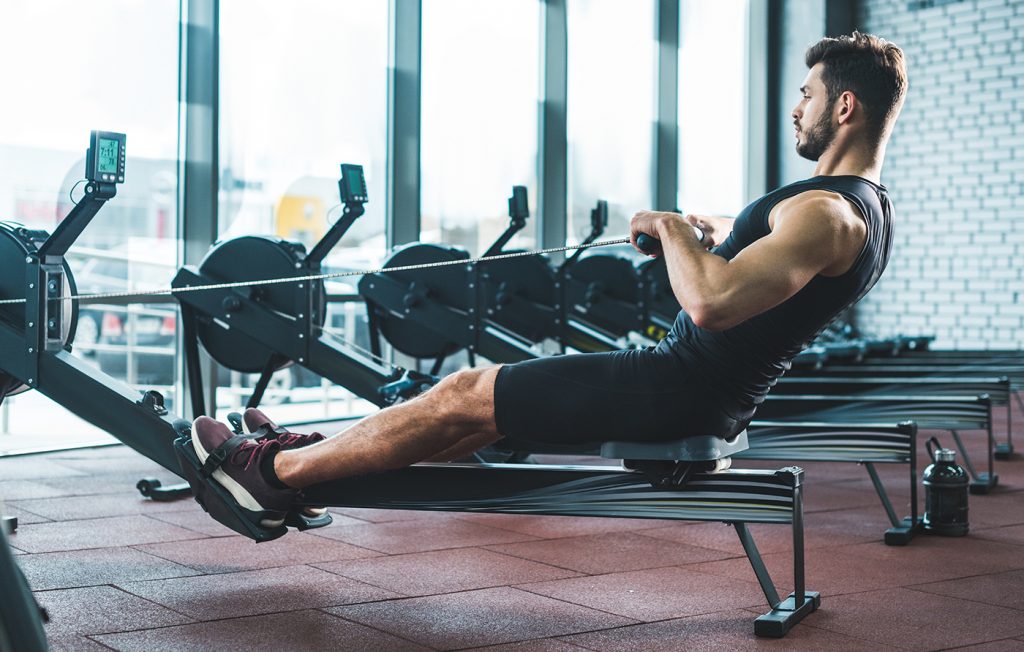
Catch (starting position): Knees bent, arms stretched, shins vertical. This is the ideal moment for a calm preparatory breathingto provide oxygen for the upcoming exertion.
Drive (pull phase): Stretch your legs, activate your core, pull the handle towards your body – the most powerful movement. Now controlled, strong exhalationwhich stabilizes the core muscles and prevents loss of strength.
Finish (final position): Grip at rib level, legs straight, elbows bent. Exhale the remaining air completely to expel CO₂.
Recovery: Stretch your arms, tilt your upper body slightly forward, and bend your knees. Now breathe deeplyto replenish oxygen reserves and relax muscles.
This coordinated breathing pattern optimizes oxygen supply, ensures efficiency, and gives rowing a smooth, flowing rhythm.
The science behind breath synchronization and muscle performance
The success of Breathing techniques on the rowing machine is based on the principle of Breath synchronizationthat combines body mechanics and physiology.
When you exhale during the drive, Diaphragm and trunk muscles, creating stable intra-abdominal pressure that protects the spine and improves power transmission. During recovery, oxygen is replenished while the movement slows down—this balances energy expenditure and enables a stable performance level.
In addition, this breathing rhythm regulates the Heartbeat and activates the parasympathetic nervous system, which promotes regeneration and concentration. This creates a feedback loop: better breathing → better performance → calmer breathing → longer endurance.
Common breathing mistakes and how to avoid them
Many rowers sabotage their performance through incorrect Breathing techniques on the rowing machine – often unconsciously:
Holding your breath in the drive (Valsalva maneuver): causes excessive pressure, dizziness, and energy loss. Solution: Exhale consciously and forcefully.
Shallow chest breathing in recovery: leads to insufficient oxygen intake and rapid fatigue. Solution: breathe deeply into the abdomen (diaphragmatic breathing).
Wrong timing: Exhaling too early or inhaling too late disrupts the flow of movement.
The solution lies in mindfulness: Memorization “Drive = off, Recovery = on” helps to synchronize breathing with the beat rhythm.
Practical exercises to improve breathing technique
To the Breathing techniques on the rowing machine To refine your skills, targeted training is worthwhile:
Breathing cadence training: At a low beat rate (18–20 bpm), consciously control your breathing rhythm – drive = off, recovery = on. Maintain this rhythm as the intensity increases.
Tempo Row: Maintain your breathing pattern while changing the tempo (e.g., 20 → 26 → 30 bpm). This teaches your body to breathe efficiently even under stress.
Pause-and-Breathe exercise: Pause briefly after each drive, take 2-3 deep breaths, then continue rowing – this strengthens breathing control and lung capacity.
These exercises promote breath awareness, sense of rhythm and endurance at the same time.
More performance through consistent breath control
The true strength of Breathing techniques on the rowing machine lies in its long-term effect. Synchronized breathing and beat rhythm enable more performance with less fatigue, increase concentration and create a stable flow of movement.
Regular use of these techniques transforms rowing into an efficient, rhythmic movement experience – both physically and mentally.
Anyone who works specifically on endurance, strength or technique should use breathing as trainable ability With conscious breathing, you can utilize the rowing machine's full potential—for power, control, and maximum performance.