Free shipping in DE
  30 day returns
  Secure payment
  2 years warranty
How effective is a rowing machine? The ultimate analysis
In recent years, the rowing machine has gained popularity and is enjoying a growing following both in the gym and for home workouts. But how effective is using a rowing machine? In this article, we'll explore the benefits, training options, and scientific evidence behind rowing.
The advantages of the rowing machine
A rowing machine offers a variety of benefits that make it an excellent choice for fitness enthusiasts. Here are some of the most outstanding advantages:
- Strength and endurance training: Rowing is one of the most effective ways to both strengthen muscles and improve endurance. It works virtually all major muscle groups, including the back, legs, and arms.
- Joint-gentle training: Unlike many other cardio machines, rowing is gentle on the joints. It reduces stress on joints and minimizes the risk of injury, making it suitable for people of all ages.
- Calorie burning: Studies show that rowing can burn as many calories as running or cycling. A person weighing 70 kg can burn approximately 600 calories in an hour of rowing at a moderate pace.
- Posture improvement: Because rowing strengthens the back muscles, it helps improve posture. This is especially beneficial for people who spend a lot of time at a desk.
How does a rowing machine work?
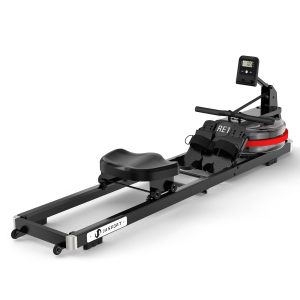
The rowing machine simulates the movements of rowing in water and is easy to use. The user sits on a movable bench, pulls on a handle connected to a resistance system, and uses their legs, torso, and arms to row forward. The different resistance systems—hydraulic, magnetic, or air—offer the possibility of individually customizing the workout.
Resistance systems in detail
One of the most important considerations when purchasing a rowing machine is the resistance system. Each system has its own advantages and disadvantages:
- Hydraulic resistance: Ideal for beginners, as the machines are often cheaper and take up less space. However, they usually offer limited resistance settings.
- Magnetic resistance: These machines are quieter and allow for smoother movements. They are ideal for home exercisers who value a quiet environment.
- air resistance: These rowing machines offer a realistic rowing feel and automatically adjust the resistance to the speed of rowing, making them a popular choice in gyms.
Training options with the rowing machine
The rowing machine offers numerous training options suitable for both beginners and advanced users. Some of the most popular training options include:
interval training
Interval training is a highly effective training method that challenges the cardiovascular system and improves endurance. It alternates periods of high intensity with recovery periods. This can be achieved, for example, by rowing for 1 minute of intense exercise followed by 2 minutes of easy exercise.
Slow constant training
For those who prefer to exercise at a steady pace, slow steady-state training is a good option. This allows the user to row at a moderate intensity for a longer period of time to increase endurance and calorie burn.
Strength training
The rowing machine can also be used for strength training. The resistance of the rowing machine allows you to specifically strengthen your muscles. You can incorporate combinations of rowing and specific strength exercises to increase effectiveness.
Scientific findings about rowing
Several studies have examined the effectiveness of the rowing machine as a training tool. A study published in the Journal of Sports Sciences shows that rowing is considered one of the most effective methods for improving cardiovascular fitness. Its benefits for muscle growth and fat burning have also been scientifically confirmed.
Daily use and integration into everyday life
To fully reap the benefits of the rowing machine, users should regularly incorporate it into their workout routine. Workouts can be performed at home, at the gym, or even outdoors with a portable machine. The flexibility of the rowing machine allows users to adapt it to their lifestyle, making it an excellent choice for busy people.
The right technique
Proper rowing technique is crucial for effective and safe training. Basic elements include:
- The starting position: The user sits on the rowing machine with a straight back and feet firmly secured in the footrest.
- The so-called "catch" movement: Arms are extended, back straight, knees hip-width apart. The user is ready to begin a dynamic movement.
- The drive: Here, the weight of the legs is efficiently transferred to the rowing machine, while the back and arms are actively involved in the movement.
- The final step: The user pulls the handle toward them while tilting their torso slightly backward. The legs protect their joints by returning to the starting position.
Conclusion
In summary, the rowing machine is an extremely effective piece of fitness equipment that offers numerous physical benefits. Its combination of strength and endurance training, joint protection, and versatility makes it an ideal choice for people of all fitness levels. Whether for weight loss, increased performance, or improved general fitness, rowing can be satisfying in every way.