Free shipping in DE
  30 day returns
  Secure payment
  2 years warranty
Which rowing machine trains which muscle groups?
Rowing is one of the most effective forms of total-body exercise, building both strength and endurance. A rowing machine is not only an excellent choice for home use, but also a perfect piece of equipment for gyms. But which muscle groups are actually trained when rowing? In this article, we'll explore the different muscle groups that are activated when using a rowing machine.
The whole-body approach to rowing training
A rowing machine is designed to engage multiple muscle groups simultaneously. This is achieved through the dynamic and rhythmic movement of rowing, which activates both the upper and lower body.
The main muscle groups
- back muscles: The latissimus dorsi, also known as the broad back muscle, is particularly active during the pulling movement. Rowing not only strengthens the back muscles but can also help correct poor posture.
- Leg muscles: The thighs and glutes work intensively as you push off and place your weight onto the rowing machine. This activates the quadriceps, hamstrings, and gluteus maximus.
- arm muscles: Rowing also involves the biceps and triceps. These muscles are particularly active during the backward movement, when the arms pull the rowing bar back.
- abdominal muscles: The abdominal muscles stabilize the body and help maintain an upright posture. The abdominal muscles, in particular, are engaged throughout the rowing movement.
Different rowing machines and their effects on training
There are several types of rowing machines, each using different mechanisms and resistance types. Here are some of the most common models and their specific benefits:
Water rowing machines
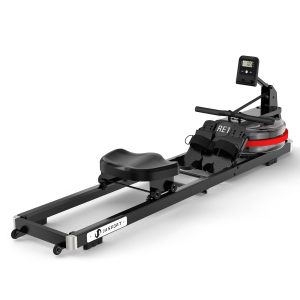
Water rowing machines use water resistance, providing a natural rowing feel. The water resistance automatically adjusts to the strength of the stroke. This type of rowing machine is particularly effective at targeting the back muscles and promoting the development of a strong upper body.
Air rowing machines
Breathing machines rely on air resistance, with resistance increasing proportionally with pulling speed. These machines are ideal for high-intensity training and particularly improve arm and leg strength.
Magnetic rowing machines
These machines use magnets to create resistance. They are generally quieter and offer the advantage of consistent resistance, making them ideal for home fitness training. They provide a more intense workout for the abdominal and leg muscles.
The right technique for maximum training
Rowing technique plays a crucial role in training effectiveness and injury prevention. Here are some tips to improve your technique:
- The starting position: Start at the front end of the rowing machine with your knees slightly bent and your posture upright.
- The train: Perform the pull with your legs while simultaneously leaning your upper body back and pulling your arms towards you.
- The return: Slide forward in a controlled manner as you straighten your legs and prepare for the next repetition.
Training tips and routines
For optimal results, it's important to schedule regular training sessions. A balanced rowing workout might include the following elements:
- Interval training: High intensity followed by short recovery time can increase endurance and strength.
- Slow, even lengths: This method promotes fat burning and is accessible to beginners.
- Strength training: Incorporate specific strength exercises, such as dumbbell training for the upper body muscles, to increase the effectiveness of rowing.
Additional benefits of rowing training
In addition to building muscle, rowing offers a variety of other benefits:
- Cardiovascular Fitness: Regular rowing improves heart health and increases endurance.
- Calorie consumption: Rowing is very calorie-intensive, which makes it easier to burn fat.
- lower risk of injury: Because it is a low-impact activity, the risk of injury is lower than in many other sports.
Conclusion
Rowing machines offer an excellent way to work a variety of muscle groups and improve overall fitness. Regardless of which rowing machine you choose, it's important to master the technique and train regularly to achieve the best results.