Free shipping in DE
  30 day returns
  Secure payment
  2 years warranty
Linear drives for treadmills: Technological innovations in the fitness sector
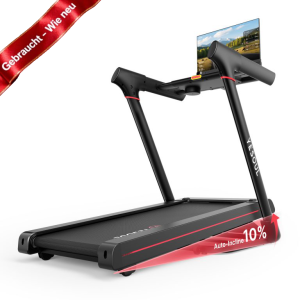
In the age of fitness and health, treadmill technology is becoming increasingly important. A central component of this technology is the Linear Drivesthat enable precise and efficient movement. In this article, we will explore the different types of linear actuators, how they work, and their benefits for treadmills.
What are linear actuators?
Linear actuators are mechanical devices that enable the movement of objects in a straight line. Unlike rotary actuators, they offer greater precision and control over the direction of movement. In treadmills, these actuators are crucial for precisely controlling the speed and incline of the belt.
Types of linear actuators
There are several types of linear actuators that can be used in treadmills:
- Electric linear actuators: These drives use electric motors to generate movement. They are generally efficient but require a constant power supply.
- Pneumatic linear actuators: These actuators use compressed air to generate movement. They are often faster than electric actuators, but require special compressors and can be more expensive to operate.
- Hydraulic linear actuators: Similar to pneumatic actuators, hydraulic systems use fluids to generate power. They are known for their high performance, but can be more cumbersome and costly.
Advantages of linear drives in treadmills
Implementing linear actuators in treadmills offers numerous advantages, including:
- Precise control: Linear actuators allow precise adjustment of speed and incline, contributing to a more realistic running experience.
- Low maintenance: Compared to mechanical drives, linear drives have fewer moving parts, which reduces maintenance requirements.
- Quiet operation: Many modern linear actuators offer virtually silent operation, making it easier to use treadmills in living spaces.
The future of treadmill technology
As technology advances, linear drives in treadmills are becoming increasingly sophisticated and efficient. The integration of smart technologies and IoT (Internet of Things) into treadmills connects the physical fitness world with digital solutions. This development opens up new possibilities for personalized training experiences and advanced analytics of training data.
Integrations with fitness apps
Modern treadmills with linear drives can be seamlessly connected to fitness apps. These interactions allow users to track their progress, create personalized training plans, and even participate in virtual fitness challenges. By leveraging big data and machine learning, treadmill manufacturers can provide personalized recommendations tailored to users' individual fitness levels and goals.
Increasing efficiency through renewable technology
Another significant advance in treadmill technology is the development of regenerative systems. These technologies allow the energy generated during running to be recovered and reused, significantly increasing the energy efficiency of treadmills. This often goes hand in hand with linear actuators, as these systems can optimize energy generation and utilization.
challenges and solutions
Despite the many advantages, implementing linear actuators in treadmills is not without challenges. One of the main concerns is cost-effectiveness, especially for smaller manufacturers. However, this challenge can be mitigated through innovative production methods and optimized designs that enable more cost-effective manufacturing. Furthermore, environmental protection and sustainability are playing an increasingly important role; manufacturers are required to use environmentally friendly materials and production processes.
Summary of benefits
In summary, linear actuators in treadmills represent a significant technological innovation, offering reliability, precision, and efficiency. Their role in the fitness industry is likely to continue to grow, and their integration into modern treadmill technology will both enhance the user experience and influence the future of the fitness market. Given the growing demand for effective and sustainable solutions, engineers and designers must continually work to improve these systems to meet user needs.
In this dynamic and competitive market, innovation is not just an advantage, but a necessity. Companies that successfully utilize linear actuators in their products are likely to establish themselves as industry leaders.