Free shipping in DE
  30 day returns
  Secure payment
  2 years warranty
The Ultimate Guide to Rowing Machine Training: Tips, Technique, and Training Plans
Rowing is one of the most effective ways to improve endurance, strength, and coordination. Rowing machines, in particular, have gained popularity in recent years because they provide a full-body workout that trains both the muscles and the cardiovascular system. In this comprehensive guide, we'll show you how to successfully train with a rowing machine, which techniques are important, and how to optimally plan your training sessions.
What is a rowing machine and how does it work?
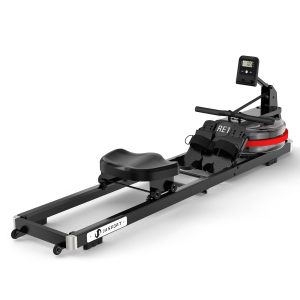
A rowing machine simulates the motion of rowing on water. It consists of a sturdy frame, a seat that moves forward and backward, and a rowing handle that allows you to perform the movement. Most modern rowing machines offer different resistance settings so you can adjust the intensity of your workout. Whether you're a beginner or advanced, the rowing machine is suitable for all fitness levels.
The benefits of rowing training
- full body workout: Rowing works almost all muscle groups, including the legs, back, arms, and abdominal muscles.
- Calorie burning: Rowing is very effective for weight loss because it burns a lot of calories – up to 800 calories per hour, depending on the intensity.
- Low risk of injury: The fluid and gentle movement of the rowing machine is gentle on the joints and is therefore ideal for people with injuries or who are overweight.
- Stamina Improvement: Regular rowing increases endurance and overall fitness level.
The right technique for effective rowing
To get the most out of the rowing machine, proper technique is crucial. Here are the four main phases of the rowing movement:
- The drive: Start by sitting correctly. Your feet should be firmly anchored in the foot straps. Push off with your legs and lean your upper body slightly backward.
- The pulling phase: Pull the rowing handle toward your chest with both hands. Keep your elbows tucked in and your back straight.
- The Return: Release the handle in a controlled manner in front of your body as you pull your knees back in. Make sure your back remains stable throughout the entire movement.
- The transition: Prepare for the next push by leaning forward slightly and straightening your legs again.
The correct setting of the rowing machine
The optimal settings for your rowing machine can have a huge impact on the quality of your workout. Here are some tips for setting up your machine:
- Seat height: Make sure the seat is comfortable for you and that you can fully extend your legs.
- Foot strap: The strap should be tight but not uncomfortable, so your foot doesn't slip out.
- Resistance Settings: Start with a low resistance setting and gradually increase as you improve your technique.
training plans for the rowing machine
To achieve the best results, it's important to have a structured training plan. Here are some sample training plans for different fitness levels:
Beginner plan (3 times per week)
- Week 1-2: 10 minutes of easy rowing, followed by a 5-minute rest. Repeat this 3 times.
- Week 3-4: 15 minutes of easy rowing, followed by a 5-minute rest. Repeat this 3 times.
Advanced plan (4 times per week)
- Week 1-2: 20 minutes of rowing with moderate resistance. Add 5 minutes of interval training (1 minute fast, 1 minute slow).
- Week 3-4: 25 minutes of rowing with increasing resistance. Add 10 minutes of interval training (1 minute fast, 1 minute slow).
Tips for motivation when rowing
Motivation plays a huge role in long-term training success. Here are some tips to help you stay on track:
- Set yourself realistic goals: Short-term and long-term goals help you recognize progress.
- Introduce variety: Change up your workout regularly to avoid boredom. Experiment with different resistances and intervals.
- Listen to music or podcasts: Listening to music or various podcasts can make training more entertaining.
- Train with friends: Motivation from others can help you maintain your fitness routine.
Common rowing mistakes and how to avoid them
Many people make common mistakes when rowing that can reduce the effectiveness of their workout or even lead to injury. Here are the most common mistakes and tips on how to avoid them:
- Incorrect posture: Make sure your back stays straight and doesn't hunch over. Good posture is crucial.
- Rowing too fast: Correct technique is more important than speed. Make sure you row slowly and with control.
- Insufficient warm-up: Make sure you warm up before exercising to avoid injury.
With this comprehensive guide, you'll be optimally prepared for your rowing machine workout. To get the most out of it, pay attention to technique, training variation, and motivation. Make rowing a permanent part of your fitness routine and experience the positive changes in your physical fitness.