Free shipping in DE
  30 day returns
  Secure payment
  2 years warranty
The Ultimate Rowing Machine Workout Plan: Effective and Sustainable
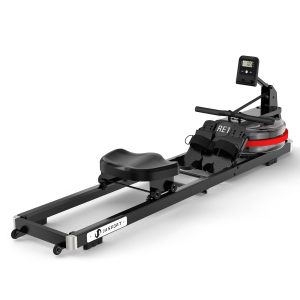
Welcome to the world of rowing training! In this article, we'll show you how to build both strength and endurance with a targeted training plan on your rowing machine. Rowing machines are not only a great year-round fitness tool, but also a fantastic way to work a variety of muscle groups simultaneously.
Benefits of rowing training
Rowing training offers numerous benefits that make it a popular choice for fitness enthusiasts:
- full body workout: Rowing uses almost all muscle groups, from the legs to the torso to the arms.
- Low load: Rowing machines are gentle on the joints, making them ideal for people with injuries or joint problems.
- Calorie burning: Rowing is an intense exercise that helps you burn calories and lose weight effectively.
The perfect training plan for your rowing machine
Before you start training, you should consider your goals. Do you want to build muscle mass, increase endurance, or simply stay fit? To help you get started, we've created a 4-week training plan for beginners and advanced athletes.
Week 1: Laying the foundations
In the first week we focus on the correct techniques and getting used to the rowing machine.
- Day 1: 20 minutes of easy rowing (60-70% of your maximum heart rate).
- Day 2: Rest day or light stretching.
- Day 3: 25 minutes of rowing exercise, increased intensity (70-75% of your maximum heart rate).
- Day 4: Rest day.
- Day 5: 30 minutes of rowing exercise (60-70% of your maximum heart rate).
- Day 6: Active rest day (walk or light yoga).
- Day 7: 10 minutes warm-up, followed by 15 minutes interval training (1 minute fast, 2 minutes slow).
Week 2: Increase intensity
Now that you're used to the rowing machine, let's increase the intensity.
- Day 1: 30 minutes of rowing training, climb: 5 minutes warm-up, 20 minutes at a moderate pace (70-80% of maximum heart rate), 5 minutes cool-down.
- Day 2: Rest day or light stretching.
- Day 3: 40 minutes of rowing training with 10-minute intervals (1 minute fast, 2 minutes slow)
- Day 4: Rest day.
- Day 5: 30 minutes of rowing, 15 minutes at a fast pace (75-80% heart rate), 15 minutes of quick cool down.
- Day 6: Active rest day (cycling or swimming).
- Day 7: 10 minutes hyggelig warm-up, 5 minutes maximum speed, 10 minutes medium speed, 5 minutes cool-down.
Week 3: Add variety
To keep things fun and motivated, we add different exercises and techniques.
- Day 1: Ergometer rowing: 30 minutes. Use different grip positions!
- Day 2: Rest day.
- Day 3: 30 minutes of rowing training at different speeds: 2 minutes fast, 2 minutes slow.
- Day 4: Rest day.
- Day 5: 40 minutes of high resistance rowing.
- Day 6: Get active (running or other cardio activities).
- Day 7: Aggressive interval training: 5 minutes fast, 3 minutes slow / 3 rounds.
Week 4: Maximum Performance
In the final week of the training plan, we focus on maximizing your performance.
- Day 1: 45 minutes of rowing: diagonal rowing, 4:10 pace.
- Day 2: Rest day.
- Day 3: 30 minutes of interval training with maximum sprints.
- Day 4: Rest day.
- Day 5: 50 minutes of rowing training.
- Day 6: Cool down (light yoga exercises).
- Day 7: Final test! 50 minutes of rowing training – what can you achieve?
Tips for Success
To get the most out of your rowing workout, consider the following tips:
- Maintain proper technique: Make sure you maintain proper posture while rowing to avoid injury.
- Hydration: Drink plenty of water before, during and after training.
- Nutrition: A balanced diet is crucial to obtain the necessary nutrients and energy for your training.
While the training
For best results, listen to your body's signals during training. Be careful not to overexert yourself and take sufficient breaks. Stick to your training plan, but be flexible if your body needs more rest.
The Role of Regeneration
Don't forget that recovery is a crucial part of any training program. Give your muscles enough rest time to repair and grow stronger. Getting enough sleep and engaging in relaxing activities will boost your performance.