Free shipping in DE
  30 day returns
  Secure payment
  2 years warranty


The rise of the home fitness phenomenon
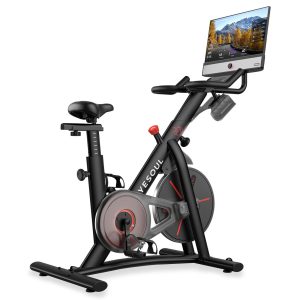
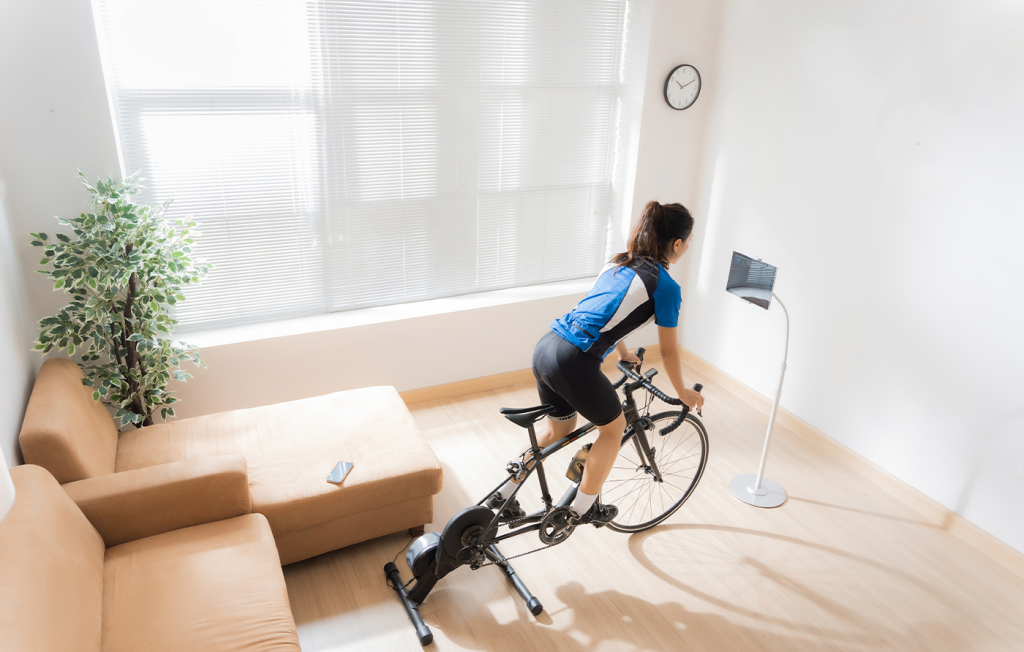
In recent years, the fitness world has witnessed a pivotal shift into the home – the home has become the primary venue for demanding, results-driven workouts. At the heart of this movement is the Speedbike: a bespoke indoor cycling machine that replicates the physical demands and sensory inputs of road cycling. Unlike traditional exercise bikes, the Speedbike incorporates a heavy flywheel, a robust steel chassis, and an advanced resistance mechanism capable of generating intense pedaling power. This configuration so faithfully replicates the conditions of outdoor cycling that riders experience not just movement, but also the immediate challenge of elevation changes, sprint finishes, and sustained climbs. Freed from the constraints of gym appointments, travel times, or unpredictable weather, enthusiasts can now pursue elite-level cardio training in the privacy and comfort of their own spaces. In this way, the Speedbike has been instrumental in shaping how modern athletes perceive accessibility and intensity – laying the foundation for the future of fitness. The speed bike contributes to cycling culture, by democratizing high-performance indoor cycling.
The appeal of the Speedbike lies in its ability to pack the essence of professional cycling into a compact, user-controlled environment. It responds to the growing desire for autonomy in fitness routines, empowering people to choose when, how, and at what pace they train. This liberation from external constraints has sparked a surge in dedicated practitioners who value consistency over sporadic visits to communal facilities. Furthermore, the machine's inherent robustness supports demanding training loads day after day, reinforcing the idea that meaningful physical development doesn't have to be confined to specialized facilities. As more people embrace this paradigm, the cultural impact of indoor cycling grows, with the Speedbike acting as a catalyst, transforming occasional pedaling into a disciplined, ambitious pursuit.
Designing the true driving experience: Core design philosophy
At the heart of the Speedbike's identity lies an unwavering commitment to replicating the biomechanics and sensational qualities of real cycling. This philosophy manifests itself in three interconnected pillars of engineering-level precision. The first is the use of a remarkably heavy flywheel, often weighing between 18 kilograms and well over 28 kilograms. This mass ensures a smooth rotation and maintains momentum throughout the pedal stroke, preventing sudden stops and jerky movements that detract from the realism. As riders accelerate or decelerate, the flywheel's inertia provides familiar, road-like feedback, activating muscles in a way indistinguishable from riding outdoors.
The second pillar is the refinement of resistance systems, which often utilize magnetic or eddy current technologies. These solutions ensure silent operation and finely graduated modulation of difficulty levels. From a gentle wave, similar to a slight incline, to a painful level demanding maximum torque, the resistance can be seamlessly adjusted, allowing athletes to transition between intensities without mechanical disruption. This responsiveness is crucial for interval training and progressive overload strategies, both of which depend on precise control over effort.
Ergonomic adaptability forms the third pillar. A high-quality speed bike adapts to anatomical differences through multidirectional adjustments of seat height, seat position, handlebar reach, and tilt. Whether you adopt a relaxed posture for endurance rides or lean forward into an aerodynamic pose for sprint simulations, the machine can be adjusted to support a safe, stress-free alignment. Together, these design principles create an environment where physical effort feels purposeful and in keeping with the true art of cycling. This engineering precision is a key reason why The speed bike contributes to cycling culture – by elevating indoor cycling beyond mere exercise into the sphere of skillful, intentional imitation of movement.
By incorporating these principles into every unit, manufacturers ensure that every session on a speed bike transcends mere mechanical repetition. Riders develop proprioceptive awareness of cadence and power application, refining their technique in parallel with muscular adaptation. Over time, this creates a mental map of cycling dynamics that enriches the wider culture—encouraging participants to think like cyclists, not just pedalers. The result is a deeper appreciation for the nuances of pace, gear selection, and the interplay between aerobic capacity and muscular resilience.
Technological integration and personalized performance
Modern versions of the speed bike extend their influence through advanced technological integration, transforming the device from a passive instrument into a responsive training core. Connectivity is paramount: many models offer native compatibility with widely used fitness apps and cloud-based training ecosystems. Through these gateways, riders unlock immersive virtual terrain, curated workout libraries, and geographical routes encompassing iconic climbs worldwide and urban loops. Although the practice is solo, the experience becomes panoramic and exploratory, dispelling the monotony that can accompany indoor sessions.
Complementing visual immersion is robust performance telemetry. Modern speed bikes feature onboard consoles or sync with wearable sensors to transmit instant data streams: cadence in revolutions per minute, power output in watts, speed, simulated distance, and heart rate data. This detailed visibility allows users to design sessions with scientific precision—and set goals based on physiological benchmarks, not guesswork. For example, a rider could program a workout to train for 20 minutes in a power band of 180–220 watts, punctuated by brief peaks above threshold—and use live feedback to verify adherence.
Such data-driven methods embody the personalized development path that is possible in indoor cycling today. Goals can range from increasing cardiovascular efficiency and lactate threshold to lower extremity muscle hypertrophy and improved muscular endurance. Because every parameter is quantifiable, progress is trackable—fostering a sense of mastery and direction. This ability to individually calibrate reinforces the fact that The speed bike contributes to cycling culture, by tailoring training to individual needs and ensuring that intensity serves a purpose, not arbitrary conventions.
Furthermore, the technological layer supports periodization models, where training load is systematically varied across macrocycles, mesocycles, and microcycles. Athletes can reduce intensity before recovery phases or ramp it up for simulated events—mimicking strategies employed by outdoor racers. The Speedbike thus bridges the gap between recreational fitness and methodical athletic preparation, encouraging users to adopt a cyclist's mindset indoors. As analytics become more intuitive and predictive algorithms suggest improvements, the culture becomes increasingly nuanced, intelligent, and intrinsically motivating.
Promote discipline and design a personalized fitness journey
The adoption of the speed bike fosters a distinct discipline rooted in personal development. By making studio-level intensity accessible at home, it empowers individuals to shape their own progression. One of the most powerful expressions of this autonomy is the use of tailored interval training. Alternating short, explosive bursts of effort with measurable recovery periods burns calories efficiently and stimulates neuromuscular adaptations far more effectively than simply pedaling continuously. This format rewards precision in execution and endurance in adherence—characteristics of serious athletic pursuits.
Motivation in this context stems less from external validation or the presence of teammates and more from introspective milestones: surpassing a previous performance peak, maintaining a target cadence for a longer period, or completing an extended session without perceptible exertion. The Speedbike thus redefines success as an inward journey, fostering resilience and self-confidence. Its gentle training mode protects joints from repetitive strain injuries, making it suitable for lifelong integration. This sustainability reinforces its cultural relevance and positions indoor cycling not as a quick fix, but as a companion for lasting vitality.
The ritualistic aspect of regular speedbike use should not be overlooked. By creating a dedicated space and time, practitioners cultivate habits that transcend momentary enthusiasm. Consistency builds neurological efficiency, increases mitochondrial density, and strengthens connective tissue—yielding cumulative benefits over months and years. In this continuum, the practitioner becomes both an artist and a scientist of their own body—attending to signals in order to adapt tactics accordingly. This holistic approach underscores that The speed bike contributes to cycling culture, by showing how indoor cycling can be a channel for lifelong learning about human performance.
Furthermore, the inner focus cultivated during speedbike training invites an almost meditative experience. The rhythmic whir of the flywheel and the palpable interplay between foot and pedal can induce a flow state in which distractions fade away and mental clarity emerges. This mental dimension enriches the entire training culture and appeals to people who seek not only physical progress but also psychological balance. The combination of physical intensity and cognitive calm positions the speedbike as a multidimensional tool for personal development.
The evolving future of indoor cycling
The development of speed bikes promises a further expansion of indoor cycling culture into areas of heightened refinement and immersion. Current trends point to a closer symbiosis between hardware and software, with onboard processors and cloud intelligence working together to deliver adaptive coaching. Using artificial intelligence, future models could analyze biometric data in real time and automatically adjust resistance or recommend pace changes—instantly adapting the difficulty to match fatigue curves and performance potential.
Visual and sensory boundaries are also being pushed. High-resolution interactive displays and emerging virtual reality integrations aim to create virtual environments with photorealistic detail and spatial sound, thus deepening the illusion of presence. Haptic feedback systems could simulate surface textures and gradient shocks, further blurring the line between indoor equipment and outdoor trails. These innovations will enhance the sensory authenticity of every ride, strengthening the bridge between imagination and effort.
Materials science will play a crucial role in the development of tomorrow's speed bikes. Lighter yet more durable alloys and frames made from modern composite materials will improve mobility and handling without compromising stability. At the same time, next-generation resistance systems promise even quieter operation and finer intensity levels. Durability is also becoming increasingly important, as users expect consistently reliable quality from their investments – ensuring the speed bike remains a dependable companion even as fitness goals change.
When these levels converge, speedcycling will solidify its status as the core of performance-oriented home cycling. It will no longer be a substitute for outdoor cycling, but a discipline in its own right, with its own techniques, metrics, and culture. By fostering individual rigor, technological empowerment, and continuous refinement, speedcycling embodies how The speed bike contributes to cycling culture —and inspires a global community of indoor cyclists to strive for excellence in their personal spaces. The future points to a world where every pedal stroke at home resonates with the spirit of discovery, mastery, and the unified pursuit of human potential.