Free shipping in DE
  30 day returns
  Secure payment
  2 years warranty
Which muscles are trained during rowing machine training?
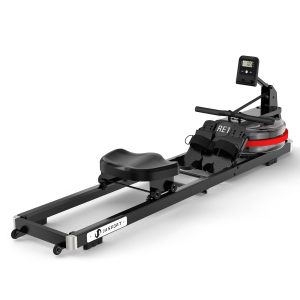
The rowing machine is an extremely effective piece of training equipment found in many gyms and homes. It not only offers an excellent way to increase endurance but also to work a variety of muscles simultaneously. In this article, we'll explore the different muscle groups targeted during rowing machine training and why this workout is so beneficial.
The main muscle groups in rowing machine training
Rowing activates multiple muscle groups. In fact, the rowing machine is one of the few machines that effectively targets both the upper and lower body. Here are the main muscle groups trained during a rowing session:
1. Back and shoulder muscles
Your back muscles benefit significantly from rowing machine training. Specifically, the latissimus dorsi muscles (the large back muscles) are activated when you perform the rowing movement. Additionally, the trapezius and rhomboid muscles, which ensure good posture and stability, are also trained. These muscles are crucial for pulling the rowing handle and help prevent injuries.
2. Arm muscles
The biceps and triceps muscles are engaged during every rowing session. The biceps, in particular, are active when you pull the handlebar toward you, while the triceps work when you extend your arm forward. This not only promotes arm strength but also builds definition and muscle tone.
3. Chest muscles
Although the rowing machine is primarily considered a back workout, the chest muscles also play an important role. Pushing the rowing handle activates the pectoral muscles, which contributes to strengthening and shaping the chest.
4. Abdominal muscles
The abdominal muscles are also heavily involved in rowing training. When performing the rowing movement, the torso must be kept stable, which engages the rectus abdominis and obliques. A strong core is essential for maintaining correct rowing technique and avoiding injury.
5. Leg muscles
The legs are one of the most heavily used muscle groups when rowing. The thigh muscles (quadriceps and hamstrings) are particularly strongly activated. With each rowing stroke, you use your legs to exert force on the machine, resulting in effective strengthening and definition of the leg muscles. The calf muscles also benefit from the workout.
Benefits of the Rowing Machine for Muscle Building
The rowing machine offers many benefits for muscle building:
- Full-body workout: With a single device you can train many different muscle groups at the same time.
- Low risk of injury: Compared to many other fitness machines, rowing machines are gentle on the joints, which reduces the risk of injury.
- Cardiovascular benefits: Rowing training not only promotes muscle building, but also improves endurance and the cardiovascular system.
- Diverse intensity: You can adapt your rowing workout to your fitness level by increasing the speed or resistance.
The right technique for the best training effect
To achieve the desired results and avoid injuries, the correct rowing technique is essential:
- The starting position: Sit on the rowing machine, place your feet in the foot straps and hold the handle with both hands.
- Rowing technique: Start with your legs straight and your torso upright. Push off with your legs while simultaneously pulling the rowing handle toward your stomach.
- Keep your back straight: Make sure your back stays straight throughout the movement to avoid injury.
Training tips for optimal results
Here are some tips to help you get the most out of your rowing machine workout:
- Start with a 5-10 minute warm-up to prepare your muscles.
- Vary your rowing technique, for example by using different speeds or resistance levels.
- Incorporate interval training into your routine to increase both strength and endurance.
- Rest is important! Give yourself time to recover between sets to avoid injury.
Conclusion: Rowing machine training as an effective method for muscle building
The rowing machine is an excellent training tool for strengthening and toning the body. By targeting multiple muscle groups simultaneously, it offers outstanding benefits for strength, endurance, and overall fitness. Whether for beginners or advanced users, rowing machines are versatile and provide an effective workout that should be included in every training plan.