Free shipping in DE
  30 day returns
  Secure payment
  2 years warranty


The training on the rowing machine It offers a rare combination of cardiovascular challenge and holistic muscle activation. However, the full benefits can only be realized if the body maintains clean, controlled movement with every stroke. Improving posture on the rowing machine is not a secondary consideration, but rather the foundation for safely and sustainably building back and core strength. When the spine is correctly aligned and the core is active throughout all phases of the movement, the risk of injury decreases significantly, while the efficiency of power transfer increases. This conscious alignment protects the spine, improves muscular endurance, and ensures that time on the rowing machine shapes a body that moves efficiently even outside of training. The key terms rowing machine, posture improvement, back strength, and core strength symbolize the central goals of mindful rowing training.
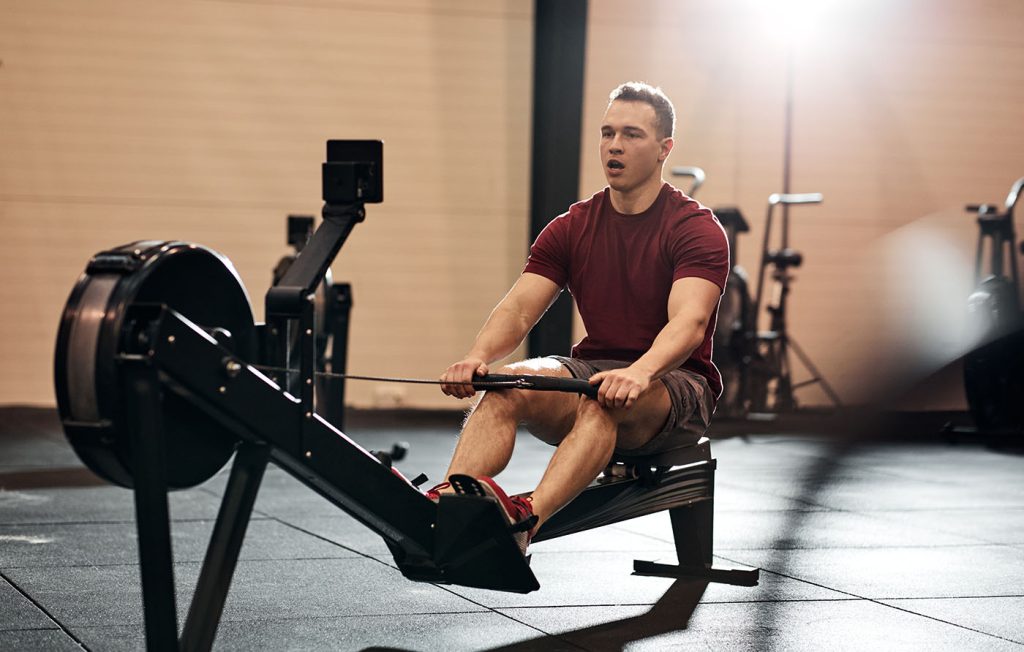
Understanding proper body alignment on the rowing machine begins with the relationship between the major joints and muscle groups during the rowing stroke. The head should be kept in line with the spine, without excessive forward or backward tilting, while the neck remains neutral to avoid pressure on the cervical spine. The shoulders are relaxed but active, allowing power to be transferred from the large back muscles and preventing tension from building up in the neck and shoulders. The rib cage remains stable, neither fanned out nor sunken in, as both would disrupt natural core tension. Equally crucial is the pelvic position: excessive forward or backward tilt alters the tension balance of the back extensors and can unnecessarily strain the lumbar spine. The knees move in line with the toes during the drive and recovery phases, allowing the legs to support the kinetic chain without generating lateral shear forces. When all these elements work together, a smooth power path is created from the legs, through the core, to the arms. This mechanical unity is the physical expression of effective posture improvement on the rowing machine, enabling greater performance with less stress on sensitive structures.
Activating the core muscles provides the internal framework that maintains this alignment throughout the entire workout. On the rowing machine, the core is far more than just a muscle group for flexing or extending the torso; it acts as a dynamic stabilizer, regulating intra-abdominal pressure and preventing unwanted movement in all planes. A key principle is to gently draw the navel toward the spine without rounding the lower back or holding your breath. This subtle tension creates a stabilizing cylinder of pressure around the lumbar spine, reducing the risk of strain during powerful leg impulses. A helpful exercise is to pause briefly in the catch position with the knees bent and the torso slightly leaning forward from the hips to check that the pelvis remains neutral and the chest doesn't sag. Another method involves slow rowing strokes with a focus on rotational control, which evenly engages the obliques and the deep transversus abdominis. Such conscious exercises train the core to work reflexively and prepare it to protect the spine even at higher intensities. Integrating this core focus into every session continuously improves posture on the rowing machine and creates a solid foundation for lasting back strength.
Each phase of the rowing stroke offers specific opportunities to strengthen the back muscles while maintaining proper posture. In the catch position, the spine should be consciously lengthened, while the latissimus dorsi is slightly activated to prevent rounding of the upper back. This position maintains the length of the posterior chain and prepares it for the powerful contraction of the drive. As the drive begins, the back extensors and rhomboids work in coordination with the glutes and quadriceps to extend the hip and knee joints. A neutral spine during this explosive phase prevents hyperextension or excessive flexion of the lumbar region. In the finish, a slight retraction of the shoulder blades increases activation of the mid and upper back without shrugging the shoulders. The recovery phase requires control, as the torso must remain stable against gravity and not slump. By consistently paying attention to these details, each repetition contributes to back strength and refines posture improvement on the rowing machine, as the body learns to handle loads and transitions in a controlled manner.
For posture guidelines to be effective in training, they should be firmly integrated into the routine of regular rowing machine sessions. One way to achieve this is to incorporate short checkpoints, such as consciously checking your pelvic and shoulder position every fifth stroke. If mirrors or video recordings are available, occasional analysis can reveal deviations that you might miss. Correctly adjusting the foot straps so that your feet are secure but not constricted supports knee alignment and pelvic stability. Even if the intensity of your sessions varies, the priority should always remain on proper technique. This way, core strength and endurance develop in parallel. A warm-up with low resistance and a focus on alignment prepares the nervous system to maintain correct positions even under higher loads. Over weeks and months, the rowing machine becomes a precision tool where every stroke is characterized by conscious posture improvement.
Training progress depends significantly on neuromuscular awareness and the willingness to consistently return to correct form. The ability to immediately sense postural errors and make small corrections during the stroke distinguishes experienced rowers from those who rely solely on momentum. This awareness develops over time, but even short daily posture checks during warm-up can solidify sustainable movement patterns. Since movement quality accumulates over the long term, consistently repeating clean technique strengthens the neural connections responsible for stable posture. With increasing practice, back and core strength become less dependent on conscious tension and increasingly automatic, freeing up more attention to rhythm and breathing. It is important to be aware that posture improvement is built upon the foundation of... rowing machine This is done gradually; patience and continuous practice lead to resilient muscles and stable movement habits.
The holistic discipline of rowing training ultimately means understanding posture not as a rigid position, but as an ongoing process between intention and execution. Breathing is closely linked to alignment, as a steady breathing rhythm supports intra-abdominal pressure and calms overactive stabilizers. Muscular coordination deepens when each body segment knows its role in the kinetic chain and power is transferred without abrupt interruptions. From this perspective, improving posture is crucial. rowing machine Far more than mere injury prevention; it's the key to more effective training sessions and improved functional movement in everyday life. The back strength gained through proper alignment protects against the stresses of daily life, while the core strength developed in this context supports balance, trunk control, and endurance. Each session thus becomes an opportunity to refine alignment, deepen control, and develop a posture that enables vitality in movement.