Free shipping in DE
  30 day returns
  Secure payment
  2 years warranty



Rethinking the treadmill: More than just a cardio machine
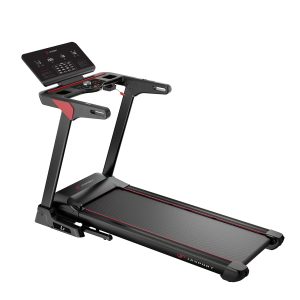
For many people, the treadmill primarily represents long, monotonous runs at a steady pace and is mainly associated with classic endurance training. However, this view significantly underestimates the versatility of this training device. When used correctly, the treadmill can be far more than just a cardio machine – it becomes a dynamic training platform on which... Treadmill Strength & Cardio can be combined effectively.
Thanks to adjustable incline, variable speed, and diverse movement patterns, training sessions can be designed to strengthen muscles—especially in the lower body—and improve cardiovascular endurance. This integrated training approach is not only practical but also based on recognized training principles that can help achieve more comprehensive fitness improvements in less time.
The aim of this guide is to provide a clear and practical framework for effectively combining strength training and cardio on the treadmill. It explains why this combination is effective, which training methods are particularly suitable, and how to develop a progressive training plan. Those aiming for a leaner, stronger, and more resilient physique can benefit from the principles of... Treadmill Strength & Cardio design a particularly efficient training session.
Training synergy: Why the combination works
The core of Treadmill Strength & Cardio lies in the simultaneous activation of multiple physiological systems. One of its greatest advantages is that muscle building and calorie burning can occur in parallel.
Strength-oriented exercises – such as walking or running uphill – particularly engage the glutes, thighs, and calves. At the same time, muscle mass is maintained or built. Muscle tissue also consumes energy at rest, thus supporting the body's basal metabolic rate.
Combining this type of exercise with cardio intervals that significantly raise the heart rate can increase energy expenditure during training and improve overall fitness. Another advantage is that it helps retain as much muscle mass as possible while losing weight, which is important for long-term performance and metabolic health.
Another important factor is time efficiency. When strength training and cardio are done separately, the training duration is often significantly longer. Integrating both components into one session allows for more efficient use of training time without sacrificing training stimuli.
Furthermore, this combination helps to avoid training plateaus. Changes in incline, speed, or direction of movement provide new stimuli. This allows the body to continuously adapt while simultaneously improving performance parameters such as endurance, muscular endurance, and overall performance.
From an injury prevention perspective, varied training can also be beneficial. Constant running on flat surfaces often puts repeated stress on the same structures. Exercises like walking uphill or backward activate additional muscle groups and can improve joint stability.
Basic principles for effective combined training
That way Treadmill Strength & Cardio To ensure effective implementation, some basic training principles should be observed.
The correct training sequence
If the main goal is strength building or muscle training, it's recommended to perform the strength-oriented elements first. In this state, the muscles are still fresh and can generate more power. Typical examples include walking on a steep incline or strength-focused interval sessions.
If, on the other hand, endurance performance is the main focus, it may be useful to start training with cardio intervals or tempo runs.
Control the intensity
A common mistake is to train both strength and cardio at maximum intensity simultaneously. This can lead to rapid fatigue and impair technique. Instead, intensity should be increased gradually – both within a single training session and over several weeks.
Don't forget to warm up and cool down
A complete warm-up of five to ten minutes – for example, light walking or slow jogging – increases blood flow to the muscles and prepares the body for the exertion.
Equally important is a cool-down, during which speed and incline are reduced. This allows heart rate and breathing to slowly return to their baseline levels.
Consider regeneration
Progress comes from a balance between exertion and recovery. Insufficient regeneration can lead to overload and a decline in performance. Therefore, adequate sleep, rest days, and monitoring your own limits are essential components of a sustainable training plan.
Training methods for Treadmill Strength & Cardio
Incline training for the lower body
One of the most effective methods is incline training. By increasing the incline of the treadmill, a movement is created that resembles walking uphill.
The following areas are particularly stressed:
glutes
back of the thigh
quadriceps
Wade
At the same time, the heart rate remains elevated, creating a combined strength and endurance stimulus. Gradually increasing the incline over several training sessions can contribute to continuous progress.
HIIT intervals on the treadmill
Another effective method within Treadmill Strength & Cardio is High Intensity Interval Training (HIIT).
This involves alternating short periods of high intensity with active recovery, for example:
30-second faster run or sprint
60 seconds of slow walking or jogging
This form of training can improve cardiovascular performance and allows for intensive training in a relatively short time.
Circuit training with treadmill
Circuit training can also be easily combined with the treadmill.
An example of a training circuit:
1 minute of light jogging on the treadmill
→ then squats next to the treadmill
1 minute of brisk walking on a steep incline
→ then push-ups on the floor
This combination keeps the heart rate constantly elevated while simultaneously training different muscle groups.
Resistance and movement variations
For additional training stimuli, light dumbbells can also be used while walking on an incline. Simple movements such as bicep curls or shoulder presses can be incorporated.
It is important that the weight remains light enough to ensure a stable posture and safe movement.
Walking backwards or taking sideways steps at a slow speed can also be beneficial. These movements activate muscle groups that are less used during normal forward walking and improve balance and stability.
Develop a progressive training plan
Beginner
Beginners should start with moderate inclines and controlled speeds. The goal is to first develop good technique and basic endurance.
Simple supplementary exercises such as:
Wall Sits
Knee raises while standing
can be a useful addition to the training.
Advanced
Advanced athletes can incorporate HIIT intervals, longer incline phases, and more complex circuit training. A varied weekly structure can help achieve continuous progress.
Advanced athletes
Experienced athletes can try more intensive programs, for example:
steep hill intervals
fast sprint intervals
complex training combinations
During periods of high training load, adequate regeneration becomes particularly important to avoid overload.
Safety and long-term training success
Proper movement technique is crucial for safe training.
When walking or running uphill, the upper body should remain upright, while the slight forward lean comes from the ankles – not from the hips.
Other important points:
shorter, controlled steps
stable knee and foot alignment
safe speed when changing direction
Variety in training also helps to maintain motivation and long-term progress.
Many treadmills display training data such as speed, incline, and training time. Recording these values can help visualize progress and adjust training accordingly.
The path to greater fitness and strength
Viewing the treadmill solely as a device for consistent endurance training doesn't do justice to its potential. The targeted combination of treadmill strength and cardio creates a versatile workout that can effectively develop both muscle and endurance.
The combination of incline training, intervals, and supplementary exercises creates a holistic training stimulus. Those who begin to integrate individual elements of this method into their training can make their treadmill workouts significantly more varied and effective.
With increasing experience, an individual training system can be developed that contributes to greater performance, stability and fitness in the long term.