Free shipping in DE
  30 day returns
  Secure payment
  2 years warranty
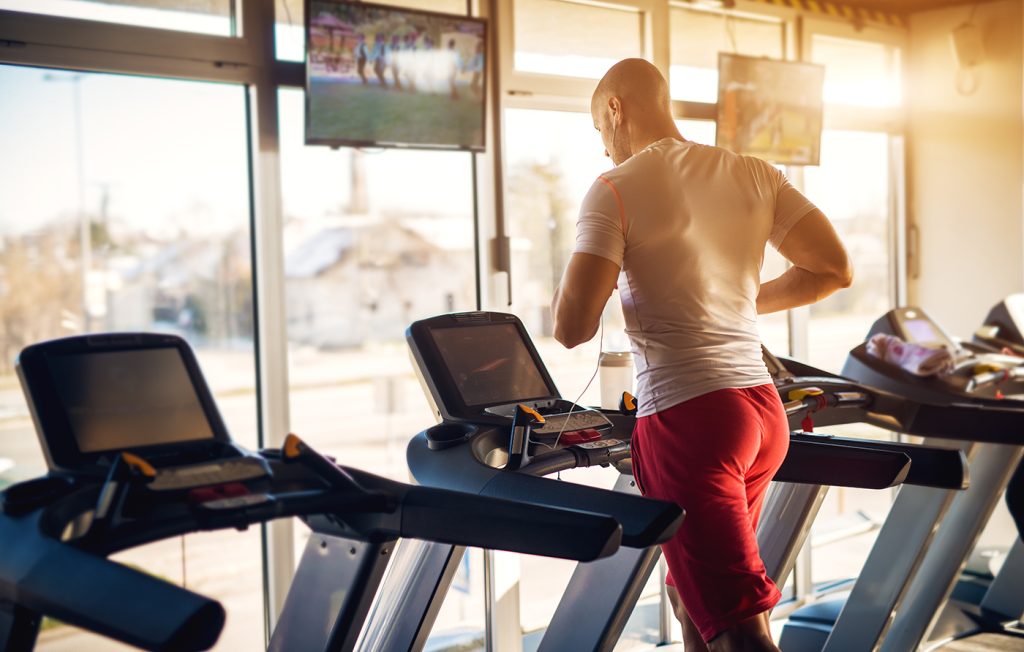
Understanding the connection between treadmill training and knee health
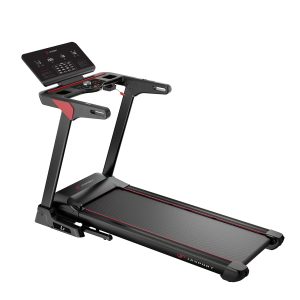
Knee pain is a widespread problem affecting people of all ages—often triggered or aggravated by high-impact activities. Ironically, the solution may lie in a device many already own: the treadmill. When used correctly, it is not only a cardiovascular training device, but also a controlled environment, in which you can strengthen the muscles around the knee, improve joint mobility and relieve discomfort.
The key is to use the treadmill’s adjustable features – Speed, gradient and damping – to minimize stress on the knee while maximizing therapeutic benefits. Unlike uneven terrain or sports with abrupt movements (such as basketball or tennis), the treadmill a message even, joint-friendly surfacethat allows you to focus on posture and pace.
For people with mild to moderate knee pain The treadmill can help you stay active without worsening symptoms. With conscious use, the treadmill transforms from a potential burden into an effective tool for pain relief.
Preparing for knee-friendly treadmill training
The foundation for safe training begins before stepping onto the treadmillA thorough warm-up is essential – it increases blood circulation, makes muscles and ligaments more elastic, and reduces stiffness. Dynamic stretching exercises such as leg swings (forward/backward and sideways), hip circles and light squats Quadriceps, hamstrings and gluteswhich are crucial for knee stability.
Also the right footwear plays a key role: Shoes with good cushioning and arch support act as shock absorbers and prevent shocks from being transmitted directly to the knee joint. Worn or flat shoes, on the other hand, increase pressure on the kneecap and surrounding structures.
Then set the Slope some treadmills easy on 1-2%This simulates natural outdoor walking and reduces pressure on the knee joint compared to flat walking. This small adjustment shifts the load to Buttock and calf muscles and thus ensures a more balanced load.
Start patiently: People with knee problems should 10-15 minutes and increase the intensity slowly. Consider this step as “Attunement” Your body's response to training – a mindful dialogue between you and the treadmill.
Optimal treadmill settings for joint comfort
After warming up, the treadmill settings should be adjusted to the current load capacity of the knees.
Speed: Begin Sie mit eeninem slow to moderate pace (3–5 km/h) – this is equivalent to brisk walking. This allows your knee to get used to the rhythmic movement without being overtaxed. Only increase your speed when walking feels natural and pain-free.
Gradient: A slight incline of 1-3% Activates the posterior muscle chain (glutes, hamstrings, calves) and relieves strain on the knee. Inclines over 3% should be avoided, as they can place excessive strain on the patellar tendon.
Duration: Start with 20-30 minutes per session. This is enough to achieve therapeutic effects without risking fatigue or poor posture. The goal is not to "fight" through the pain, but to find a comfortable, joint-friendly balance.
Correct running technique to minimize knee strain
Even the best settings are of little use if your posture is not correct.
Attitude: Keep your upper body upright, shoulders relaxed, and abdominal muscles slightly engaged—this distributes your weight evenly across your legs. Leaning forward or backward shifts your center of gravity and puts additional strain on your knees.
Footrest: Land with the midfoot instead of the heel. This reduces the braking forces that would otherwise be transmitted to the knee. Avoid Overstrides, i.e., overly large steps in which the foot lands far in front of the body. This forces the knee to abruptly stop the forward movement, increasing pressure on the joint.
Better are short, even stepsthat land directly under the hips – so the muscles, not the knee, absorb most of the impact.
Let the arms swing along looselyTense or held arms lead to upper body tension, which can negatively affect leg and knee movement.
Targeted variations for pain relief and strength building
One-sided routines can lead to stagnation. Variations keep training interesting and effective:
Alternating between normal walking and short incline intervals (1-2 minutes at a 3-4% incline): Activates the glutes and quadriceps – natural shock absorbers of the knee.
After go flat againto relieve pressure on the joint.
Interval walking: 3 minutes of moderate pace, followed by 1–2 minutes of slow walking (2–3 km/h). These breaks reduce cumulative pressure.
Gently walking backwards (1-2 minutes at 2 km/h) can strengthen the back of the legs, but should only be attempted with experience and caution.
These variations maintain the training stimulus, promote stability and make the treadmill a versatile tool for joint-friendly training.
Cooling and regeneration for long-term effects
The workout does not end when the treadmill is switched off. Cool down phase of 3–5 minutes at 2–3 km/h helps to normalize pulse and blood circulation and prevents joint stiffness.
Afterwards static stretching exercises important:
Hamstring stretch (sitting or standing) – releases tension in the back of the legs.
Quadriceps stretch (standing with support) – loosens the front of the thigh.
Calf stretch (on the wall or with a belt) – reduces tensile forces on the knee.
Hold each stretch for 20–30 seconds and avoid rocking movements.
Don’t forget, enough to drink – Liquid supports the Synovial fluid in the joints, which acts as a lubricant. Also, treat your body rest daysto heal micro-injuries in muscles and connective tissue. Overtraining can increase inflammation and worsen pain.
Building a sustainable treadmill routine for healthy knees
The goal of treadmillTraining for knee pain is not a short-term solution, but a long-term improvement in joint health.
Increase speed or incline maximum of 5–10% per week, and only if your knees remain stable. If pain recurs, reduce the intensity or take a break – "going through the pain" often leads to regression.
Combine treadmill training with other joint-friendly activities such as swimming or cycling to strengthen different muscle groups and distribute the load evenly.
Think of the treadmill as Partners, not as an opponent. With the right preparation, mindful posture, sensible attitudes and sufficient recovery, the treadmill can become a powerful tool – one that Relieves knee pain, strengthens muscles and promotes long-term mobility.