Free shipping in DE
  30 day returns
  Secure payment
  2 years warranty
Rowing machine water: advantages and disadvantages for effective training
Rowing is one of the most effective sports for building both endurance and muscle tone. Rowing machines with water resistance have become a trend in recent years. But what are the advantages and disadvantages of a rowing machine with water resistance?
What is a water resistance rowing machine?
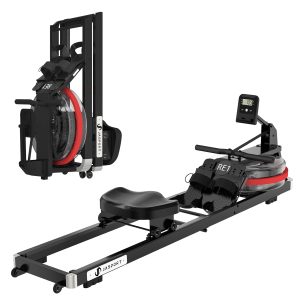
A water-resistance rowing machine uses water as resistance to create a realistic rowing experience. The machine's inner chamber is filled with water, which is agitated during rowing. This creates a natural resistance that varies with the strength and speed of the rower.
The advantages of rowing machines with water resistance
1. Realistic rowing feeling
A water rowing machine offers an authentic feel that closely resembles rowing on water. The gentle movements and sounds of the water create a pleasant and motivating workout experience.
2. Continuous adjustment of intensity
Unlike other resistance systems, you can easily adjust the resistance of a water rowing machine. The faster and harder you row, the more resistance you experience. This means it's suitable for all fitness levels, from beginners to advanced athletes.
3. Low risk of injury
Rowing is a low-impact sport. Because there are no harsh impacts, even people with injuries or limitations can row safely. The water ensures gentle movements and reduces stress on the joints.
4. Total body workout
Rowing activates over 80% of your muscles. Arms, legs, abs, and back benefit from an intensive workout. Therefore, a water-resistance rowing machine is an excellent solution for strengthening the entire body.
The disadvantages of rowing machines with water resistance
1st Prize
Rowing machines with water resistance are often more expensive than their magnetic or air-based alternatives. If you're on a tight budget, this can be a significant disadvantage.
2. Care and Maintenance
Because the machine uses water, there's a risk of algae growth or other water-related problems. The rowing machine requires regular cleaning and maintenance to ensure hygiene and functionality.
3. Weight and size
Water rowing machines tend to be heavier and less compact than other models. This can be a hindrance if you have limited space or plan to move the machine frequently.
4. Noise level
The movement of the water can cause noise during rowing workouts, which may be disturbing for some people. If you want to train in a quiet environment, this is something to consider.
Tips for using a rowing machine with water resistance
1. Proper bootcamp
Start with a warm-up to avoid injury. A short (5-10 minute) light rowing session will prepare your muscles and get you ready for the main workout.
2. Strengthen core stability
Focus on keeping your core engaged. This will help maintain proper posture and minimize the risk of injury. Your core muscles must be engaged during every rowing session.
3. Optimize rowing technique
Proper technique is crucial for an effective workout. Make sure your movements are fluid and avoid jerky movements. Guided training can help you improve your technique.
Conclusion
In summary, rowing machines with water resistance offer numerous advantages, primarily the realistic rowing feel and the possibility of a low-impact workout. However, it's important to consider the disadvantages, particularly in terms of price and maintenance requirements.
Ultimately, the decision as to whether a water-resistance rowing machine is right for you depends on your personal goals, budget, and training habits. Familiarize yourself with this information and decide if this machine fits your fitness routine.