Free shipping in DE
  30 day returns
  Secure payment
  2 years warranty
Water or air rowing machine: Which is best for your training?
Rowing machines are becoming increasingly popular in the world of home exercise. They offer an excellent way to train strength and endurance simultaneously, while requiring minimal space. However, there's a crucial question when choosing a rowing machine: Is a water or air resistance machine better suited to your individual fitness goals? In this article, we compare these two rowing machines and help you make the best choice.
What are water and air resistance rowing machines?
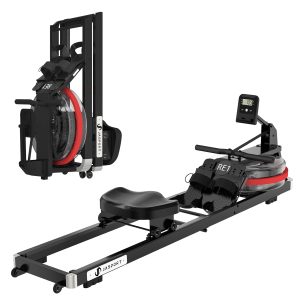
Before we delve into the advantages and disadvantages of both types of rowing machines, it's important to clarify what exactly is meant by water and air resistance. Water resistance rowing machines use a water tank in which the resistance is generated. The faster the user rows, the more lift and resistance the water creates. On the other hand, we have air resistance rowing machines, which are equipped with a wheel that creates air vortexes. Here, too, the faster you row, the more air resistance you have to overcome.
Benefits of Water Rowing Machines
Water rowing machines offer several notable advantages. One of the biggest is the realistic rowing feeling they provide. The gentle lapping of the water and the resistance, which is tailored to the natural movements of rowing, add a special touch to the workout. Furthermore, training on a water rowing machine requires a very consistent technique, which can lead to improved muscle tone and posture.
Another advantage is the noise level. Water rowing machines are generally quieter than their air counterparts, making them ideal for home workouts, especially if you live in an apartment or in a neighborhood with neighbors. Maintenance is also straightforward: A water rowing machine only requires checking the water, especially for the optimal pH level to prevent algae growth.
Disadvantages of water rowing machines
Despite their advantages, water rowing machines also have some disadvantages. One major drawback is their weight. These machines are often heavier and more difficult to move than their air-powered counterparts. Space requirements can also be an issue, depending on whether you plan to store the machine when not in use.
Additionally, the initial investment for most water rowing machines is higher than for air-powered machines. Most high-quality models that simulate real water rowing can come with a high price tag.
Advantages of air rowing machines
In contrast, air rowing machines have their own advantages. They are often more affordable and usually lighter and more compact, making them ideal for people with limited space or budget. Additionally, many models are foldable and extremely portable, which is a huge advantage for those who want to transport their equipment.
Air rowing machines also offer a high degree of resistance adjustability. You can easily intensify your workout simply by rowing faster. This makes the machine perfect for all fitness levels, from beginners to advanced.
Disadvantages of air rowing machines
The biggest drawback has to do with the noise level. Air rowing machines tend to be louder when rowing, which can become uncomfortable over extended periods. Additionally, some air resistance machines can create a less realistic rowing experience, especially for those accustomed to real rowers.
Which rowing machine should you choose?
Choosing between a water and an air rowing machine ultimately depends on your personal preferences, needs, and fitness goals. If you prefer a realistic rowing feel and a quiet workout environment, a water rowing machine might be a better choice for you. However, if you're looking for a compact, easily transportable machine and aren't concerned about noise, an air rowing machine might be the right choice.
The importance of the right technique
Regardless of the type of rowing machine you choose, learning proper rowing technique is crucial. Incorrect rowing can not only hinder your results but also increase your risk of injury. Make sure you maintain proper posture, engage your core, and perform smooth movements.
Additional tips to improve your training
To make your rowing workouts even more effective and enjoyable, consider the following tips:
- Variation of intensity: Alternate between low, medium and high intensities.
- Use of interval units: Interval training can help improve your endurance as well as your muscle strength.
- Regular breaks: Make sure you allow enough time for recovery.
Finally, never forget to adjust your training plan. Your body will adapt to the workout, so it's important to regularly set new challenges and refresh your routine.
Conclusion
With all this information, you're now in an excellent position to choose the right rowing machine for your needs. Remember that any type of training is valuable as long as it brings you closer to your fitness goals. And ultimately, consistency in your training will bring the greatest results.