Free shipping in DE
  30 day returns
  Secure payment
  2 years warranty
Rowing machine and back pain: causes and solutions
Rowing is one of the most effective sports, engaging both body and mind in a unique way. Many people use rowing machines to increase their fitness, lose weight, or prepare for competitions. However, some athletes report experiencing back pain during or after training. In this article, we explore the typical causes of back pain while rowing and offer tips on how to avoid it.
The importance of the right technique
Proper technique is crucial for a safe and effective rowing exercise. Many beginners tend to neglect proper posture in the rush of training. Incorrect posture can lead not only to back pain but also to injury. Your back should always be kept in a neutral position. Be careful not to hunch your shoulders and keep your spine in a straight line.
The role of muscles
A well-trained back is crucial for avoiding pain during rowing training. The back muscles, especially those along the spine and in the lower back, play a key role. If these muscles are weak, they are subjected to greater strain, which can lead to tension and pain. Regular strength training that focuses on the back muscles can help.
Tips for back training
- Rowing with proper resistance: Start with light resistance to improve your technique and avoid injury. Gradually increase the resistance as you feel comfortable.
- Warming up is mandatory: You should warm up thoroughly before every training session. Stretching exercises, especially for your back and legs, help prevent injuries.
- Strength training to strengthen the back muscles: Integrate special exercises such as back extensions and rowing exercises into your fitness program.
Choosing the right rowing machine
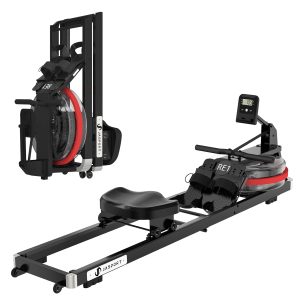
Choosing the right rowing machine can have a huge impact on your workout experience. Not all machines are created equal—high-quality rowing machines offer better ergonomics and support proper posture. Make sure the machine is sufficiently adjustable to accommodate your body type. A well-matched rowing machine can help prevent back pain while increasing the efficiency of your workout.
Common causes of back pain when rowing
Back pain can occur for a variety of reasons. Some of the most common causes are:
- Wrong technique: One of the most common causes of back pain. Check your technique regularly, perhaps with a trainer.
- Muscle imbalance: A strongly developed chest muscle and a weak back can lead to poor posture.
- Overexertion: Insufficient rest periods between training sessions can overload the body.
Common mistakes when rowing
A number of common mistakes can also lead to back pain. Be sure to avoid the following:
- Too much weight: Trying to move too much weight too quickly can lead to injury.
- Jumping movements: Uncontrolled movements can place great strain on the spine.
- Frequent bending of the back: Make sure your back stays straight the entire time.
Regeneration and care
The importance of recovery and self-care should not be underestimated. Overexertion can lead not only to back pain but also to more serious injuries. Be sure to include rest days in your training and focus on active recovery, such as gentle stretching or yoga. Massages can help relieve muscle tension and promote regeneration.
The right diet to support back health
A balanced diet plays a crucial role in your overall health and performance. Certain foods can reduce inflammation and accelerate healing. Increase your consumption of foods high in omega-3 fatty acids, such as fish, nuts, and seeds. Antioxidant-rich foods such as berries, leafy green vegetables, and spices like turmeric can also be beneficial.
Summary and Outlook
Rowing is a great way to improve endurance and muscle strength. However, it's important to follow some basic principles to avoid back pain. Ensure proper technique, strengthen your core muscles, choose a suitable rowing machine, and ensure proper recovery. By following these guidelines, you can enjoy a pain-free and effective rowing experience.