Free shipping in DE
  30 day returns
  Secure payment
  2 years warranty
Rowing machine with water or without: Which is better?
Rowing machines have become increasingly popular in recent years. This is due not only to their effectiveness, but also to the versatility these machines offer. A common question that many fitness enthusiasts ask is: Should I choose a water-based or a non-water-based rowing machine? In this article, we compare both options and help you make the best choice for you.
How rowing machines work
Before we delve into the advantages and disadvantages of water and non-water rowing machines, it's important to understand how these machines work. Rowing machines simulate rowing on water and are particularly effective for a full-body workout. Most models use resistance to train different muscle groups.
rowing machines with water
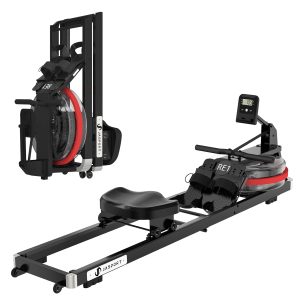
Water rowing machines utilize water resistance, giving users the sensation of actually rowing on the water. The water is held in a tank in the center of the machine. The rowing strokes create pressure on the water, providing consistent resistance. Here are some of the advantages of water rowing machines:
- Realistic rowing feeling: The resistance offered by the water is very consistent and allows for a realistic training experience.
- Low maintenance: Water as a means of resistance requires less maintenance than mechanical parts in other models.
- Aesthetics: These devices often look attractive and can also serve as decoration in the room.
- Quiet operation: Rowing machines with water are generally quieter because the water itself dampens noise.
Disadvantages of water rowing machines
Despite the many advantages, there are also some aspects that potential buyers should consider:
- Weight Devices with water are often heavier and less portable.
- water change: It may be necessary to change the water regularly to ensure optimal performance.
Rowing machines without water
Unlike water rowing machines, waterless models primarily use mechanical resistance. This type of rowing machine can utilize various resistance systems, such as air, magnetic, or hydraulic resistance. Here are some of the advantages of these machines:
- Easier handling: Rowing machines without water are generally lighter, making them easier to transport and store.
- Variability: Some models allow for more precise adjustment of resistance, which can be beneficial for advanced athletes.
- Low maintenance effort: There is no need to change the water or maintain it.
Disadvantages of rowing machines without water
Of course, rowing machines without water also have their disadvantages:
- Resistance experience: The resistance may feel less natural than on water rowing machines.
- Volume: In many models, air resistance can lead to higher noise levels.
Who are water rowing machines suitable for?
Water rowing machines are ideal for people who value a realistic rowing feel and are looking for a relaxing yet intense workout. They're ideal for users who value the aesthetics of their machine and are willing to invest a little more effort in maintenance.
Who are rowing machines without water suitable for?
Waterless rowing machines are ideal for athletes who want precise control over their resistance and appreciate the benefits of a lighter, more portable machine. They're also a good choice for people who have limited space and prefer easier maintenance.
prices and budget considerations
An important consideration when choosing a rowing machine is cost. Water rowing machines are generally a bit more expensive than their mechanical counterparts. It's therefore important to set your budget before making your decision and consider which features and functions are most important to you.
Make the right choice
The decision between one Rowing machine with or without water should be carefully considered. Consider your personal preferences, budget, and fitness goals. Remember that no one piece of equipment is inherently "better"; it all depends on your individual needs.
Tips for using rowing machines
No matter which rowing machine you choose, there are some basic tips that can help you get the most out of your workout:
- Correct technique: Be sure to learn proper rowing technique to avoid injury and achieve optimal results.
- Warm up: Always warm up well before starting your workout.
- Regularity: To see results, it is important to train regularly and stick to set times.
Whether you ultimately choose one Rowing machine with or without water Both options have their unique advantages. Analyze your needs, test drive at a gym or retail store, and find the machine that best fits your lifestyle. Also, keep the tips above in mind to make your rowing workout effective.