Free shipping in DE
  30 day returns
  Secure payment
  2 years warranty
Rowing machine for beginners: achieve wattage goals and learn the right technique
Rowing is one of the most effective ways to increase endurance, build muscle, and burn calories. The smell of fresh air, the gentle lapping of the water, and the rhythmic pull of the rowing machine—it's not only a workout for the body, but also for the mind. However, many beginners are often overwhelmed by the sheer amount of information and techniques involved in using a rowing machine correctly. In this article, we'll teach you everything you need to know about rowing as a beginner, as well as provide helpful tips for achieving your wattage goals.
What is a rowing machine?
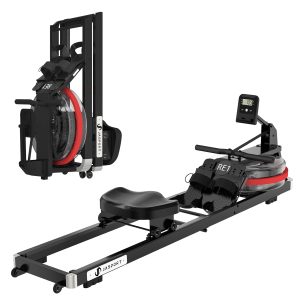
A rowing machine simulates the motion of rowing on water and provides a complete, full-body workout. It not only trains the arm, back, and leg muscles, but also the core. Suitable for both beginners and advanced users, the machine is an excellent way to improve your fitness. Rowing can be practiced not only in gyms but also at home, making it a flexible option for many people.
Differentiation of rowing machines
Before we dive deeper into the details, it's important to understand the different types of rowing machines available on the market. Here are the most common types:
- Water rowing machines: Use water as resistance and offer a very realistic rowing feel.
- Air rowing machines: Use air resistance; the faster you pull, the higher the resistance.
- Magnetic rowing machines: Offer quiet resistance, ideal for training at home.
- Hydraulic rowing machines: Have a lower price but offer different resistance settings.
Basics of Rowing
To row effectively, proper technique is crucial. You need to focus on your posture and flow of movement. Here are the four essential phases of every rowing session:
- The starting position: Sit on the rowing machine with your back straight and your legs straight.
- The feed: Perform a gentle movement that activates your arms and legs.
- The train: Pull the handle towards your body while straightening your legs.
- The Return: Slowly return to the starting position and repeat.
Why watts are important
Measuring wattage is an effective way to monitor the level of exertion and intensity of your workout. For beginners, it's crucial to understand the relationship between heart rate and wattage output. Here are some benefits of using watts as a metric:
- Improves training control and allows you to make adjustments.
- Helps track progress over time.
- Allows you to set realistic goals that are tailored to your fitness level.
Getting started for beginners: Setting realistic wattage goals
When you start rowing, it's important not to overexert yourself. Set realistic wattage goals that are both challenging and achievable. Here's one possible approach to setting your goals:
- Start by recording your current performance: Do a test run to capture your initial values.
- Plan a progressive increase: Gradually increase your wattage goals by about 10% each week.
- Monitor your progress: Use a training journal or apps to track your performance over time.
Training tips for beginners
Here are some useful tips to improve your technique and train more effectively:
- Warm up: An active warm-up prepares muscles and joints and reduces the risk of injury.
- Courses or online training: Take part in group classes or online training sessions to get valuable feedback on your technique.
- Vary your training: Incorporate intervals or Tabata workouts to add variety to your training.
- Listen to your body: Watch for signs of fatigue or injury and adjust your training intensity.
The importance of recovery
One of the most common mistakes is the intention to give your all during training, which often leads to overtaxing the body. Rest breaks are just as important as the training itself. Allow yourself regular rest days and consider incorporating gentle exercises like yoga or stretching to improve flexibility and promote muscle recovery.
Conclusion
Rowing can be an excellent way to improve fitness and achieve your wattage goals. With the right technique and a well-thought-out training plan, you'll see rapid progress. Remember to learn the basics, set realistic goals, and don't forget to have fun while training.