Free shipping in DE
  30 day returns
  Secure payment
  2 years warranty
Effective rowing machine training: tips for beginners and advanced users
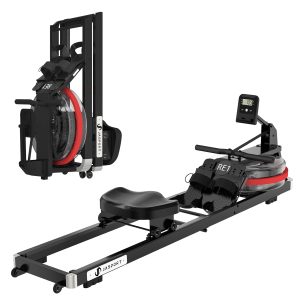
Rowing is one of the most effective exercises for strengthening the entire body and is often cited as the best total-body workout. A rowing machine can help you achieve your fitness goals, whether you're a beginner or an advanced rower. In this article, you'll learn everything you need to know about training effectively with a rowing machine. We'll give you tips on proper technique, training planning, and much more.
The advantages of the rowing machine
- full body workout: Rowing works almost all muscle groups, including back, legs, arms and core.
- Cardiovascular Fitness: Regular rowing strengthens the cardiovascular system and increases endurance.
- Calorie burning: Rowing is a calorie-burning exercise that helps with weight loss.
- Gentle on the joints: Compared to many other sports, rowing is gentle on the joints and is therefore suitable for people with joint problems.
The right technique is crucial
To get the most out of your rowing machine workout, proper technique is crucial. Here are the basic steps for proper rowing technique:
- The starting position: Sit on the rowing machine with your feet firmly in the loops. Lean slightly forward, knees bent, and grasp the handlebar with both hands.
- The train: Start with your legs. Push your feet into the crampons while simultaneously beginning the arm pull. Keep your back straight and pull the handle toward your torso.
- The Return: Slowly return the handle as you lean forward and bend your legs again.
Training planning for different fitness levels
For beginners
If you're new to rowing, you should start with short, intense sessions. An ideal beginner's workout might look like this:
- Warm up: 5 minutes of easy rowing at low intensity.
- Interval: 4 x 1 minute fast rowing with 1 minute rest in between.
- Cooling down: 5 minutes of slow rowing to lower your heart rate.
For advanced
If you already have experience with the rowing machine, you should try increasing your endurance and strength. An advanced workout might look like this:
- Warm up: 10 minutes moderate pace.
- Interval training: 5 x 2 minutes hard rowing with 1 minute slow recovery in between.
- long-distance rowing: 20-30 minutes of constant rowing at moderate intensity.
- Cooling down: 5-10 minutes of slow rowing.
Common mistakes and how to avoid them
Many beginners make common mistakes when rowing that not only reduce the effectiveness of their workout but can also cause injuries. Here are some common mistakes and tips on how to avoid them:
- Incorrect posture: Make sure your back stays straight and your head is in line with your spine. Avoid leaning forward.
- Excessive force: Use your legs to transfer power to the handle. Avoid using too much force from your arms.
- Movements that are too fast: Make sure to make smooth, controlled movements rather than hasty movements.
maintain motivation
As with any workout, staying motivated can be difficult. Here are some tips to help you maintain your motivation:
- Set goals: Set achievable goals, such as the length of your workout or the number of calories you want to burn.
- Find a training partner: Exercising with a friend can increase motivation and make training more enjoyable.
- Bring variety to your training: Vary your training by trying different programs or recovery times.
The Importance of Regeneration
No matter how intense your rowing workout is, don't forget to give your body time to recover. Recovery is crucial for avoiding injuries and improving your performance. Incorporate rest days into your training schedule and make sure you get enough sleep and eat a healthy diet.
Conclusion
The rowing machine is an excellent piece of training equipment that can help you achieve your fitness goals. Whether you're a beginner or an advanced rower, proper technique, planning, and motivation are crucial to your success. With the tips above, you'll be well-equipped to make your rowing sessions effective and get the most out of your workout.