Free shipping in DE
  30 day returns
  Secure payment
  2 years warranty
Effective training with the rowing machine: Tips for beginners and advanced users
The rowing machine is extremely popular both in the gym and for home workouts. It combines an effective full-body workout with a low risk of injury. In this article, you'll learn how to train effectively with a rowing machine—both as a beginner and as an advanced user.
What is a rowing machine?
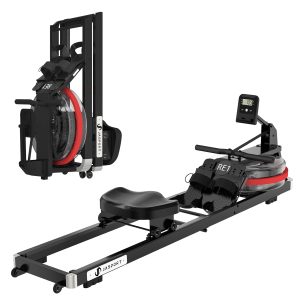
A rowing machine simulates the movements of rowing in water and offers an excellent way to improve endurance, strength, and coordination. It simultaneously works multiple muscle groups, including the back, legs, arms, and core. Rowing machines are available in many different versions, from simple models to high-tech machines with numerous features.
The benefits of rowing
- full body workout: Rowing uses up to 85% of the muscles, making it an extremely effective workout.
- Low risk of injury: Because the rowing machine is gentle on the joints, it is ideal for people with injuries or joint problems.
- Improved Endurance: Through regular exercise you strengthen your cardiovascular system and increase your endurance.
- Calorie burning: Rowing effectively burns calories and can therefore help you lose weight.
The correct rowing technique
To get the most out of your workout and avoid injury, proper technique is crucial. Here are the four phases of rowing:
1. The upward movement (catch)
Start with your legs slightly bent and your back straight. Your arms should hold the rowing handles as you lean forward to initiate the movement.
2. The Drive
As you lean back, push with your legs and simultaneously pull the handles toward your torso. Make sure to keep your elbows close to your body.
3. The Return (Finish)
During this phase, you should raise the handles with your arms extended, keeping your back straight. Complete the movement by bending your legs again.
4. The back movement (Recovery)
In this phase, bring your arms forward again and lean forward slightly before beginning the upward movement again. This phase should be smooth and controlled.
training plans for beginners
If you're new to rowing, it's recommended to start with a structured training plan. Here's a simple plan for your first three weeks:
Week 1: Laying the foundations
- 3 training sessions per week
- Each session should last 15-20 minutes
- Start with low intensity (2-3 rounds)
Week 2: Increase in intensity
- 3-4 training sessions per week
- Each session should last 20-30 minutes
- Add interval training: 1 minute high intensity, 2 minutes recovery
Week 3: Endurance and strength
- 4-5 training sessions per week
- Each session should last 30-40 minutes
- Integrate different intensity levels
Advanced Rowing Training
If you are already familiar with rowing, you can intensify your training sessions using the following methods:
interval training
Alternate between intense rowing sessions and lower-intensity periods. For example, 500 meters at a brisk pace followed by 2 minutes of slow rowing.
long-distance units
Set a goal to row longer distances (e.g., 5000 meters or more) at a moderate pace. This will help significantly increase your endurance.
Strength building
Incorporate additional strength training to strengthen the muscles you use while rowing. Exercises like deadlifts, pull-ups, and dips are very effective here.
The right accessories for rowing training
To make our training more effective, we can also consider accessories:
- Sports shoes: Your attention when purchasing suitable shoes can make a difference to your performance. Look for non-slip soles.
- Fitness watch: Tracking heart rate and calories can help monitor progress and improve your performance.
- gloves: Special rowing gloves can help prevent blisters and injuries to your hands.
Nutrition for rowers
Not only training, but also nutrition plays a crucial role in your success. Here are some tips:
- Before the training: Light carbohydrates (e.g. a banana) can give you energy for your workout.
- After training: A combination of protein and carbohydrates (e.g., a protein shake with a banana) helps repair muscles and replenish glycogen stores.
The role of recovery
Recovery is a crucial component of an effective training program. Get enough rest and sleep to achieve optimal results. Stretching exercises and massages can also be complementary measures to help keep muscles supple.
By combining effective techniques, well-structured training plans, proper nutrition, and adequate rest, you'll quickly see progress with your rowing machine training. Use these tips and keep yourself informed to achieve your fitness goals!