Free shipping in DE
  30 day returns
  Secure payment
  2 years warranty
The advantages and disadvantages of rowing machines: water vs. air
Rowing is one of the most effective sports, building both strength and endurance. Rowing machines are extremely popular, both in gyms and at home. Two of the most common types are water and air rowing machines. In this article, we'll explore the advantages and disadvantages of both types and help you make the best choice for your fitness goals.
What are rowing machines?
Rowing machines simulate the motion of rowing on water and are an excellent way to train multiple muscle groups simultaneously. They are especially popular in the fitness world because they target the entire body and provide an effective cardiovascular workout. The two common types of rowing machines are water and air rowing machines.
Water rowing machines: how they work and their advantages
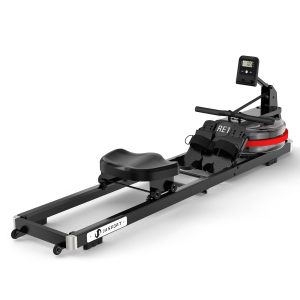
Water rowing machines use a water tank to generate resistance. The rowing-side pectoral muscle movements create waves in the water, increasing resistance. This creates a realistic rowing feel and very fluid movements. Here are some advantages of this type of rowing machine:
- Realistic experience: The feeling of actually rowing in the water is very appealing to many users. It provides an authentic experience.
- Pain-free movement: Due to the fluid resistance, training is often gentler on the joints, which is a decisive advantage for many athletes.
- Aesthetics: Water rowing machines often have an attractive design. The view of the water during your workout can also be motivating.
Disadvantages of water rowing machines
Despite their many advantages, water rowing machines also have some disadvantages:
- Maintenance: Water rowing machines require more maintenance. The water needs to be changed regularly and possibly chemically treated to prevent mold and bacteria.
- Price: These machines are generally more expensive than air rowing machines, which can be a disadvantage for many buyers.
- Weight Water rowing machines are often heavier, which can make transport and storage difficult.
Air rowing machines: how they work and their advantages
Air rowing machines use air resistance generated by the rower's movement. These machines are simple and often more cost-effective alternatives to water rowing machines. Here are some of the advantages of air rowing machines:
- Cost effective: In general, air rowing machines are cheaper to purchase and therefore more attractive to many users.
- Low maintenance: These devices require less maintenance because they do not contain water tanks and therefore no water changes or chemical treatments are necessary.
- Portability: Air rowing machines are generally lighter and easier to transport and store.
Disadvantages of air rowing machines
As with water rowing machines, there are also some disadvantages to air rowing machines:
- Noise development: Air rowing machines can be noisy during exercise, which could be annoying for users.
- Less realistic: The rowing feeling is not as realistic as with water rowing machines and is therefore less suitable for those who want to experience authentic rowing.
- Resistance setting: Many air rowing machines do not allow the resistance to be adjusted to suit the rower's fitness level, whereas water rowing machines are more flexible in this regard.
Comparison of the two rowing machines
When it comes to choosing between water and air rowing machines, it all comes down to your individual preferences and needs. The decision could depend on several factors, including budget, space, fitness goals, and personal preferences. While water rowing machines offer a unique and realistic experience, air rowing machines are often cited as practical and cost-effective solutions.
Conclusion
To make your final decision, consider the above factors and perhaps test both types at the gym. The right rowing machine can significantly enhance your workout routine and help you achieve your fitness goals.