Free shipping in DE
  30 day returns
  Secure payment
  2 years warranty

Regaining mobility in a familiar environment
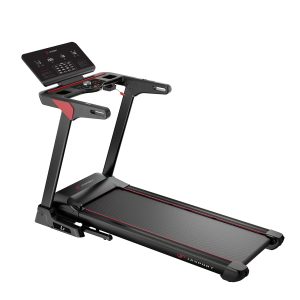
Recovery from an injury presents both physical and psychological challenges, and the environment in which rehabilitation takes place can significantly influence the entire healing process. For many people, regaining mobility in the safety and familiarity of their own home is particularly appealing. This environment reduces external stressors and allows them to focus their attention entirely on their body's signals and the gradual progress they make. Treadmill for injury rehabilitation It offers a practical solution, as it creates a stable and predictable movement platform – without the uncertainties of weather or uneven outdoor terrain. In the context of postoperative or post-traumatic rehabilitation, access to a treadmill means that essential cardiovascular and gait training can begin safely, even before outdoor activities are possible again. The familiarity of the home environment provides security and promotes the regularity that is crucial for rebuilding strength, coordination, and endurance. When integrated effectively, it becomes a treadmill For injury rehabilitation, it is far more than just a training device: it becomes a central component of home rehabilitation, supporting every phase of healing and preventing setbacks due to overload or unsuitable conditions.
Controlled pace for gradual healing
A key advantage of a Treadmills for injury rehabilitation The advantage lies in the precise control of movement parameters. Speed, incline, and training duration can be finely adjusted and precisely adapted to the individual's capacity. This control is particularly important in the early stages of rehabilitation, as sensitive tissues and joints must be protected from unnecessary stress. The joint-friendly movement of walking or very light jogging on the treadmill maintains blood circulation and neuromuscular activation without creating sudden impacts that could impair the healing process. By carefully applying the principle of progressive overload, users can progress from simple weight shifts and short walking phases to longer sessions with moderately increasing intensity – always within pain-free and safe limits. This controlled progression promotes injury-specific adaptations, allowing the body to learn to cope with existing limitations and gradually overcome them. A treadmill for injury rehabilitation thus gives those affected the opportunity to determine their own pace and ensure that every step forward contributes constructively to regaining function.
Safe integration into everyday life
The flexibility of treadmill training makes it easier to seamlessly integrate rehabilitation measures into everyday life at home and simultaneously reduces dependence on frequent clinic appointments or trips to rehabilitation centers. Neither weather conditions, time of day, nor surroundings pose obstacles; a Treadmill for injury rehabilitation It enables targeted exercise precisely when it fits into an individual's schedule and current energy level. This reliability promotes training consistency – an essential factor for successful rehabilitation. Because the running surface is smooth and predictable, the risk of tripping or slipping, as can happen on uneven ground, is also reduced. Performing rehabilitation at home also offers psychological benefits: without the pressure of a clinical environment, performance anxiety decreases, and intrinsic motivation increases. Over weeks and months, this easy integration supports the development of stable habits, leading to continuous progress in mobility and self-confidence. Thus, a treadmill for injury rehabilitation acts as a bridge between therapeutic guidance and independent, disciplined training at home.
Support for joint function and muscle activation
A key goal of rehabilitation after an injury is to restore the harmonious interplay of muscles and joints, which is necessary for fluid and efficient movement. Treadmill for injury rehabilitation This process is supported by repetitive, weight-bearing movements that activate large muscle groups in the lower extremities while promoting proper joint alignment. During walking or controlled jogging, the quadriceps, hamstrings, calf muscles, and glutes work in a coordinated manner with the flexion and extension of the joints. This strengthens neuromuscular connections that are essential for functional movement patterns in everyday life. These patterns can be directly transferred to activities such as standing up from a seated position, climbing stairs, or walking on different indoor surfaces. Thanks to adjustable speed and incline options, specific muscle groups can be targeted – for example, to strengthen the hip stabilizers or improve ankle proprioception. Because the load can be finely controlled, the risk of sudden overload remains low, and the healing structures can adapt without being overtaxed. In this way, a treadmill for injury rehabilitation not only contributes to maintaining endurance but also to the targeted rebuilding of muscle strength and joint mechanics.
Monitor and adjust intensity – without external pressure
A frequently underestimated advantage of using a Treadmills for injury rehabilitation In the home environment, the opportunity for self-monitoring and independent adjustment is crucial. Users can perceive their heart rate, breathing rhythm, subjective perception of exertion, and even the quality of their foot strike, deciding in real time whether to maintain the pace, slow down, or take a break. This self-regulation fosters a deeper body awareness—a skill invaluable throughout rehabilitation and beyond. Small adjustments to speed or incline can mimic the gradual increase in workload found in professional rehabilitation programs, ensuring that progress aligns with actual capacity rather than rigid targets. Even without complex technology, documenting duration, distance, and subjective perception is often sufficient to safely guide progress. Without the social or performance pressure of group training, a mindful environment is created where each session is guided by internal feedback, prioritizing tissue protection and sustainable improvement.
Build consistency through familiar environmental stimuli
Humans respond positively to routine, and the neural systems of motor learning benefit particularly from repetition in a familiar environment. Rehabilitation at home with a treadmill for injury rehabilitation Instead, sensory overload is reduced, allowing the brain and body to fully concentrate on the quality of movement. Repeated training in the same space strengthens motor engrams—the neural patterns for efficient movement sequences. Over time, this results in a smoother, more automated gait and a more stable posture, both hallmarks of regained functional mobility. Simultaneously, the consistency of the home environment supports long-term training discipline, which is often a challenge during rehabilitation. The visible presence of the treadmill acts as a daily incentive to remain active, even on less motivated days. Thus, a treadmill helps injury rehabilitation transform good intentions into firm habits and facilitates the transition from sporadic training to reliable progress.