Free shipping in DE
  30 day returns
  Secure payment
  2 years warranty
The correct stroke sequence: rowing machine strokes per minute optimally
When rowing, it's not just about proper technique, but also stroke rate. Many fitness enthusiasts use the rowing machine to improve their endurance and strengthen their muscles. A common topic in fitness circles is the question of the optimal number of strokes per minute (SPM) for achieving the best results. In this article, we'll explore the best practices for effectively utilizing SPM and maximizing overall rowing performance.
What are beats per minute (BPM)?
Strokes per minute (SPM) refers to the number of rowing strokes performed in one minute. This metric is crucial for assessing the intensity of training. Athletes and coaches use this metric to control and vary training load. High SPM values generally indicate more intense workouts, while low SPM values can indicate longer, controlled pulls.
The importance of stroke frequency
The optimal stroke rate depends on several factors, including fitness level, personal goal, and training type. A beginner might start at 22 to 26 bpm, while experienced rowers often range between 28 and 34 bpm. For competitive rowing, the stroke rate can vary even further. Generally speaking, a higher stroke rate requires more strength and endurance, but also promotes cardiovascular health.
The ideal stroke sequence for different training goals
Depending on your training goal, a specific stroke rate may be recommended. For beginners who want to build their basic endurance, a stroke rate of 20 to 24 strokes per minute is suitable. This allows you to refine your technique and build muscle without overloading your joints.
For fat burning, it's often recommended to aim for an average heart rate of 24 to 28 beats per minute. This rate ensures that the body switches into fat-burning mode and the heart rate remains in an optimal range.
Advanced athletes looking to improve their performance often focus on frequencies of 28 to 32 BPM to maximize their anaerobic capacity and intensely challenge their muscles.
Techniques to improve stroke rate
Controlling and improving your stroke rate requires a strategy. Here are some techniques that can help:
- Interval training: Alternate between high and low stroke rates. This helps your body adapt to different intensities.
- Focused rowing: Focus your attention on each stroke to ensure you maintain consistent technique.
- Take part in rowing courses regularly: Professional trainers can provide valuable feedback and help improve stroke rate.
How do you measure beats per minute?
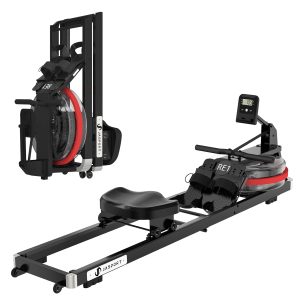
Most modern rowing machines are equipped with a built-in computer that displays strokes per minute. This feature allows you to monitor your performance in real time and make adjustments. Be sure to keep an eye on your SPM throughout your workout to ensure you stay within your desired range.
The role of breathing
Breathing technique also plays a crucial role when it comes to stroke rate. Even breathing helps increase lung capacity and improve endurance. Try coordinating every second or third rowing session with a breath. This can help you maintain a consistent stroke rate while maximizing your endurance.
Common stroke frequency errors
Some common mistakes athletes make with rowing frequency are:
- Poor posture: Good posture is crucial to avoid injuries and maximize efficiency.
- Resistance too high or too low: The resistance should be chosen so that the stroke rate can be maintained without losing form.
- No variation in training intensity: Getting used to the same stroke rate over a long period of time can lead to stagnation.
Summary of best practices
When using a rowing machine, it's crucial to understand and correctly utilize strokes per minute (SPM). Your stroke rate should be adjusted to your individual goals—be it endurance, fat burning, or performance improvement. Through techniques like interval training and targeted breath control, you can improve your stroke rate and thus achieve more effective workouts.
Since rowing is one of the most effective forms of full-body exercise, we recommend regularly working on your technique and stroke rate. Targeted training not only has a positive impact on your rowing technique, but also on your overall fitness and health. Good rowing training not only supports your muscles but also strengthens your endurance and cardiovascular system.