Free shipping in DE
  30 day returns
  Secure payment
  2 years warranty
Optimal muscle strain on the rowing machine: tips and techniques
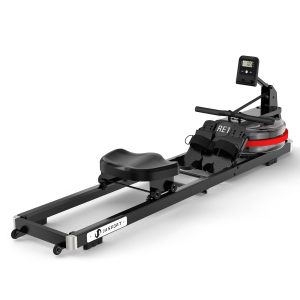
The rowing machine is becoming increasingly popular in gyms and at home. It's considered an effective tool for improving endurance and strengthening muscles. But how can you optimize muscle strain while rowing? In this article, you'll learn everything you need to know about technique, muscles, and the best tips for effective training.
1. Anatomy of the muscles in rowing
Rowing engages a variety of muscle groups throughout the body. The main muscle groups include:
- back muscles: The latissimus dorsi, the broad back muscle, is particularly stressed.
- Leg muscles: The thigh muscles, especially the quadriceps and hamstrings, play a crucial role in power transmission.
- abdominal muscles: Strong core muscles are necessary to ensure stability during the rowing movement.
- arm muscles: Biceps and triceps are also active and support the pulling movement.
2. The right technique for maximum muscle strain
To effectively engage your muscles, proper rowing technique is crucial. Pay attention to the following points:
2.1. The starting position
Start in an upright position with your knees slightly bent. Your back should be straight and your shoulders relaxed. This lays the foundation for an efficient rowing movement.
2.2. The train
Perform the pull with a powerful movement. Start with your legs, followed by your hips, and finally your arms. Keep your elbows close to your body to maximize the use of the activated muscles.
2.3. The repatriation
Make sure the return movement is just as controlled. This prevents injuries and ensures the body remains consistently active. Here, too, the legs should be moved first, followed by the upper body and arms.
3. Tips for increasing muscle strain
To maximize the training effect of rowing, you can consider the following tips:
3.1. Variation of intensity
Change the intensity of your workout regularly. High intensity with short rest periods promotes muscle engagement and increases your endurance.
3.2. Interval training
Incorporate interval training into your routine. Alternate between short, intense sprints and slow, recovery phases to increase muscle activation.
3.3. Different rudder positions
Experiment with different rowing positions, such as overhead rowing or one-handed rowing, to target different muscle groups.
4. Additional exercises to support rowing performance
To support your rowing performance, it is advisable to incorporate various complementary exercises into your training.
4.1. Deadlifts
Deadlifts strengthen not only your back but also your leg muscles and core. This exercise is an excellent complement to increase your rowing performance.
4.2. Plank exercises
Plank exercises are effective for strengthening the abdominal muscles. A strong core is essential for rowing technique and helps you maintain proper posture.
4.3. Pull-ups
Pull-ups build upper body strength, especially in the back and arm muscles. This is crucial for the pulling motion in rowing.
5. Nutrition and regeneration
A comprehensive training approach includes not only technique and exercises, but also proper nutrition and recovery. Make sure you eat a protein-rich diet to support muscle growth and allow for adequate recovery time.
6. Avoid common mistakes
To optimize your rowing training, you should avoid common mistakes:
- not to neglect posture;
- starting too quickly at high intensity;
- insufficient warm-up and cool-down phases.
7. Conclusion: Maximize muscle strain when rowing
The rowing machine is an extremely effective fitness tool that actively engages many muscle groups. With proper technique, targeted increases in intensity, complementary exercises, and a balanced diet, you can significantly improve your performance and muscle tone and achieve your fitness goals.