Free shipping in DE
  30 day returns
  Secure payment
  2 years warranty
The best tips for using a rowing machine effectively for your daily workout
Rowing is considered one of the most effective full-body workouts, building both strength and endurance. In recent years, the rowing machine has gained popularity, especially among those seeking an effective and efficient workout without having to leave the house. In this article, we'll give you valuable tips on how to get the most out of your rowing machine to achieve faster results and keep your workout interesting.
1. The correct setting of the rowing machine
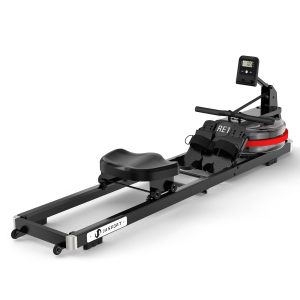
Before you begin your workout, it's important to adjust the rowing machine to your height and fitness level. The seat depth and foot straps should be adjusted so that you can perform a comfortable and controlled rowing motion. Make sure your ankles are slightly bent and your feet are firmly supported, ensuring you have a stable stance.
2. The correct rowing technique
Proper rowing technique is crucial to avoid injury and maximize the effectiveness of your workout. Start with a straight posture, slightly retracting your shoulders, and keeping your back straight. Focus on the movement by pushing your legs first, followed by hyperextending your back, and finally pulling the handle toward your chest. This sequence ensures effective use of your muscles and increases calorie burn.
3. Warming up and cooling down
As with any training program, warming up is essential for rowing. Start with 5 to 10 minutes of easy rowing to get your muscles up to operating temperature. After your workout, you should also allow a few minutes to slowly lower your heart rate and stretch your muscles. Cooling down reduces the risk of muscle tension and promotes recovery.
4. Training programs for different fitness levels
Regardless of your fitness level, you can adapt your rowing routine. Beginners should start with shorter sessions and a lower intensity, while advanced rowers can complete longer, more intense workouts. Here are some suggested training programs:
- Beginner: 15 minutes of easy rowing, 3 minutes rest, repeat 2 times.
- Advanced: Interval training with 10 minutes of fast rowing followed by 2 minutes of slower pace, totaling 30 minutes.
- Pros: 45 minutes of continuous rowing at varying speeds.
5. Add variety to your training
To combat boredom, make sure you add variety to your workouts. Vary the intensity, try different rowing machine programs, or take advantage of online courses. You could also change the music you listen to while training or the room you train in to add some freshness to your workout.
6. The advantages of the rowing machine for different target groups
The rowing machine is not only suitable for fitness enthusiasts, but also has advantages for other groups of people:
- For people with joint problems: Rowing is a low-impact sport that is ideal for people who have injuries or pain in their joints.
- For those who want to lose weight: Rowing burns a high number of calories in a short period of time, making it perfect for losing weight.
- For athletes: Rowing not only improves endurance but also strength, which is beneficial for many sports.
7. The importance of nutrition
In addition to your training, a balanced diet is important for achieving your fitness goals. Make sure you include enough protein, healthy fats, and complex carbohydrates in your diet. Small snacks like yogurt or a banana before and after training are recommended to recharge your energy.
8. Track progress
To stay motivated and track your progress, you should record your training data. Use a journal or apps specifically designed for fitness tracking. Monitor your training times, distances, and calorie consumption. This way, you can see how quickly you're progressing and adjust your goals.
9. Joint training
Train with friends or family! Rowing in a group can be more enjoyable and help you stay motivated. Set monthly goals or competitions to improve your performance and make training more fun.
10. Don't forget the psyche
Mental training is just as important as physical training. Develop a positive attitude toward your training to keep your motivation high. Visualize your goals and celebrate small successes. Set achievable goals to make your progress tangible and maintain your long-term motivation.