Free shipping in DE
  30 day returns
  Secure payment
  2 years warranty
The Ultimate Guide to Rowing Machines – Fitness, Technique, and Selection
In today's fast-paced world, fitness is a top priority for many people. The rowing machine has established itself as a popular choice of exercise equipment and offers an excellent way to achieve a full-body workout. In this article, we'll look at the different types of rowing machines, their benefits, proper technique, and tips for choosing the right machine for your individual needs.
What is a rowing machine?
A rowing machine, also called a rowing bench or rowing ergometer, simulates the movement of rowing and offers an effective workout for both the upper and lower body. The advantage of a rowing machine is its combination of strength and endurance training, making it an excellent choice for home use.
The advantages of a rowing machine
Rowing machines are much more than just a fitness machine; they offer numerous advantages:
- full body workout: Rowing machines activate over 85% of the muscles, including legs, back, stomach and arms.
- Gentle on the joints: The flowing movement protects the joints, reducing the risk of injury.
- Stamina Improvement: Regular training on the rowing machine strengthens the cardiovascular system and increases endurance.
- Calorie burning: With a rowing machine, you can burn up to 800 calories per hour during an intense session.
- Space saving: Many rowing machines can be folded or stored, making them ideal for small apartments.
Types of rowing machines
There are different types of rowing machines that differ in their functionality and features:
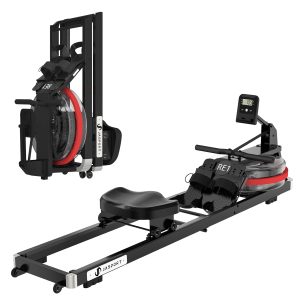
- Water rowing machines
- These devices use water as resistance. They offer an authentic rowing experience and are also quiet in operation.
- Air rowing machines
- Aerodynamic drag systems that are easily adjustable. Drag increases with increasing speed.
- Magnetic rowing machines
- A quiet variant that uses magnetic resistance. They are usually compact and easy to use.
- Hydraulic rowing machines
- These devices use hydraulic cylinders to create resistance. They are often the cheapest option, but less stable.
The right technique
Proper rowing technique is crucial to avoiding injuries and maximizing workout effectiveness. Here are some basic tips:
- The starting position: Sit on the seat with your feet securely in the footboard and your knees slightly bent.
- The train: Start with a strong leg extension, followed by an active back pull phase, and pull the handle towards your body.
- The retreat: Return your arms in a controlled movement as you bend your torso forward to return to the starting position.
Tips for choosing the right rowing machine
If you want to buy a rowing machine, there are a few factors you should consider:
- Budget: Set a budget that fits your pocket. Rowing machines come in a variety of price ranges.
- Space: Consider the available space in your home. Folding models are often more practical.
- resistance system: Choose the resistance system that best suits your training style.
- Additional functions: Look for devices with training programs, heart rate monitoring, and other practical features.
Conclusion
A rowing machine is an excellent choice for anyone looking for efficient, joint-friendly, and holistic training in the comfort of their own home. It not only creates space for fitness but also promotes health and well-being. Learn more to find the right machine for your individual needs and start your rowing journey today!