Free shipping in DE
  30 day returns
  Secure payment
  2 years warranty
The Ultimate Movement Sequence on the Rowing Machine: Tips for Beginners and Advanced Users
Rowing is one of the most effective forms of exercise for strengthening the entire body, improving endurance, and having fun at the same time. Whether in the gym or at home, the rowing machine is a popular piece of exercise equipment. In this article, we'll show you the correct rowing machine movement and provide valuable tips to maximize your training results.
What is a rowing machine?
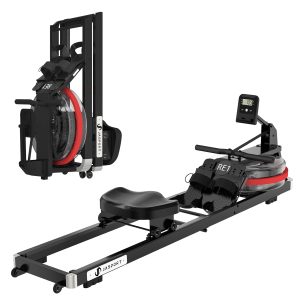
A rowing machine simulates the motion of rowing a boat and trains numerous muscle groups. It's ideal for cardio training and promotes endurance and strength. Rowing is also gentle on the joints, making it suitable for people looking to prevent or rehabilitate injuries.
The correct movement sequence
1. The starting position
Begin in the starting position by sitting on the rowing machine. Your feet should be firmly planted in the straps; foot placement is crucial to ensure a stable grip. Your knees should be slightly bent and your torso should be upright. Make sure your arms are extended and you're holding the handlebars with a relaxed but firm grip.
2. The Catch
The movement begins with the initial pull, also called the "catch." Your legs press forcefully against the footplate while your upper body leans slightly forward. Your arms remain extended. This is the crucial moment in which you focus on muscle activation.
3. The Drive
Now begin the push-off. Extend your legs powerfully and simultaneously pull the handle toward your torso. Make sure you don't hunch your shoulders, but rather perform the movement with your back and arms. This should be a fluid and harmonious movement. Your legs should do the majority of the work, while your torso tilts backward and your arms pull the handle toward you.
4. The Transition (Finish)
In the final position, your legs are fully extended, your torso is slightly leaned back, and your hands are at chest height. Hold the handle close to your body while keeping your shoulders still. This is the moment to conserve energy and prepare for the next stroke.
5. The Withdrawal (Recovery)
The return phase is equally important. Let the handle slide forward again as you lean your upper body forward again. Your legs should return to the starting position. Make sure you keep the movement fluid. The transition between the final position and the starting position should be smooth to prevent injury and avoid unnecessary strain on the muscles.
Tips for effective training
regularity
To maximize your progress on the rowing machine, it's important to train regularly. One to three times per week is ideal for beginners. Advanced athletes can train more often to further increase their endurance and strength.
Pay attention to the technology
Proper technique is crucial for success. Avoid rowing with just your arms. Your legs should do the bulk of the work, while your upper body and arms support. Pull the handle at a controlled pace and focus on executing the exercises with precision.
Variations in training
To add variety to your workout, you can try different methods, such as interval training or longer endurance sessions. These variations help activate different muscle groups and keep you motivated.
The benefits of rowing
Rowing is not only effective for physical fitness but also an excellent stress management method. The rhythmic movement pattern, combined with a focus on breathing, can help clear your head and organize your thoughts.
strength and endurance
The combination of strength and endurance training makes rowing a unique sport. You strengthen not only your leg muscles but also your back muscles and upper body, which ensures good posture and stability.
Protects joints
Another advantage is that rowing is gentle on the joints. The seated position puts less strain on the joints than many other sports, making it a perfect choice for people with joint problems.
Common mistakes when rowing
Even experienced athletes sometimes make mistakes. Be careful not to generate too much momentum with your upper body. The rowing motion should always be controlled and smooth. If you notice that you're rowing too much with your arms, you should reconsider your technique and focus on your footwork again.
Conclusion
Rowing on a rowing machine offers many health benefits and promotes fitness in a variety of ways. With the right movement sequence and a few valuable tips, you can get the most out of your workout. Whether you're a beginner or an advanced rower, structured training and attention to your technique are the key to success.