Free shipping in DE
  30 day returns
  Secure payment
  2 years warranty
Sore muscles after training: Why the rowing machine is perfect
Every fitness enthusiast has experienced it before – that unpleasant muscle soreness after an intense workout. Although muscle soreness is often perceived as unpleasant, it's also a sign that the body is adapting to new stresses and getting stronger. In this article, we explore why the rowing machine is an excellent choice for your workout and how it can effectively reduce muscle soreness.
What is muscle soreness anyway?
Muscle soreness, also known as delayed onset muscle soreness (DOMS), typically occurs 24 to 72 hours after an unfamiliar or intense physical activity. Symptoms can range from mild discomfort to severe pain. This pain results from small tears in the muscle fibers that occur during exercise. These tears are a normal part of muscle development and, upon healing, lead to stronger muscles.
Advantages of the rowing machine for training
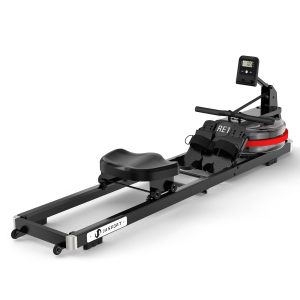
The rowing machine is a great piece of fitness equipment that offers numerous benefits. Here are some of them:
- full body workout: Rowing requires the activation of both the upper and lower body muscles, making it one of the most effective cardio and strength-training exercises.
- Low risk of injury: Compared to other fitness equipment, the rowing machine is particularly gentle on the joints. The smooth, controlled movement minimizes the risk of injury.
- Calorie burning: Rowing burns a large number of calories in a short period of time, making it an ideal choice for anyone looking to lose weight or achieve their fitness goals.
How the rowing machine causes muscle soreness
An effective rowing workout can cause muscle soreness, especially if you're new to rowing or increasing your workout intensity. Here are some reasons why the rowing machine can cause muscle soreness:
Intense muscle strain
The rowing movement engages a variety of muscle groups. The legs, back, shoulders, and arms are all activated during the workout. It's especially important that the reverse movement strongly engages the muscles, something that's often neglected in other fitness programs.
Variation in the training plan
If you regularly train with a rowing machine, you have the opportunity to incorporate new training methods, such as interval training, endurance training, or strength training. Any variation can lead to muscle injuries, resulting in muscle soreness.
Prevention of muscle soreness
Although muscle soreness is a natural part of training, there are some steps you can take to minimize the risk:
- Warm up: An effective warm-up helps prepare the muscles for the upcoming strain and minimizes the risk of injury.
- Progression: Gradually increase the intensity and duration of your workouts. Start with shorter sessions before increasing the time and intensity.
- Regular stretching: Stretch your muscles after training to promote flexibility and reduce the risk of muscle tension.
- Recovery phases: Give your body enough time to recover between workouts so that your muscles can regenerate.
The correct rowing technique
Proper technique is crucial to getting the most out of your workout and avoiding injury. Make sure you use your back and arm muscles correctly while rowing. Here are some tips for proper rowing technique:
The starting position
Sit on the rowing machine, place your feet securely in the foot straps, and hold your hands shoulder-width apart on the handlebars. Your knees should be slightly bent, your back straight, and your gaze directed forward.
The train movement
Start the movement with your legs by pushing off forcefully. Keep your arms straight and only pull the handle when your legs are almost fully extended. Make sure you perform the movement with control in your back and arms.
The return movement
After the pull, slowly return your arms to the front while bending your legs and returning to the starting position. This helps improve your technique and optimize the entire movement.
Conclusion
The rowing machine is not only an excellent piece of fitness equipment for an effective workout, but it can also induce muscle soreness, which is a sign of progress. However, maintain proper technique and carefully plan your workout to maximize the benefits. With regular training, you'll progress quickly and be able to accept muscle soreness as part of your fitness journey.