Free shipping in DE
  30 day returns
  Secure payment
  2 years warranty
Muscle groups that are trained when rowing with the rowing machine
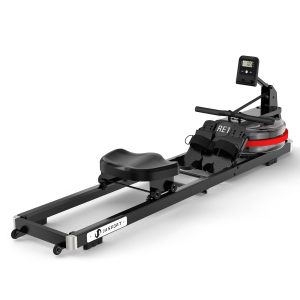
Rowing is a comprehensive sport that's not only fun but also works a variety of muscle groups. More and more people are choosing to use rowing machines to exercise in the comfort of their own home. In this article, we'll explore which muscle groups are targeted when rowing on a rowing machine and how to optimize your workouts to achieve the desired results.
The benefits of rowing training
Before we look at individual muscle groups, it is important to understand the many benefits of rowing:
- Full-body workout: Rowing activates multiple muscle groups and thus provides an effective full-body workout.
- Improve cardiovascular health: Regular rowing trains the heart and improves endurance.
- Low stress on the joints: The rowing machine enables gentle training that protects the joints.
- Calorie burning: Rowing can help burn calories and, when combined with a balanced diet, can aid weight loss.
The main muscle groups activated when rowing
Rowing on a rowing machine particularly activates the following muscle groups:
1. move
The back is particularly stressed during rowing. The latissimus dorsi muscles (broad back muscles) play a crucial role, as they are activated during the pulling action. The trapezius and rhomboid muscles are also essential for keeping the upper body stable and retracting the shoulders.
2. Legs
When rowing, the legs are the center of power. The thigh muscles, especially the quadriceps, are heavily engaged when pressing the pedal. The hamstrings and calf muscles are also engaged, especially during the return phase of the rowing stroke. This effectively strengthens the lower half of the body.
3. Gluteal muscles
The gluteal muscles are also active during rowing, as they help stabilize the body during the movement and shift the weight while rowing. Strong glutes can also reduce the risk of injury and promote overall mobility.
4. Abdominal muscles
The abdominal muscles play an important role in rowing, especially in stabilizing the torso. The rectus abdominis and obliques help maintain body tension, while the lower back muscles (erector spinae) also contribute to stability.
How to make your rowing sessions effective
To get the most out of your rowing workout, you should incorporate some best practices into your sessions:
1. Interval training
Interval training can increase the effectiveness of your workout. Alternating between intense rowing phases and recovery periods can help improve endurance while targeting your muscles.
2. Optimize rowing technique
Correct rowing technique is crucial to avoid injuries and effectively train the muscles being used. Maintain an upright posture, active leg use, and a well-thought-out pull and return mechanism.
3. Regularity of training
A regular training schedule is key to long-term results. Aim for at least three to four rowing sessions per week to increase your fitness and steadily strengthen your muscles.
4. Nutrition and regeneration
A workout is only as good as the recovery that follows. Also, make sure you eat a balanced, protein-rich diet to promote muscle recovery. Hydration is equally important—remember to drink plenty of water!
Summary of rowing exercises
When you respond to the rowing machine's cue, you'll not only activate your muscles but also improve your overall fitness. Each rowing movement targets different muscle groups, providing you with a naturally balanced workout. By consciously controlling and varying your workout, you can specifically achieve your strength and endurance goals.
Take advantage of rowing training and discover the power in every stroke!