Free shipping in DE
  30 day returns
  Secure payment
  2 years warranty
Is a rowing machine good for your back?
Rowing is one of the most effective forms of exercise, not only increasing endurance but also strengthening muscles in many areas of the body. In particular, people often ask whether a rowing machine is good for their backs. In this article, we explore the benefits of rowing for back health and provide valuable tips for effective and safe training.
The anatomy of the back and the benefits of rowing
The human back is a complex system of muscles, ligaments, and vertebrae. The main muscle groups targeted during rowing are the latissimus dorsi (broad back muscle), the trapezius (upper back), and the erector spinae. These muscles are crucial for supporting the spine and helping to improve posture. Regular rowing can provide the following benefits for your back:
- Strengthening the muscles: Rowing not only trains the back, but also the legs and upper body, which leads to even muscle development.
- Improved posture: By training the back muscles, posture problems that are often caused by sitting for long periods can be counteracted.
- Mobility and flexibility: The rhythmic movements of rowing promote flexibility of the spine and can reduce tension in the back.
How does a rowing machine work?
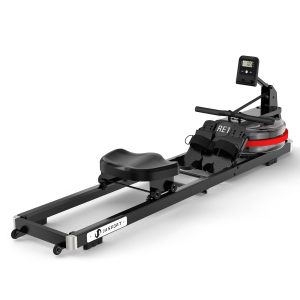
A rowing machine simulates the motions of rowing on water. The user sits on a movable seat and pulls on a handle connected to a resistance system. This movement not only works the back but also improves coordination and balance. Here are some basics you should know about rowing:
- Sitting position: Make sure your back remains straight and not excessively curved. The soles of your feet should be securely positioned on the footrests.
- Rowing movement: Start with your legs, then your back, and finally your arms. This sequence prevents back pain and injury.
- Adjust resistance: Choose a resistance that offers you a challenge without sacrificing correct technique.
Training tips for a healthy back
To further maximize the benefits of rowing for your back, consider the following tips:
1. Warm up and stretch
Before you start rowing, it's important to warm up. Perform some light stretches to prepare your muscles for the workout. The muscles in your back, shoulders, and legs, in particular, benefit from a thorough warm-up.
2. Regular breaks
If you plan to train on the rowing machine for a longer period of time, you should also take regular breaks. Short breaks can help prevent muscle tension and maintain full mobility in your back.
3. Pay attention to your technique
Proper technique is crucial to avoiding injuries, especially to the back. Keep your back straight and avoid jerky movements. Practice the technique regularly to get used to it.
Studies on the health benefits of rowing
Several studies have examined the health benefits of rowing and found that it not only increases endurance but also brings significant improvements to back muscles. A study by the National Institutes of Health (NIH) has shown that people who row regularly complain significantly less of back pain. They report better physical fitness and a general improvement in well-being.
Summary
Overall, a rowing machine is an excellent choice for anyone looking to strengthen their back muscles and prevent back pain. With proper technique, regular breaks, and a focus on proper posture, the benefits of rowing for your back health can be maximized. Whether you're a beginner or an experienced rower, the most important thing is to master the correct technique and listen to your body.