Free shipping in DE
  30 day returns
  Secure payment
  2 years warranty
Experience with rowing machines: Fit and healthy through training on the water
Rowing is considered one of the most effective sports for training the entire body. It combines endurance and strength training in one. In recent years, more and more people have discovered the rowing machine as a home workout tool. In this article, I would like to share my personal experiences with various rowing machines, highlight the advantages and disadvantages, and offer tips on how to get the most out of your rowing workout.
Choosing the right rowing machine
Before deciding on a rowing machine, I did extensive research. There are many different models on the market, each offering different price ranges and features. Rowing machines can generally be divided into three categories:
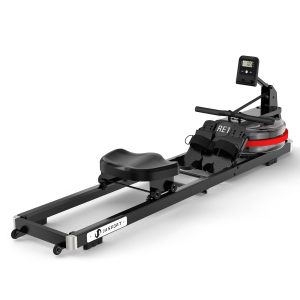
- Water rowing machines: These devices simulate the real rowing experience and offer a very realistic feel. The water provides natural resistance while remaining quiet.
- Magnetic rowing machines: They use a magnet to generate resistance. These devices are typically compact, quiet, and offer adjustable resistance levels.
- Air rowing machines: These devices use a fan to provide air resistance. They are often popular with professional athletes, but they are also somewhat noisy.
I ultimately decided on a water rowing machine because I really enjoy the experience of being on the water, and the noise level is minimal, which is a plus for my home.
My training routine
To maximize the benefits of rowing, I've created a structured training routine. This routine consists of four sessions per week, each lasting 30 to 60 minutes. Here's a summary of my training structure:
- Warm up: At the beginning of each session, I do a 5- to 10-minute warm-up. I row at a leisurely pace to prepare my muscles and minimize the risk of injury.
- Interval training: After the warm-up, a phase of interval training follows. I row fast for 1 minute and then switch to 2 minutes at a slow pace. This intensity increases the heart rate and increases calorie burn.
- Cooling phase: At the end of each workout, I row gently for another 5-10 minutes to lower my heart rate and relax my muscles.
With this structure, I've not only significantly improved my endurance but also strengthened my muscles. It's amazing how effective rowing training is.
The benefits of rowing training
Rowing offers a variety of benefits that include both physical and mental aspects:
- full body workout: Rowing uses up to 85% of your muscles, making it a great workout.
- Improved Endurance: With regular exercise, your cardiovascular health can improve significantly.
- Calorie burning: Rowing is intense enough to burn more than 600 calories in an hour, depending on your weight and the intensity of the workout.
- Stress Relief: Physical activity releases endorphins, which improve mood and reduce stress.
- Gentle on the joints: Rowing is a low-impact sport that puts less strain on the joints than many other sports.
Tips for effective rowing training
To get the most out of your rowing workout, here are some useful tips:
- The right technique: Make sure you learn proper rowing technique to avoid injury. Look for tutorials or videos to refine your technique.
- Regularity: Make sure you have a consistent workout routine. Regular training leads to better results in the long run.
- Vary your workouts: Incorporate different training methods and intensities to create variety and maintain your motivation.
- Pay attention to your diet: A balanced diet supports your training success. Make sure you consume sufficient protein and carbohydrates.
My conclusion on rowing training
For me, rowing has not only improved my fitness but also helped me feel better overall. I enjoy spending more time moving, and I highly recommend it to anyone looking for an effective and enjoyable form of exercise. The workout is strenuous, but also incredibly enjoyable. With the right technique and routine, anyone can fully enjoy the benefits of rowing.