Free shipping in DE
  30 day returns
  Secure payment
  2 years warranty
Effective rowing machine training: A guide for beginners and advanced users
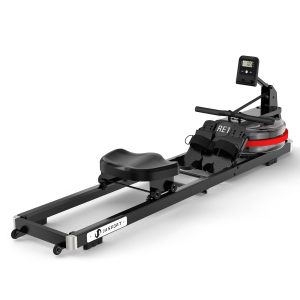
The rowing machine has become one of the most popular pieces of fitness equipment in recent years. It offers a comprehensive, full-body workout that combines both aerobic and strength training. Whether you're a beginner or an experienced athlete, the rowing machine can help you achieve your fitness goals. In this article, we'll discuss the benefits of rowing, effective training techniques, and common mistakes to avoid.
The benefits of rowing training
Rowing is not only an excellent cardiovascular workout, but also has many other benefits:
- full body workout: Rowing activates almost all major muscle groups – legs, back, stomach and arms.
- Stamina Improvement: Regular rowing can improve your cardiovascular health and increase your endurance.
- Gentle on the joints: Compared to many other forms of cardio exercise, rowing is gentle on the joints, making it ideal for people with joint problems.
- Kcal consumption: Rowing burns a significant number of calories, making it an excellent choice for weight loss.
- Improve posture: By activating the back muscles, rowing can help improve posture.
Training techniques for the rowing machine
To get the most out of your rowing workout, it's important to use the correct technique. Here are the four main phases of rowing to consider:
1. The outward movement (catch)
In this position, you'll sit at the end of the rowing stroke. Keep your knees buckled and lean forward slightly. Your arms should be straight, and your hands should grip the handles of the rowing machine.
2. The pulling movement (drive)
This is where the power begins to take effect. Push with your legs while leaning your upper body backward. Pull the handles toward your chest, activating your back muscles.
3. The final position (finish)
In this position, your legs are fully extended, your torso is slightly leaned back, and the handles are close to your chest. Hold this position briefly to feel the tension.
4. The recovery
Gently place your hands forward for the next pull, bending your knees at the same time. This smooth return movement will help you maintain proper form.
Beginner training plan
For beginners, a step-by-step approach is recommended for safe and effective training. Here's a simple training plan for the first few weeks:
- Week 1: 3x per week, 10-15 minutes at moderate intensity
- Week 2: 3x per week, 15-20 minutes, increase the intensity slightly
- Week 3: 4x per week, 20-25 minutes, add interval training
- Week 4: 4x per week, 25-30 minutes, increase the intensity further
Before each workout, you should warm up for 5 minutes and use the last 5 minutes for cooling down and stretching.
Tips to improve your technique
Here are some practical tips to improve your technique and make your training more efficient:
- Keep a straight body line: Your shoulders should be relaxed and your back straight to prevent injury.
- Pay attention to the handle: Hold the handle firmly, but not tensely. Too much pressure can strain your shoulders.
- Breathe correctly: Align your breathing with the strokes – breathe in on the pull and breathe out on the return.
Vermeidung häufiger Fehler
There are certain common mistakes in rowing that can affect your performance:
- Lack of coordination: Make sure all movements are synchronized. Uneven movements can reduce effectiveness.
- Overload: Increase the intensity gradually. Doing too much too quickly can cause injury.
- Incorrect sitting position: Make sure your feet are securely in the straps and that your legs remain controlled throughout the entire movement.
The importance of rest and nutrition
Don't forget that recovery and nutrition are crucial to the success of your training program. Try to get enough sleep to give your body time to recover. A balanced diet rich in protein, healthy fats, and complex carbohydrates will also support your fitness goals.
The rowing machine is a versatile and effective piece of fitness equipment that offers many benefits. No matter your level, proper training, correct technique, and avoiding common mistakes are key to your success. Use the tips and training plans in this article to improve your rowing fitness and achieve your goals.