Free shipping in DE
  30 day returns
  Secure payment
  2 years warranty
Effective Rowing Machine Training: The Ultimate Guide for Maximum Results
Rowing machines have become increasingly popular in recent years due to their effectiveness and versatility. Whether you're a seasoned athlete or new to the fitness world, training with a rowing machine can take your fitness to a new level. In this article, you'll learn everything you need to know about effective rowing machine training for the best results.
Why rowing machine training?
The rowing machine offers a holistic workout experience that incorporates both strength training and cardiovascular exercise. With every stroke, you work virtually all major muscle groups—from your legs to your core to your arms.
- Building strength: Rowing machines help build muscle and improve overall body strength.
- Cardiovascular endurance: Rowing training increases heart rate and improves endurance.
- Gentle on the joints: Compared to many other sports, rowing is gentle on the joints and ideal for people with injuries.
The correct rowing machine technique
Before you begin training, it's important to learn the correct technique. Incorrect technique can lead to injury and reduce the effectiveness of your workout.
The four main movements
Rowing can be divided into four main movements:
- The pulling phase: Sit on the machine, hold the handles firmly and pull the rowing handles towards your body.
- The transition phase: Slowly release the handles and prepare for the next pulling phase.
- The reverse phase: Gently slide the handles forward and return to the starting position.
- The recovery phase: Take a moment to recover and control your breathing.
Rowing machine training plans
A structured training plan is crucial for success. Here are two sample training plans you can try:
Beginner training plan
- Weeks 1-2: 15 minutes per session, 3 times per week.
- Weeks 3-4: 20 minutes per session, 3 times per week.
- Weeks 5-6: 25 minutes per session, 4 times per week.
Advanced training plan
- Week 1: 30 minutes interval training (1 minute fast, 1 minute slow)
- Week 2: 35 minutes (25 minutes moderate pace, 10 minutes interval training)
- Week 3: 40 minutes (30 minutes steady pace, 10 minutes sprint)
Tips for increasing training effectiveness
Here are some more tips to optimize your rowing machine workout:
- Warm up: Start each workout with a 5-10 minute warm-up to prepare your muscles.
- The correct resistance setting: Set the resistance of your rowing machine to an appropriate level to avoid overexertion.
- Regular breaks: Listen to your body and plan regular breaks to avoid overtraining.
- Additional exercises: Complement your rowing training with strength exercises such as push-ups or squats.
Nutrition and regeneration
In addition to training, a healthy diet is crucial for achieving your fitness goals. Make sure you consume enough protein and carbohydrates to help your body recover.
Drink plenty of water to meet your hydration needs and consider taking supplements such as protein shakes or amino acids for optimal results.
Common mistakes when training on a rowing machine
Some common mistakes made during rowing machine training can affect results:
- Incorrect sitting position: Make sure your back stays straight and your shoulders are relaxed.
- Rowing too fast: Focus on consistent technique rather than excessively fast execution.
- Insufficient variability: Vary your training regularly to avoid boredom and less progress.
Choosing the right equipment
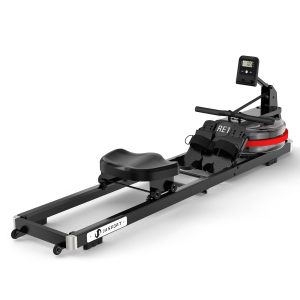
Choosing the right rowing machine can make a big difference in your workout. Consider factors like the type of resistance (air, water, hydraulic), the size of the machine, and your budget before making a decision.
Training monitoring
To track your progress and stay motivated, it's important to monitor certain metrics like time, distance covered, and calories burned. Many modern rowing machines offer built-in monitors to help you analyze your performance.
Use the social community
Finally, joining a fitness community or group challenges focused on rowing machines can boost your motivation and accountability. Share your progress on social media or attend local events to meet like-minded people and support each other.